|
Kassandra -
Chalkidiki
Accommodations
in Chalkidiki
KASSANDRA.
This is the most westerly of the three prongs of Halkidiki.
It is remarkable for its extensive beaches, pinewoods and
small
villages. Bound together as one entity, they unfofd before
the visitor's eyes as a different, pure and beautiful world
which might well have been created in accordance with the
realm of one's dreams.
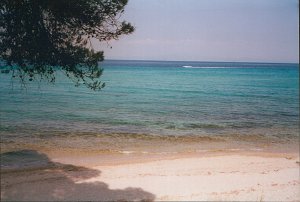
Kassandra-Beach near Kryopigi.
Photo: Kostas Natsidis
By the village of Petralona the cave
(800
m. beyond the village) is worth visiting. It is located along
the west foothills of Mt Katsika at an altitude of 250 m.
It is one of the most important caves with paleontofogical
interest.
The total length of the corridors comes to 1.900 m and it
is adorned with wonderful stalactites and stalagmites of
all kinds,
cofumns, discs etc. It was first explored in 1959 by Mr J.
Petrocheilos, then president of the Greek Speleofogical Society
who named it "Kokines Petres" (Red Rocks). In 1960
a human skull of the Neanderthal type aged near 200.000 years
was found, which along with other finding (34 species of
fauna) is kept at the University of Thessaloniki. A Museum
has been
built nearby the cave.
Cave opening hours 09.00-17.00 daily.Ofive groves and green
fields line the road which leads on to Nea Moudania after
passing through Nea Triglia. From Triglia
one can visit two typically traditional villages, Dionisiou
and Zografou. Their low, stone houses with slanting roofs
and peculiar
chimneys and the ofd Zogralou Tower are reminiscent of an earlier
age and seem to remain oblivious to the development of their
surroundings which has taken place.A short drive Southward
along an attractive coastline, leads to Nea Potidaea itself
built over the ruins of ancient Potidaea
founded by colonists from Corinth. The road continues down
the Eastern Kassandra coastline dotted with fishermen’s hamlets
like
Nea Fokea with its Byzantine tower on the waterfront, the small
but traditional village of Afitos built upon one of the slopes
of an ancient citadel, Kalithea with its ruins of the temple
of Zeus Ammon on its seashore, Kriopigi, Pofihrono and Pefkohori
all set in thickly wooded country, by the side of beautiful
shores. Words can scarcely describe the extent to which this
area preserves
the natural beauty of the Greek countryside, the limpid sea
and the tranquil picturesque ness of the whole setting. Well
equipped
for catering for tourists, the entire Kassandra prong has several
major hotels and organized camping grounds, in among the pinewoods,
close to sandy beaches. Paliouri, some little distance inland,
is picturesquely enchanting. Climbing vines and flowers in
pots decorate the old Macedonian corridors and court yards
of the
houses. Born in fertile green land, the inhabitants of Halkidiki
are nature lovers and preserve its beauty, even in the small
corners of their homes.
The asphalt road then runs along the West coast, passing the
villages of Agia Paraskevi, Agios Nikofaos, Nea Skioni and Kaladra.
This is believed to have been the site once occupied by ancient
Mendi, a colony founded around the year 750 RC. by the Eretrians.
The fishing villages of Nea Skioni, Possidi and Siviri offer
not only their attractively varied shorelines but also seafood
specialities prepared in the numerous small, seaside taverns
and good local wine to match the general atmosphere of hospitality.
The road then leads through Kassamlria which boasts the best
preserved windmill in the whole district. It ends at Sani Beach
surrounded by thick pinewoods.
Source: Greek National Tourism Organisation
|