SALAMIS (Area 95 km2 , length of coastline
104 km).
Salamis, on account of its strategic position in Athens' 'embrace',
was an 'apple of discord' between the Athenians and the Megarians
in the historical period. The most important event in the island's
past was the naval battle fought in its straits, between the
Greek and the Persian fleet during the Persian Wars (480 BC),
in which the invaders suffered an ignominious defeat. Salamis
was also the birthplace of the tragic poet Euripides. The island's
capital is Salamina or Koulouri. The Salamis Archaeological
Museum houses finds from the area. In the Folklore Museum there
are
local costumes, tools, vessels and ether objects. About 6 km
NW of the town is the Phaneromeni Monastery, with rich wall-paintings,
a collection of ecclesiastical treasures, an icon-painting
and a weaving workshop, as well as a hospice. The earliest
archaeological
site on the island is at Ambelakia, 4 km SE of Salamina. The
naval battle of Salamis was fought here. Selinia is located
8 km SE of the town. The seaside village of Moulki or Aianteio
is 6 km SW of the town in an area of pine woods. The recently
explored Cave of Euripides, at Peristeria, has not only yielded
significant finds but is also the place where tradition relates
that the poet withdrew to write his tragedies. How to get there:
By ferryboat: From Piraeus daily, frequent services in the
summer
to Paloukia, Selinia, Kamatero, Peristeria. Also services from
Perama to Paloukia and from Nea Perama, Megara to Phaneromeni,
Salamis.

Salamis.
Photo: Kostas Natsidis
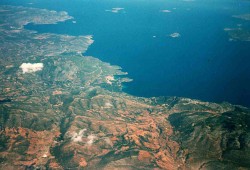
Salamis. Photo: Kostas Natsidis
Source: Greek National Tourism Organisation