Central Greece - Delphi
JustGreece.com
Holidays in Delphi

Delphi - Delfi
 

IM001709.jpg
 

Delphi (4) 01-09-2003.jpg
 

 DSCF2298.jpg

Delphi.jpg


Delphi, home of the sanctuary and oracle of the god of light Apollo, was believed to be the 'navel of the world' by the ancient Greeks. The largest religious and spiritual centre in Hellas, its fame and prestige spread throughout the Mediterranean. Men came from all corners of the then-known world to seek the, priestess's wise prophecy: state emissaries on major issues of war or peace and ordinary folk on their personal problems. The sanctuary's renown remained undimmed throughout antiquity, but when Christianity prevailed and idolatry
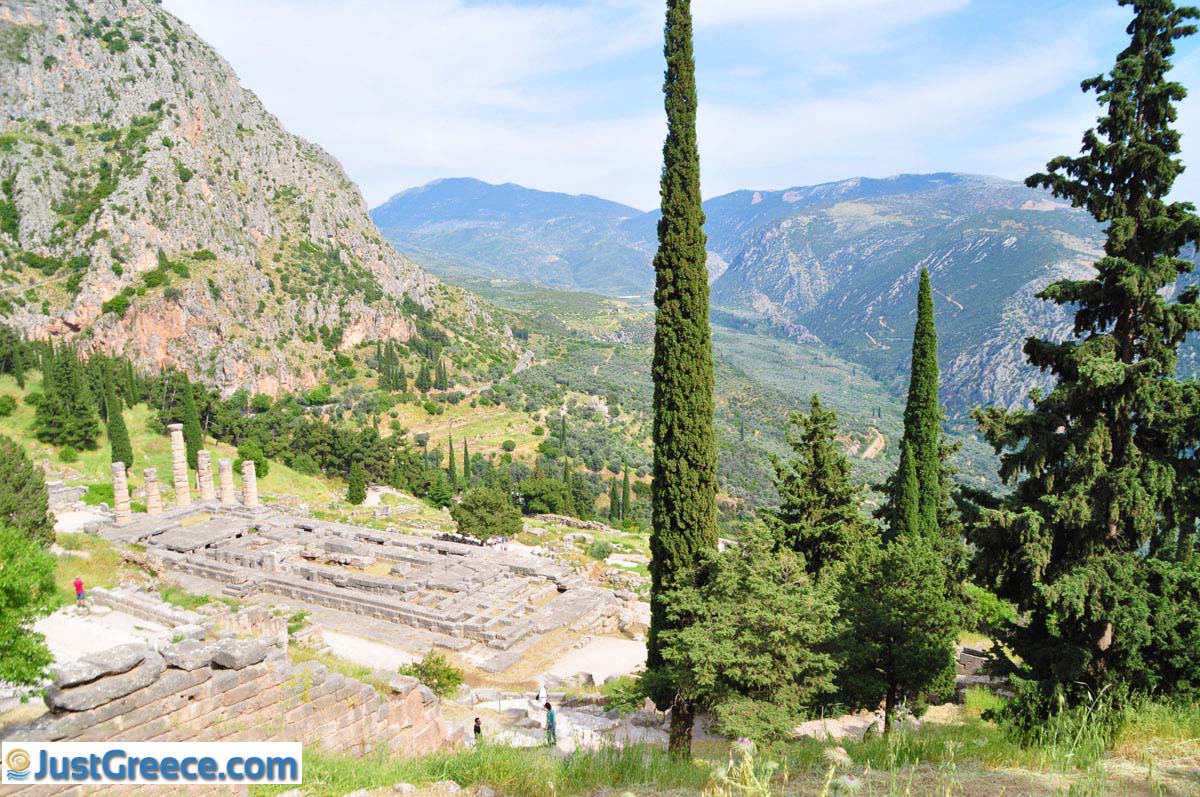
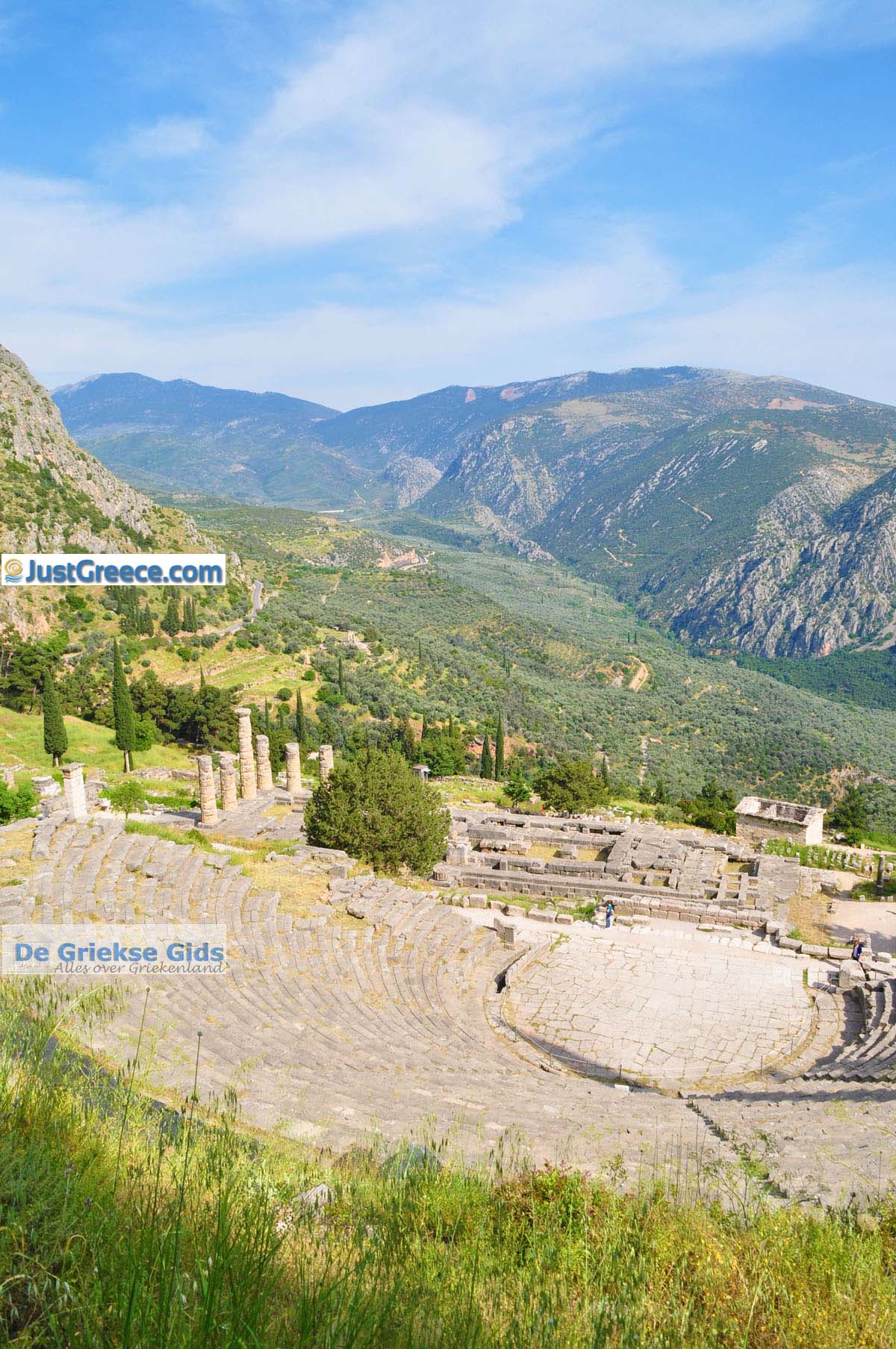
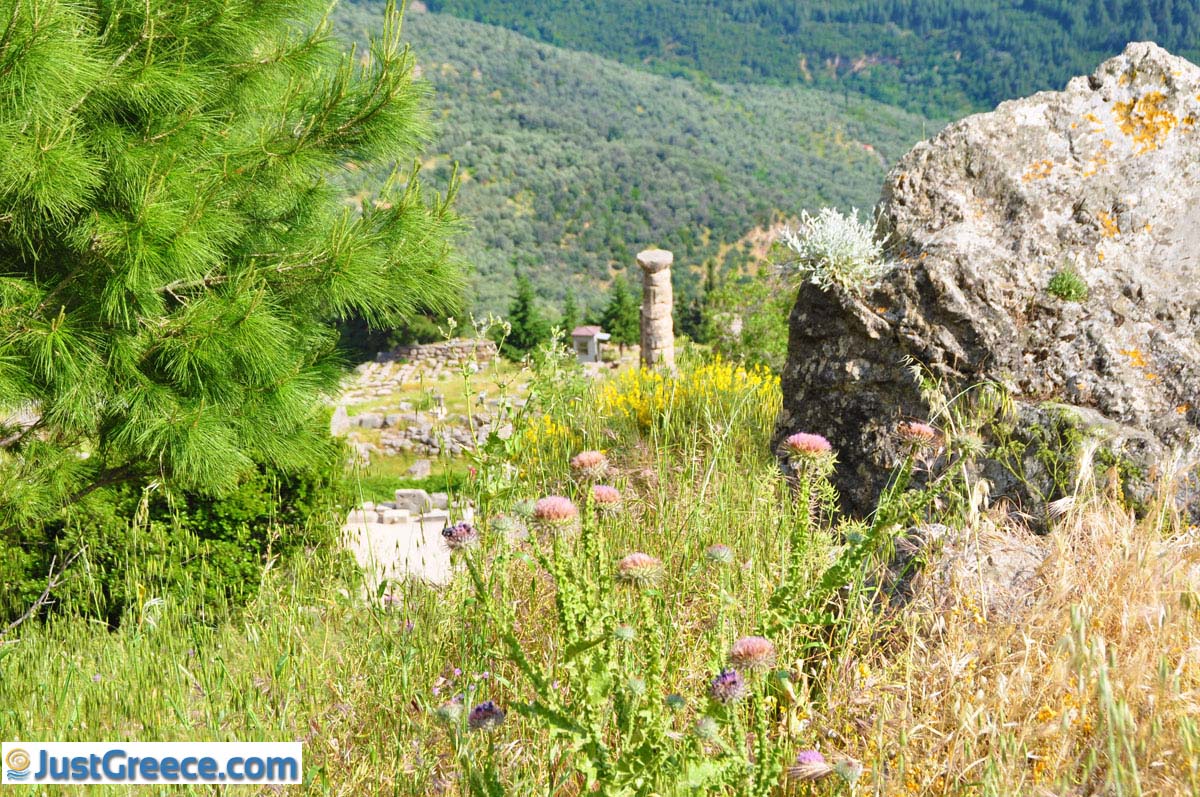
was banned,  it fell into decline  and was abandoned. According to tradition, it was at Delphi  that the two eagles sent by Zeus from the ends of the earth in order to determine its centre, met. This myth was the basis of the Greeks’ conviction that the “omphalos” or navel of Delphi was the geographical centre of the world, which in fact emphasises the importance they attached to this place. The Delphic sanctuary of Apollo extends over successive terraces on the lower slopes of Mount Parnassos, in a stunning location surrounded by towering crags, the Phaidrades Rocks, and with the Gulf of Itea as its backdrop.


Photo: Anke Rietveld

Archaeological research has shown that the area of Delphi was inhabited at least from the Mycenaean period (l4th - 11th c. BC). The deity worshipped here in these times was Gaia or Ge. Myth has it that she dwelt in a cavern guarded by her serpentiform son, Python, and pronounced oracles for devotees. The place was thus named Pytho. When the god Apollo arrived from Delos he slew Python, after which he abandoned the area in search of purification. He returned later, expiated and crowned with a wreath, to establish his cult and the place was then renamed Delphi. Apollo took the prosonym Pythios and henceforth the oracle BClonged to him.
The sacred place was arranged during the , 8th and 7th centuries BC. Towards the end of the 7th c. the first stone temples were built, one dedicated to Apollo and the other to the goddess Athena.
Delphi BClonged politically to the Phocian city of Krissa - the present village of Chrysso. In the early 6th c. BC the Amphictiony was founded, a union of city states with common political aims. Its seat
was transferred to Delphi, essentially inaugurating the history of the city. In time the Delphic Amphictiony acquired decisive responsibilities in the administration of the sanctuary. In 582 BC it organised the Pythian Games, which were held every four years in honour of Apollo and in remembrance of his victory over Python. In 548 BV the temple of Apollo was destroyed by fire and building of a new one commenced with contributions from various Greek cities. BCtween the 6th and 4th c. BC the sanctuary enjoyed a great heyday and was adorned with handsome edifices and numerous ex-votos dedicated to Apollo by cities and indivADuals. Several sacred wars affected the operation of the oracle, since Phocians, Locrians, Athenians and others coveted its wealth and interfered in its independence. Both the war against Krissa (600-590 BC) and that waged to relieve Delphi of the sovereignty of the Phocians were called sacred wars (First and Second). In 356 BC the Third Sacred War was declared, which lasted 10 years and ended in the domination of the Phocians. They were vanquished later by Philip 11 of Macedon, who assumed the leadership of the Amphictiony. In 339-338 BC the Fourth Sacred War provADed Philip with the pretext for invading southern Greece, which he finally conquered in the battle of Chaironeia. From 191 BC the Romans were in power. In 86 BC the sanctuary was sacked by General Sulla. The Emperor Nero participated in the Pythian Games and transferred 500 statues from Delphi to Rome, to grace his capital. In the 2nd c. AD Hadrian made gifts intended to boost the sanctuary's finances, but efforts to regain its former glory were to no avail. The oracle that the Pythia pronounced to the Byzantine Emperor Julian the Apostate (AD 361-363) confirms the fact that Christianity had prevailed and ousted paganism: Tell ye the king: the carven hall is fallen in decay. Phoebus hath no chape lleft, no prophesying bay, no prating spring. The stream is dry. In AD 392 Emperor Theodosius banned the practice of ancient cult and the office was forced to close. Delphi is mentioned as an inhabited area, however, until the 6th century.

Oracle and Prophecies
Pilgrims and emissaries (theopropoi) came from all over the ancient world to seek advice from the oracle. First they cleansed themselves in the water of the Kastalia Spring, then they paid a tax, the pelanon, and after that sacrificed an animal on the altar to Apollo. The prophecies were uttered by the Pythia, priestess of the god, on a fixed day each month, except the three winter months when it was believed that Apollo was absent from Delphi, in the land of the Hyperborians. The Pythia purified herself with water from the Kastalia Spring, censed the hearth and entered the adyton of the temple. There, seated upon a tripod set above a cleft in the ground, she chewed bay leaves, drank water from the Kassotis spring and inhaled the fumes that sent her into a trance. Priests and theopropoi submitted the pilgrims' questions. The oracle was written down and interpreted by the priests of Apollo. The oracles were ambiguous and could be interpreted in many ways, so that the advice of the god was never erroneous. The formal procedure of the oracle's operation was crystallised in the 6th c. BC and remained unchanged until the reign of Hadrian (2nd c. AD).


Photo: Wilma Verstraeten

 The Archaeological Site
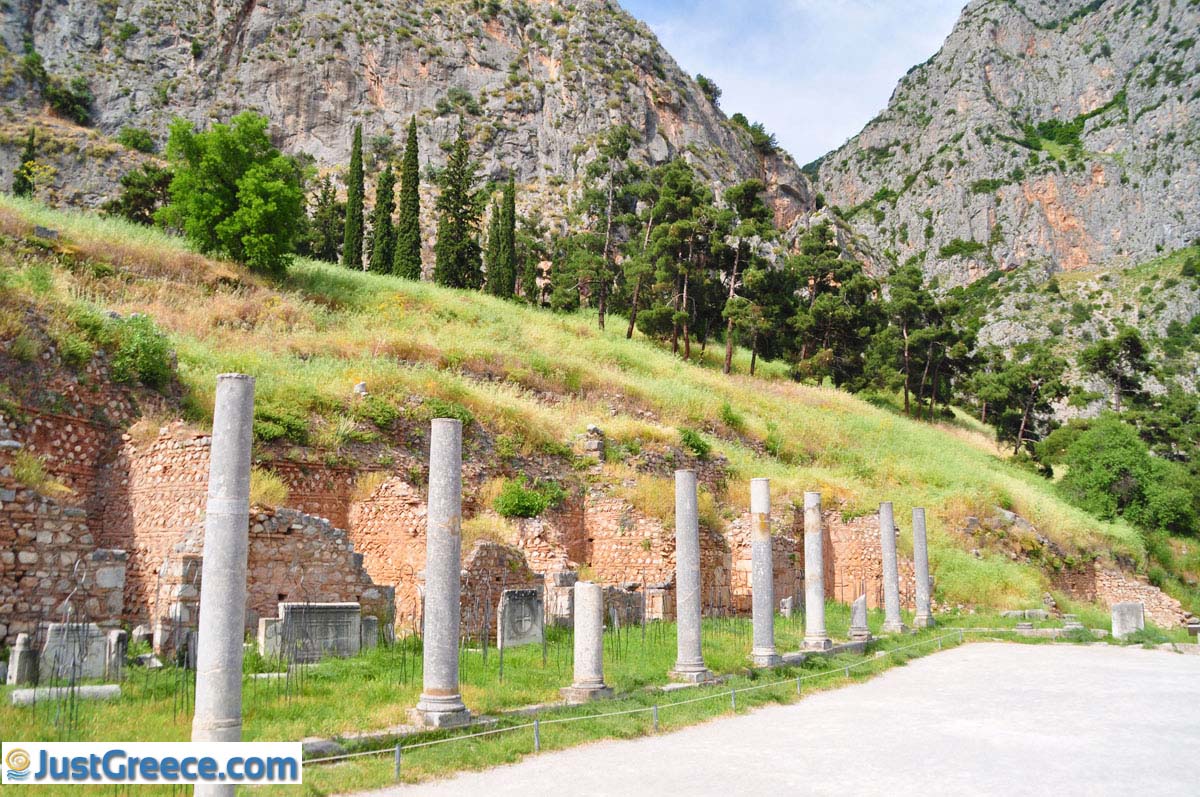
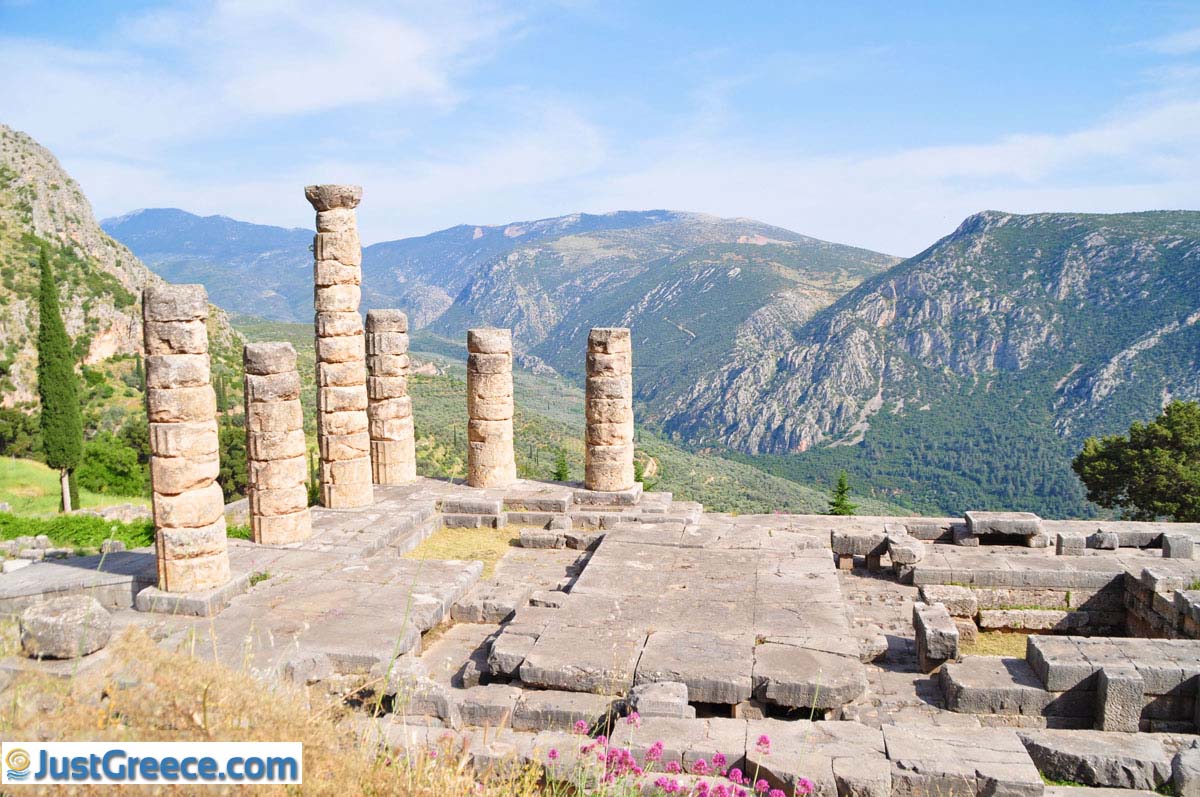
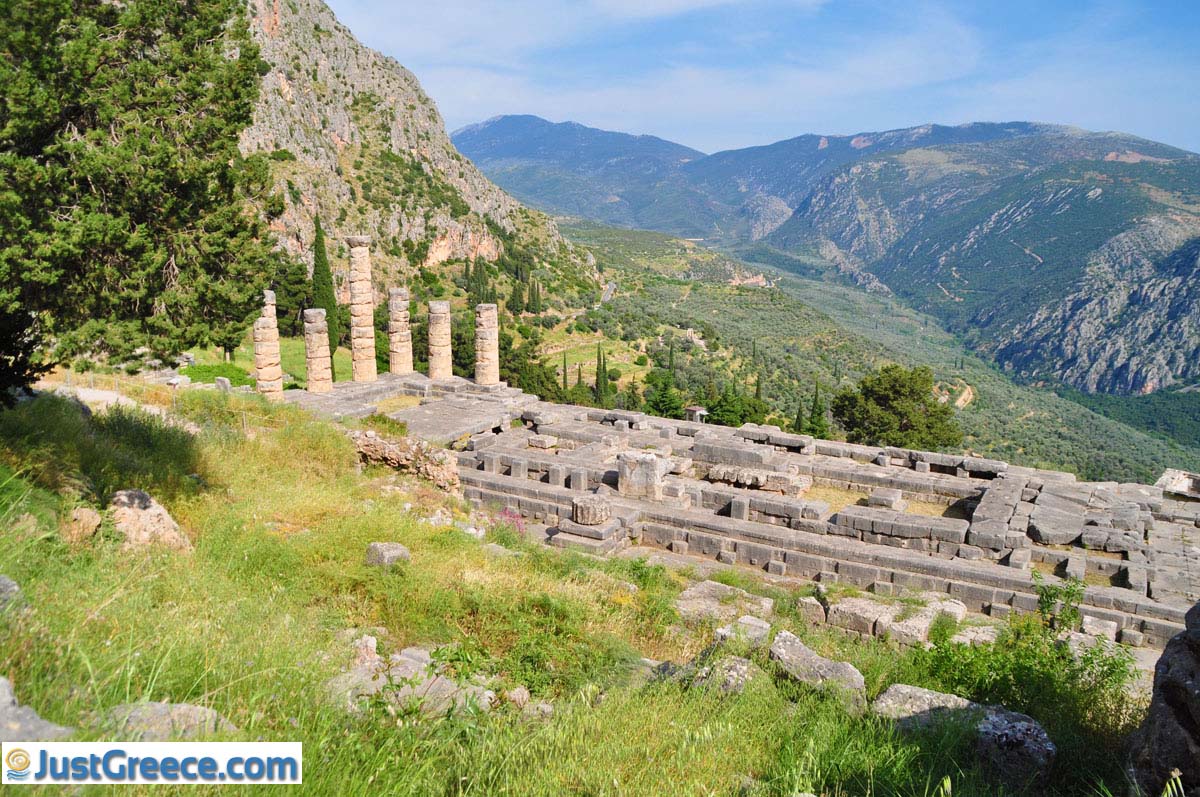
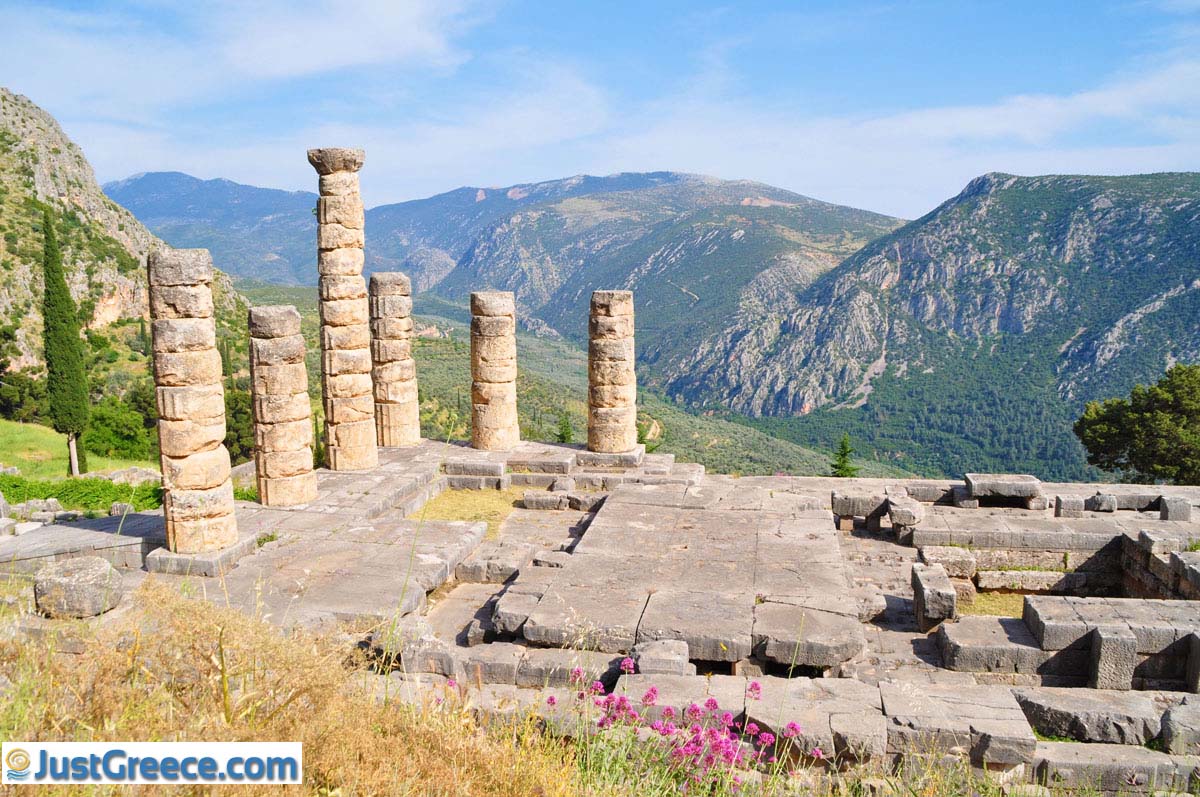
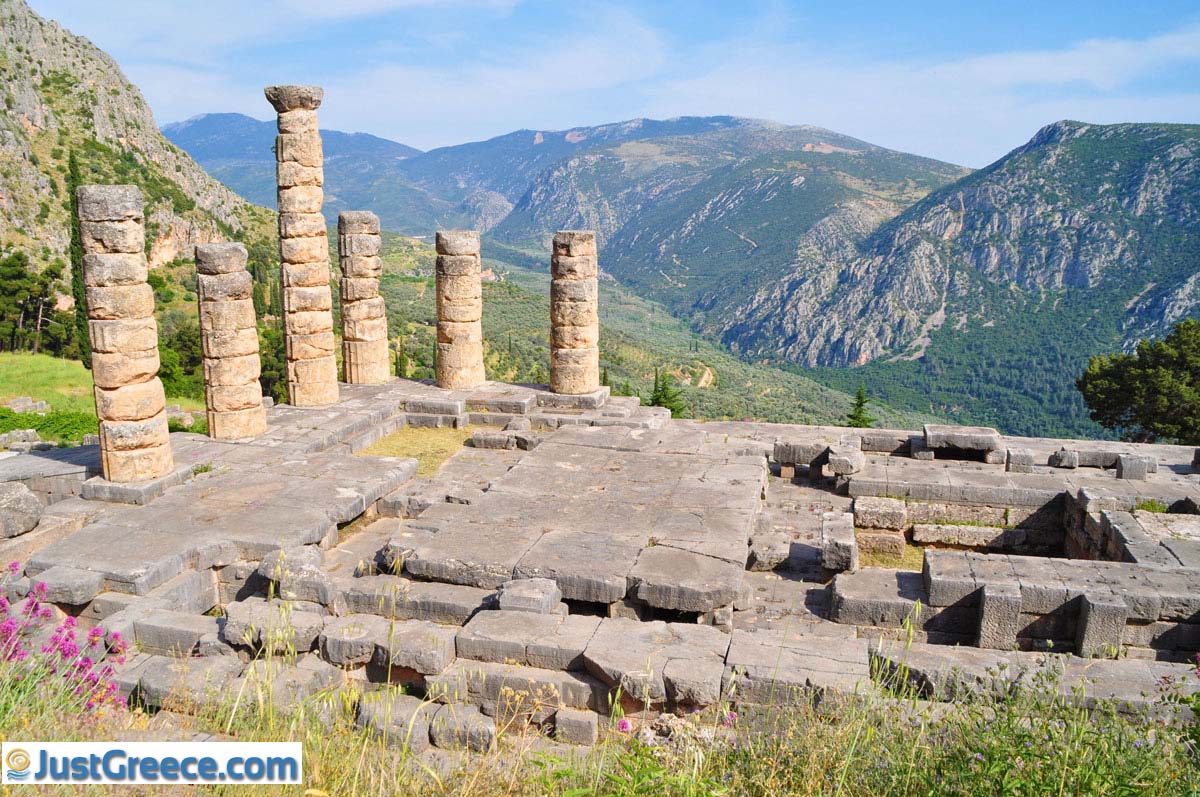
Excavations at Delphi began in 1892, under the auspices of the French Archaeological School at Athens. The sanctuary was surrounded by a precinct wall with several gates. The paved Sacred Way led up from the main gate to the centre of the sanctuary, where its most important building, the Doric temple of the god, stood. Three building phases can BC distinguished in the monument, the latest of which is dated between 373 and 330 BC. Below the adyton was the subterranean chamber in which the Pythia delivered the oracles. The Sacred Way was flanked right and left! by monuments and votive offerings dedicated by the ancient cities to commemorate their victories: statues, relief compositions, 'Treasuries' (small temple shaped edifices in which precious ex-votos were kept) and others. The most important are the votive offerings of the Lacedaemonians, the Arcadians, the Athenians, the bull of the Corcyraeans, the Wooden Horse' of the Argeians, the treasuries of the Sicyonians, the Siphnians, the Megarians, the Athenians and others. Above the northwest side of the temple is the well- preserved theatre (4th c. BC), with a capacity of some 5000 spectators. It was here that dramatic and lyric (singing to the accompaniment of the lyre) competitions took place. Higher up and outside the sanctuary is the stadium, the tiers of seats in which have survived in good condition. In addition to athletic contests, musical events were held here. Located to the southeast of the sanctuary of Apollo is the sanctuary of Athena Pronaia. Preserved are the ruins of an Archaic and later temple of the goddess, two treasuries and the famous circular building known as the Tholos. This architectural masterpiece combines the Doric order in the external colonnade and the Corinthian in the engaged columns on its circular walls. Beside the entrance to the archaeological site with its monuments, the Phaidriades rise sheer above the Kastalia Spring.

Delphi Museum
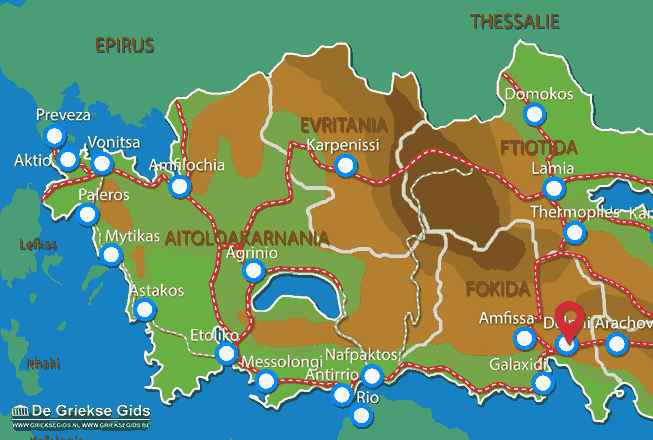
The 13 galleries of this rich museum house finds from the excavations at Delphi, dating from prehistoric into Roman times. Very important are the ex-votos in precious metals, of the Archaic period (7th-6th c. BC). Outstanding exhibits include: the bronze Charioteer of Delphi from a four horse chariot (quadriga) dedicated by Polyzolos, Tyrant of the Greek city of Gela in Sicily after his victory in the Pythian Games of 478 or 474 BC; the Delphic omphalos of Hellenistic or Roman times; the Sphinx of the Naxians; the Archaic kouroi Kleobis and Biton; the statue of the athlete Agias; the statue of Antinoos; the group of the Thyiades or Maenades. Noteworthy among the architectural sculptures are the Archaic frieze of the Knidian Treasury and the karyatades from its porch, the east pediment of the Archaic temple of Apollo (built by the Alkmeonides) and the metopes from the Athenian Treasury.Delphi is a venue for international meetings, such as conferences on architecture, ancient drama, archaeology, and training programmes for young people, on culture and the arts in general. During the months of July and August festivals of Music and Ancient Drama are staged in the stadium, under the auspices of the European Cultural Centre, Delphi. Close to the archaeological site is the home of the poet Angelos Sikelianos, which is now a museum of the Delphic Festivals. It houses archival material and photographs relating to the revival of the Delphic Idea, costumes from performances of ancient drama, personal effects of Angelos and Eva Sikelianos, as well as most of the poets manuscripts and correspondence. The modern village of Delphi lies a short distance from the archaeological site (2.5 km SE of Amphissa, capital of the prefecture of Phocis). Although its population is only around 1500, it has the honorary status of municipality. Located in a beautiful landscape on the western outskirts of the village are the Conference Centre, the 'Europa' guesthouse and the Sculpture Park. Delphi has excellent tourist facilities, with shops, restaurants, hotel accommodation of all classes, rooms to rent, camp sites etc. It is well able to cape with the many visitors, most of whom come to see the fascinating archaeological site as well as the other places of interest in the region.

Source:Greek National Tourist Organisation.


Copyright JustGreece.com and De Griekse Gids®
Contact