Harbour of Kavala. Photo: Kostas Natsidis.
At a distance of lust 165km from Thessaloniki, it is easy to
reach by car, plane and ship, which makes it an ideal holiday
destination.
There are excellent road connections with all the large towns
in the region. The international airport (at a distance of
30 km from
the city), which links Kavala to Athens by daily scheduled
flights as well as to foreign countries by charter flights
is one of
the safest airports in the Balkans. The port connects Kavala
and Thassos
as well as other islands in the Aegean Sea by ship and ferry.
The elegant neoclassical mansions in Kyprou Street, built in
the nineteenth
century, are snapshots of the past. In the city centre the
old tobacco warehouses still give forth a strong smell of tobacco,
although most of them have been transformed info night clubs,
cafes or malls. Enjoy a stroll along the waterfront and run
your
eyes
over the fishing boats. Churches either perched on hillocks
or interspersed throughout the city have their own history.
The city is vibrant with life day and night: government departments
are busy in the daytime while entertainment takes the lead
in the night time. People are, above all, generous in offering
hospitality.
Kavala is an important port on the Balkan Peninsula of old.
Neapolis - Christoupolis - Kavala are its historical names.
It has been inhabited since Neolithic times. In the 7th century
BC it was a Thassian colony under the name of Neapolis and
later it joins the Athenian Alliance. It gains great prosperity
during the Macedonian rule, after Philip II has annexed it,
its harbour serving Philippi. Romans upgrade the major trade
port by having Via Egnatia run through it but as the same
time it is made the target of Goth and Hun raids. Paul the
Apostle comes to Neapoli to preach the Christian faith in
Europe. Byzantine times, when the town is renamed 'Christoupolis'
is a prosperous period; however, Norman ravages and Turkish
occupation put an abrupt stop to it. The important monument
of the old aqueduct, nowadays known as Kamares, dates from
that period. From one arched gate to the other, centuries
put on a new face. Liberated in the early twentieth century,
international centre of tobacco trade
and hub of cultural activity, Kavala gains greater prosperity
thanks to the Greek refugees from Asia
Minor. Kavala's course in history is alive at every step you
take. In the Archaeological Museum of Kavala, there are unique
exhibits, such as remains of Athena Perthenos's Temple and
other exhibits from the whole region, namely from Oisymi,
Galypsos, Dikili Tass, Nikisiani and Avdira.
Kavala at the seaside
You can find a beach within a stone's throw from the city
centre. Plenty of sandy, clean beaches, most of which have
been awarded the Blue Flag, are waiting to be discovered
and can provide a wide range of tourist facilities; keep
these names in mind: Kalamitsa, Batis, Tosca, Patio, Perigiali. Everybody
enjoys the sea and not few play beach volleyball which
kas become very popular among bathers. Cheerful music
at beach bars and fresh juices set the scene lor good Jun.
Seaside taverns serve fresh fish and sea-food together with
luscious local wine and tsipouro which can put you in the
best mood. The
west coast of the prefecture of Kavala is
a challenge to holiday- makers. The seaside
villages or "Ghialohoria ", as
they are widely known (at a I distance of
15km from Kavala) stretch along an indented
coastline with vast sandy beaches and crystal-clear
waters.
Nea Irakutsa
A charming seaside resort with a long-stretching sandy beach.
There are hotels, a wide range of tourist facilities and
the appropriate infrastructure for climbing and diving
lovers. Restaurants and cafes found along the seafront
Zend lraklitsa a cosmopolitan look. You can explore several
caves on the islets of Kokkina, Fidonissi and Panagia by
boat.
Nea Peramos, the capital of
a municipality comprising three villages, has all that tourist
facilities which can make
holidays unforgettable. "Ammolofi" (the Greek'
word for sand dunes), which stretch for miles is one of
the most popular beaches in Greece. Hotels, rooms to let
and a campsite, can provide you with
comfortable accommodation. You can relish fresh I fish
washed down with local tsipouro. At the
far end, the Byzantine, Anaktoroupolis towers over the village
and commands a fine view of it. Eleftheron Bay is ideal for
non professional fishing!
Akti Ofryniou (Touzla) Holiday destination with tourist facilities all along the
shore: hotels, rooms to let and a campsite cater for the
holiday-makers who can be assured of a splendid stay. Quaint
fish-taverns and exciting night life. A short distance
away, one can visit the estuary of the river Strymonas
and the ancient city of Amphipolis.
Beaches All along the coastal zone (50 km long) you can discover
the most attractive beaches you have ever seen, sunbathe
on fine sand and swim in sparkling waters. Apart from Ammolofi,
other beaches that cater for tourists are Almira, Akti
Folias, Akti Eleochoriou, Sarakina and Karyani.
The first Christian town in Europe
The city of Filippi was
at the height of its fame for several centuries. It was founded
by Thasians in 359 BC; the king
of Macedonia Philip II conquered it in 356 BC and renamed
it after him. At a distance of 15km from Kavala, visitors
can see monuments of three historical periods: the ancient,
Roman and Byzantine era. The well-maintained ancient theatre,
a section of Via Egnatia, the watts, the Forum, the early
Christian Basillicas, the Octagon and the dungeon where Paul
the Apostle had been held prisoner, are true evidence of
Filippi's great prosperity. In the archaeological museum
there are unique prehistoric ancient, Roman and Byzantine
exhibits dug up at Dikili Tas or at the archaeological site
of Filippi. In 41 BC, Antony fought (the well-known battle)
against Brutus and Kasius at Filippi marked the end of democracy
in Rome and the beginning of imperial years. Paul the Apostle
Game to Filippi as well to preach the Christian faith for
the first time in Europe (49 BC); it is there that he baptized
Lydia, the first Christian in Europe, in the waters of the
river Zygaktis. A church consecrated to her and an outdoor
baptistery were erected at that very place. In summer, an
ancient drama festival is held at the ancient theatre of
Filippi.
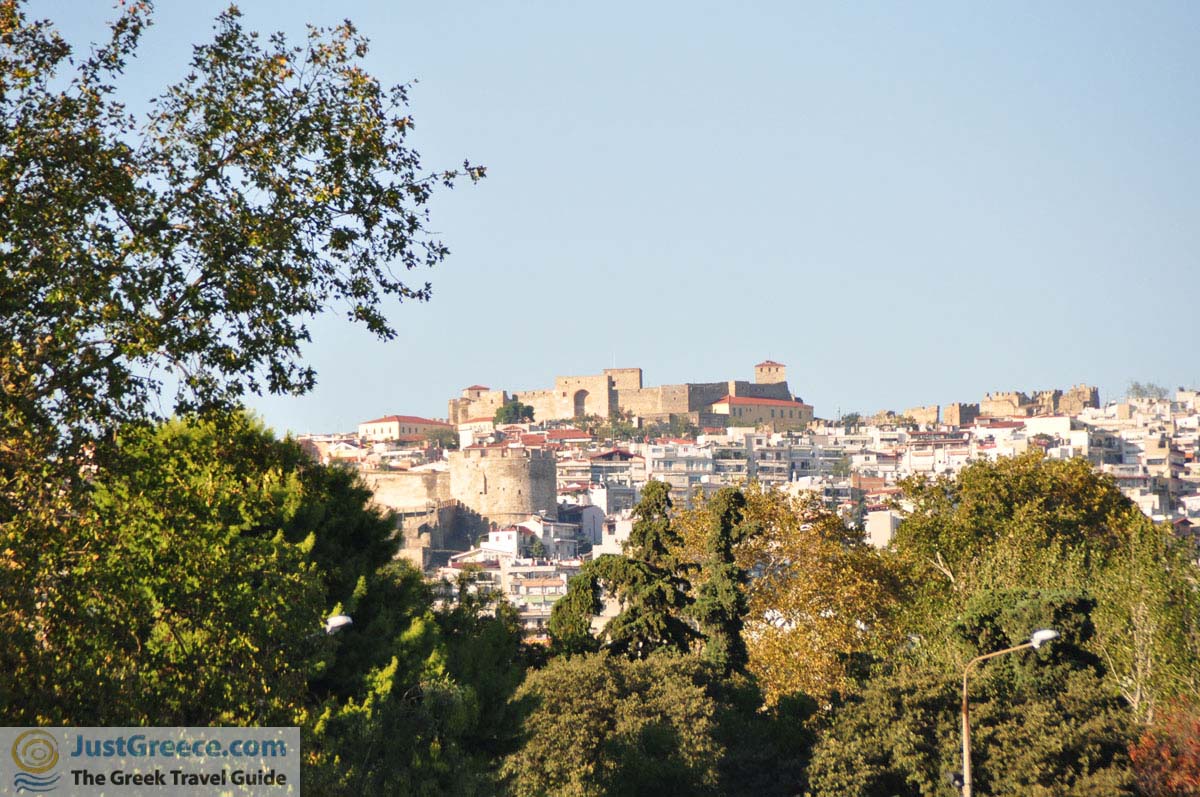
The castle in Kavala The castle crowns the city. The fist wall was built in the
5th century BG. Later fortifications were successively
built on that wall in Byzantine and post Byzantine times.
The Turks, in their turn repaired the existing walls and
fortified the old city in order to feel safe.
The citadel in Filippi The ruined citadel lies on a knoll over the archaeological
site of Philippi. It was used as a lookout post in post-Byzantine
times. The views of Mt Pangaion which towers over the plain
of Philippi opening before your eyes are fantastic.
The castle at Paleochori This Byzantine castle lies on a hillside lust opposite Filippi's
citadel above the village of Paleochori. The view from
the castie is breathtaking as you run your eyes over the
Filippi plain as far as the mountains in Drama.
Anaktoroupoli at Nea Peramos This Byzantine castle is situated on the headland of Vrasidas
at Nea Peramos. Only part of the walls have survived through
time. It was used as a watchtower of the local port.
The tower at Apollonia Those travelling from Nea Peramos to the Baths of Eleftheres
on the road along the coast are able to sec this tower.
The fortress was built to guide ships and watch over the
area.
The castle at orfani On the hill opposite the village of Orfani are the remains
of a castle obviously built in Byzantine times. The whole
area is interspersed with ruins of ancient settlements,
which are the vestiges of development that the area around
the important ancient city of AmphiPolis achieved.
Panagia Kavala's foundation stone. Built on the ruins of the first
Thassian colony used to be the heart of the city until the
end of the nineteenth century. The castle casts its shadow
on this old district of outstanding beauty. Few alterations
have been made that Panagia remains as picturesque as ever.
Take a walk on traditional paving and follow the scent of
gardens ablaze with colour. The sea smiles a greeting through
the narrow alleys. While ascending you can discover Plenty
of beautiful spots or run your eyes over the city. Mehmet Ali's
residence is located right at the top of the headland; Imaret
looks down on the harbour. You can have
a rest at picturesque taverns or cafeterias. Time takes you
back to former times. This is the most authentic example
of ' traditional architecture in Macedonia.
Historical towns and villages in the egion of
Mount Paggeo
Pravi or Eleftheroupoli, as it is currently called, used
to be the regional centre of commerce and handicraft until
the middle of the twentieth century. One can marvel at
traditional Macedonian architecture, large tobacco warehouses
and mansions or take a stroll around the winding narrow
roads. The villages of Nikissiani, MessoroPi and Moustheni
have kept their traditional character almost intact.
Monasteries on Mt paggeo
Perched on hillsides, these places of worship and
monastic contemplation, offer some space to anyone who wishes
to
attend divine service and pray. The imposing monastery of
lkossifinissa,
considered to be a cradle of orthodoxy in the whole region,
lies in a ravine near the village of Nikissiani. Built
in the 4th century AD by venerable Germanos, it has been
the
spiritual centre of the area foT many centuries. Saint
Dionyssios stayed in the monastery for a long time. There
are over 150
cells while the church is decorated with fine mural paintings
and a magnificent icon screen. All around Mt Paggeo, one
can visit the monastery of St Panteleimonas at Chryssokastro,
the monastery of YPapanti (Presentation of Christ in the
Temple) on the way to the top of the mountain, lying very
near the remains of an old village, Panagia Paggeotissa
above the village of ChortokoPi and the monastery of St Dimitrios
at Nikissiani. Many of these monasteries overlook Mount Athos.
Natural beauty and myth in perfect harmony. Land of the Hedones,
initiated info Orphic mysteries later on, the whole
mountainous area around Mt Paggeo was famed for gold mines
and the city of Skaptini in particular. It is there that
Alexander the Great had the greatest amount of gold used
in his expedition to Asia extracted from. interspersed with
sanctuaries, the area used to be a Place of worship through
centuries. At the villages of Kipia and
Akropotamos, there are remains of early Christian churches
dating back to the 6th century AD; at Eleftheroupoli, the
historic church of Agios Nikolaos was built on the remains
of an early Christian basilica; arched Byzantine bridges
and churches still exist at Messoropi and Nikissiani. Mt
Paggeo, 1956 metres above sea level, is covered with chestnut
trees, beeches and oaks; an asphalt road goes up
to the mountain top. At the top there is a spacious ski run
and a refuge for climbers. Midway you can stop at the chalet
'Dassiko Chorio', where you can have a meal as welt as find
lodging. Besides, on the way up to the top there are barbecue
facilities and springs with running fresh water. The mountainsides
are ideal for climbing. Besides being the administrative
centre in the area, the historic town of Eleftheroupoli is
vibrant with life and
people go out to elegant restaurants in the old district
as welt as on the surrounding hillsides. The towering tobacco
warehouses are bring back memories of a bright past. A trip
to Nikissiani, Paleochori, Moustheni, Platanotopos, Kipia,
Podochori, Avli, and Messoropi and a meal at quaint taverns
in the shade of perennial plane trees having the murmur of
spring water in your ears can convince you of Mt. Paggeo's
perfect beauty.
The Nestos river Of life
A setting overflowed with file, ideal for those looking for
adventure. Rich in ffora and fauna, it has been recognised
as one of the five most important wetlands in Europe. The
Nestos Narrows stretching for 22 km are of exquisite beauty
and ecological interest. Nature lovers can enjoy hiking
on the European path E6 while marvelling at glorious scenery
and finding rare wild flowers or go down the river by canoe
or kayak. Farther into the forest, you may see the wild
Liverian horses. The Great aquatic Forest or Kotza Orman which boasts luxuriant
vegetation, abundant creepers, rare bird and animal species
is a real paradise. The six Lagoons spreading out from Nea
Karvali as far as the Nestos, is a complex of takes and marshes
providing shelter for migratory birds. The dreamlike Nestos
Delta stretches for 27km. At the riverbanks there is a recreation
ground where hikers can rest. ft is the habitat of herons,
cormorants and flamingos. Chrissoupoli. Situated near the
river it is the financial and cultural centre of the Nestos
eparchy. Visit the villages which are set within the green
mountains of Lekani and breathe in the fresh air. Do not
miss a walk through the virgin oak forest where you can enjoy
the peace and quiet and experience the riot of tastes, scents
and images around you. The picturesque seaside resort of
Keramoti is an ideal holiday destination. You can enjoy swimming
at Ammoglossa and eating fresh fish at the taverns alongside
the waterfront.
In Kavala cultural heritage and contemporary cultural creation
are interwoven. All year round people express themselves
through various events. Every single village in the prefecture
of Kavala celebrates its own feast days and organises fairs
and festivals. One of the most important ancient drama summer
festivals in Greece has been held at the ancient theatre
of Filippi for the past 40 years.
'Eleftheria' include a series of cultural events held to
celebrate the city's liberation from the Turks. At Akontisma, Nea Karvali, you fan attend the 'Sun and Stone'
festival with dance performances from alt over the world.
At Nikissiani, the custom of 'Arapides' is revived during
the last twelve days of the year: people wearing big bells
round their necks enact the end of life and revival in nature. "Dances
of the world". Is organized, in Kavala, every July,
by the "Lykion Ellinidon" a cultural union. In
that event dancing groups from all the world participate
and visit every part of the prefecture. The 'Grape festival'
held at Eleoehori is the leading event in the area. At Lekani
(50km away from Kavala), a Place of outstanding natural beauty,
the Potato Festival marks the coming of autumn.At Chrissoupoli,
the local Folk Festival is a very important summer event
attracting many visitors to the music and dance performances
held. The history of a Place is culture as well. If you visit
the Municipal Museum of Kavala, you wilt be able to see costumes,
jewellery, needlework as well as the Historical Records of
Kavala. There are also paintings and sculptures created by
important Greek artists. The sculptor from Thassos Polygnotos
Vagis's works are displayed in a separate room.
For those who would prefer to spend their time in a bustling
modern city and look for excitement, there is a wide choice:
bars, discos and night clubs This land has been dispensing
its healing blessing to those who need it for a long time.
At Loutra Eleftheron (a spa near the village of Eleftheres)
there are mineral water springs, the necessary facilities
(bathtubs, pump rooms, for treatment as well accommodation
of high quality. Mineral water is ideal for rheumatics and
gynaecological complaints. The peaceful scenery and abundant
water springs offer a tranquil setting where you are assured
of a relaxed stay. There are mud-baths at the village of
Krinides; thanks to its curative powers, that mud is recommended
for orthopaedic, kidney, pulmonary and gynaecological complaints.
There are hotels, rooms to let and restaurants around.
Source: Prefecture Commission for Tourist Promotion of Kavalla
and The Hellenic Tourism Organisation