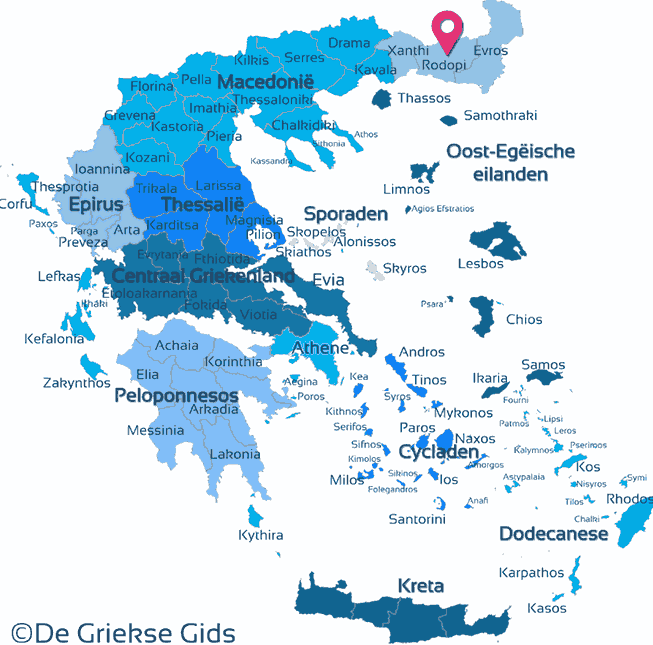
Almost at the very eastern border to Europe, in the heart
of Thrace is the Prefecture of Rhodopi, surrounded to the east
and west by the Prefectures of Evros and Xanthi respectively
and to the south by part of the Aegean Sea (the Thracian
Sea)
while the northern extremes of the prefecture at the mountain
peaks of the Rhodopi range are part of the Greek-Bulgarian
border.
The entire northern section of the Prefecture (76350 hectares)
is covered by the mountainous massif of Rhodopi while the
southern areas are covered by semi-mountainous areas and
plains (178,000
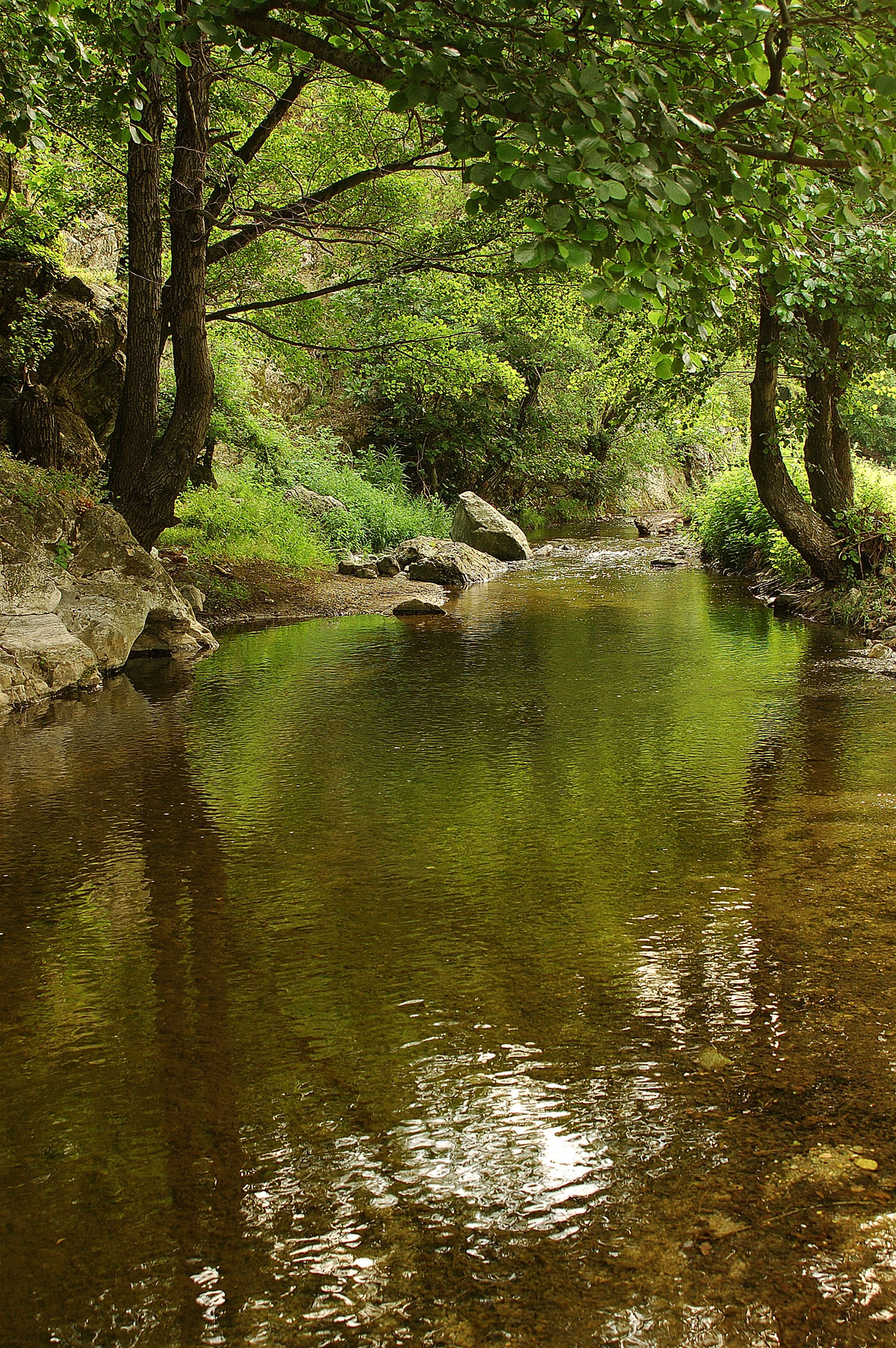
hectares). The prefecture is crossed by raging streams springing
from the mountains to the north and pouring out into the
Aegean Sea, streams which include the Asprorema (which
touches the western
extent of Komotini), the Travos the Lissos, the Kompsatos
and other smaller streams. The Rhodopi mountain range determines
the climate of the prefecture's northern zone (continental)
while
as one moves further south the climate becomes Mediterranean.
Rhodopi, even though considered one of the most downgraded
areas in Greece in terms of the economy level, has over recent
years made significant improvements and achieved strong rates
of growth thanks to the development dynamic which provide favourable
incentives for investments in the area, thanks too to the Via
Egnatia, the imminent opening of borders to the large populations
of the former Eastern bloc countries, and the development of
the Democritus University of Thrace, among others. Equally
important is the role of the area's historical past, rich in
extent and content, with human presence being dated in the
area with present-day data to 100 thousand years ago. In more
recent historical times the area was populated by ancient Thracian
tribes, a significant part of whom where gradually assimilated
by the 81th century BC by the Greek colonists who first reached
the southern and later the northern are as of wider Thrace.
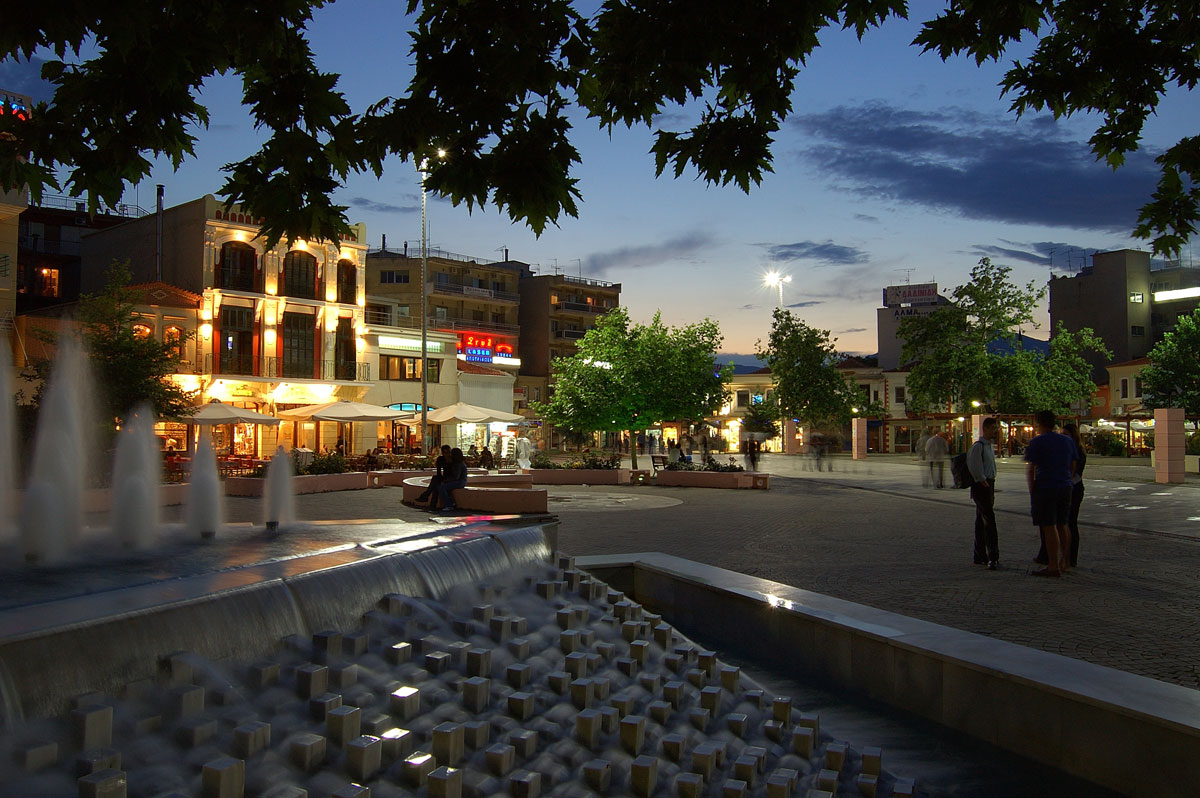
Komotini, is the capital of the Prefecture and administrative
centre of the Region of Eastern Macedonia - Thrace. It is a
modern economy and administrative centre in the wider area
which combines a range of European and eastern elements in
the architecture of its buildings and in the traditional cultures
which have coexisted for centuries in the same city. The history
of the city dates back to the first centuries after Christ.
Circa the 4th century AD a fort was erected which laid the
foundations for the town to evolve from a small Byzantine settlement
to the large, modem city. The visitor can still see the Byzantine
fort building of stone and strong ceramic pillars with a total
of sixteen towers of which unfortunately the ruins of only
one have survived. Inside the fort along the eastern side is
the Byzantine church of the Assumption of the Virgin (Kirniseos
Theotokou). The present-day church was erected on the site
of the Byzantine one in 1800. The oldest reference to the city
is that of the traveller, Pierre Belon, dating from 1548. A
remarkable building with historical and architectural value
is the Almshouse (Imaret) on the western side of Filikis Eterias
St. which look its present form around 1363 by the conqueror
of the city, the islamisized Christian lord Gazi Ervinoz Bey.
The Hellenic Civil School Nestor Tsanaklis is a unique building
in the city (17 Dimokritou St.) erected at the beginning of
the 20th century by the Komotini benefactor, Nestoras Tsanklis,
repatriated from Egypt. Many mansions built during the 19th
century or at the beginning of the 20th century are witnesses
to the economy and cultural boom experienced by the city's
Greek community during the years of Turkish occupation. The
Orologio Tower, built in 1884, as well as the New Mosque (Geni
Mosque) are among the most traditional and attractive points
in the city and lies only a short distance from the central
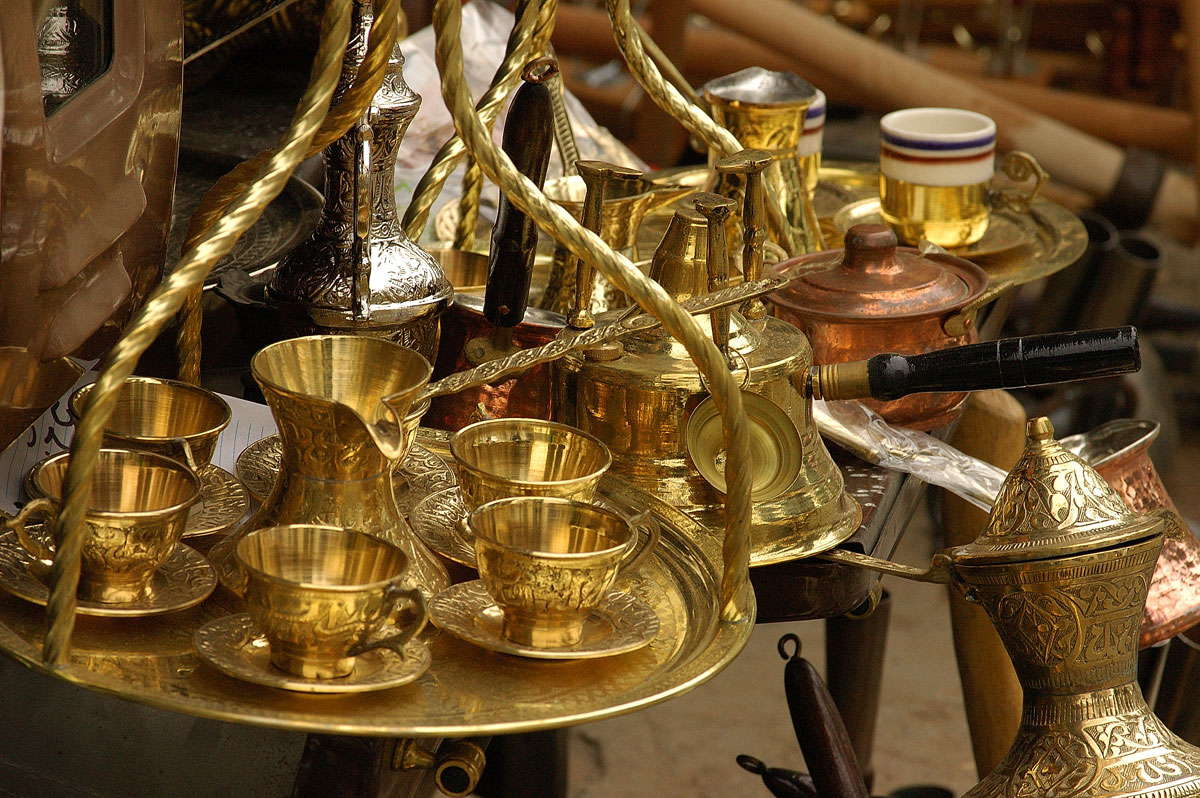
square. The Open Air Market held every Tuesday is nothing more
than a living exhibition of languages and traditions. The city's
museums contain significant elements of its cultural past.
The Basket Weaving Museum of Roma is unique in all of Europe
(located in the village of , Thrylorio) where rare, beautiful
examples of the basket weaving craft are on exhibit. The Folk
Museum contains a rich store of items on Thracian tradition,
the Archaeological Museum houses finds from excavations in
the area, the Ecclesiastical Museum has unique exhibits of
an ecclesiastical and historical character while the N. Papanikolaou
Foundation Museum bas Byzantine exhibits in the main. The Museum
of Thracian Education completes the city's web of museums which
are open to visitors. The region of Komotini with the variety
of sights on offer bas something to suit the tastes and interests
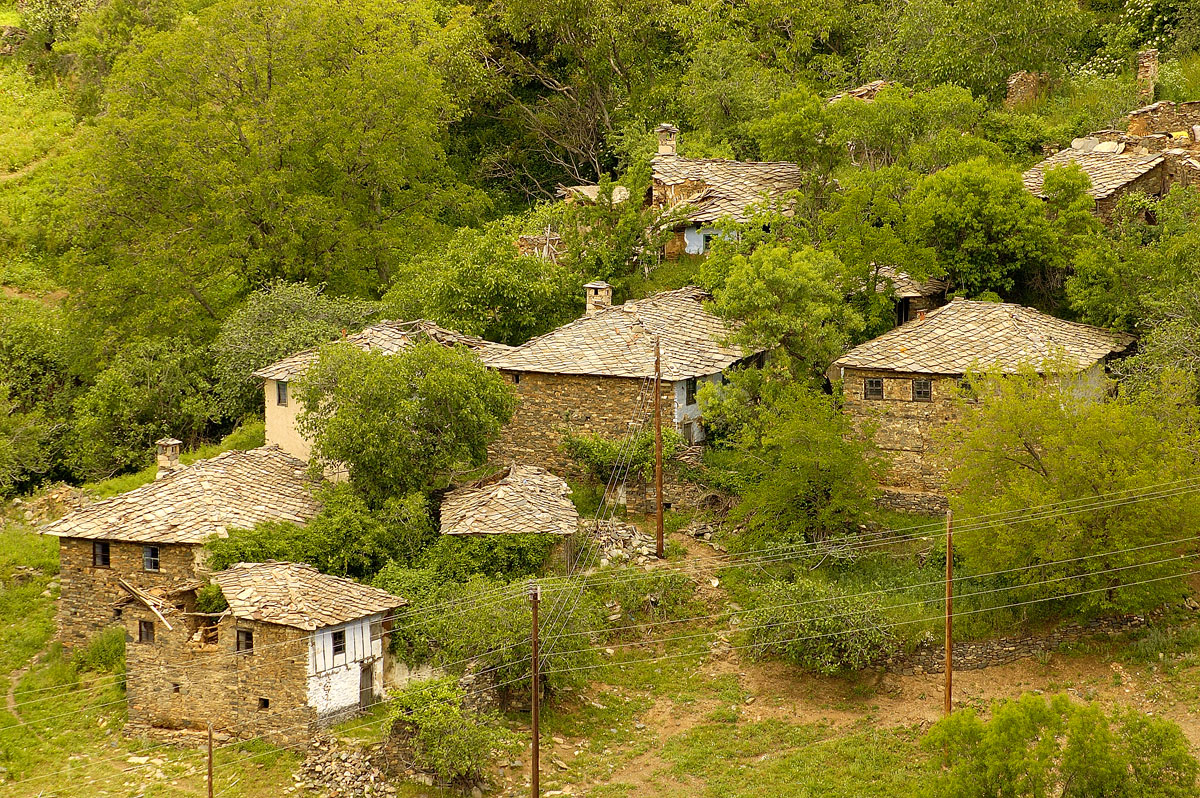
of all visitors. The important ecosystem of the Rhodopi mountain
range where nature is untouched and truly beautiful and the
scattered Pomak villages are exceptional poles of attraction.
The European path E6 which starts in Sweden and crosses mountainous
RhoIdopi (Efthymo, Astrea, the Trikorofou Sima bridge, KrystaHi,
Poa, Kerasia) amply rewards the rambler with wonderful changes
of views and altitudes. At an altitude of 1,050 m set among
a beech forest some 34 km north of Komotini is a fully equipped
mountain refuge belonging of the Greek Mountaineering Association
of Komotini 'Haralambos Dimos". The wetlands at Lake Vistonis
covering 45 km2 on the SW borders with the Prefecture of Xanthi,
remarkable for their ecological and natural beauty are home
to more than 37 species of fish and 264 species of birds bath
native and migratory such as avocets, herons and others, which
give the area a unique feeling. The lake is associated with
Greek mythology because it was here that Hercules carried out
his 8th Labour by capturing man-eating horses of King Diomedes.
Ismaros or Mitriko Lake covering 3.4 km2 southeast of Vistonis
is the only fresh water lake in all of Thrace and is in geographical
terms the eastern edge of a chain of coastal wetlands which
commence from the Nestos Delta and end at Mount Ismaros. The
extensive water lily coverage and the dense reeds surrounding
the lake are the ideal refuge for around 200 species of birds
recorded in the area.
The beaches of the Thracian Sea with their sandy expanses
or pebbles are a pole of attraction for thousands of people
during Summer months. At the eastern edge of the prefecture
with mountains rolling down to the sea wonderful morphological
and colour combinations are created which are complemented
by large numbers of antiquities in the area. The most easily
accessible beaches from west to east are: Fanari (a cosmopolitan
village with hotels, fish taverns, and an endless sandy beach),
Arogis, Mesi, Glyfada, Molyviti, Imeros, Profitis Ilias, Proskynites,
Alkyonas, Plataniti, Maronia, Marmaritsa and Petrota. The last
three are connected with the sacred mountain of Ismaros where
the amazing morphology of the terrain and the antiquities create
a unique ancient Greek landscape. In the wider area of the
village of Maronia (unique for its combination of island and
mainland characteristics) the visitor can find prehistoric
antiquities, megalithic monuments and monuments from more recent
historical periods ranging from the early Christian years to
the post-Byzantine period. The Maronia cave (of the Cyc1ops
Polyphemus according to local tradition), the ancient Greek
theatre seating up to 3,000 people, the mines, the walls and
acropolis of Ancient Ismaras, the ruins of the Byzantine monastery
at Synaxi are just some of the main points of interest for
the visitor in the wider area of Maronia.
The entire Prefecture of Rhodopi is scattered 'with antiquities
from all historical periods. The ancient Greek settlement of
Dikea (3km after the Komotini - Xanthi crossroads on the National
Road), the ancient Greek Strymi (18 km from the new village
of Siderohori), the grave of Symvola (600m north of the village
of Symvola) together with the antiquities at Maronia create
a strong picture of the ancient Greek past of the Prefecture.
The Byzantine period is also represented by rich finds from
archaeological sites such as Mount Papiko which can today be
accessed from the villages of Sosti or Mega Pisto where hundreds
of monks and Byzantine emperors sought refuge from the world
during the 11th-and 12th centuries. At Mosynoupoli, 7.5 Km
NW of Komotini there are ruins of section of the fortifications
and foundations of a Byzantine church while at Perithorio 18km
along the Komotini - Xanthi regional road is Isamos whose fortification
walls and tall towers are preserved in quite a good state of
repair. Imperial monograms adorn these towers. Visit too the
Byzantine fortress of Gratini at the peak of a hill dominating
the town of the same name among the foothills of Rhodopi and
the Byzantine fortress of Nymphaia to the north of Komotini. Of great interest are the range of religious and cultural events
which take place in the Prefecture and attract thousands of
pilgrims and visitors alike. From the church festivals on saint's
days which retain a touch of their Byzantine glory, two stand
out in particular, those of the Virgin Faneromeni at the Monastery
of Vathyrryaka or Fatyrgiaka at a distance of 15 km from Komotini
heading towards Xanthi (22-23 August) and St. Marina of Imeros
outside the village of Imeros (16-17 July). Finally the festival
of Babos or Gynaecokratia, as it has come to be called in recent
years, in the villages of Xylagani, Strymi, Proskynites, and
Nea Petra is held each year on 8th January, the Camival of
Sapon topped off by the events on Mardi Gras Sunday, the Liberation
of Thrace celebrations (14th May) and the anniversary of the
battle of Nymphaia fort (6th April) give a rough outline of
the wealth of events in the Prefecture throughout the whole
year.
Source: Source: Region
of Eastern Macedonia - Trace
Greek National Tourism Organisation