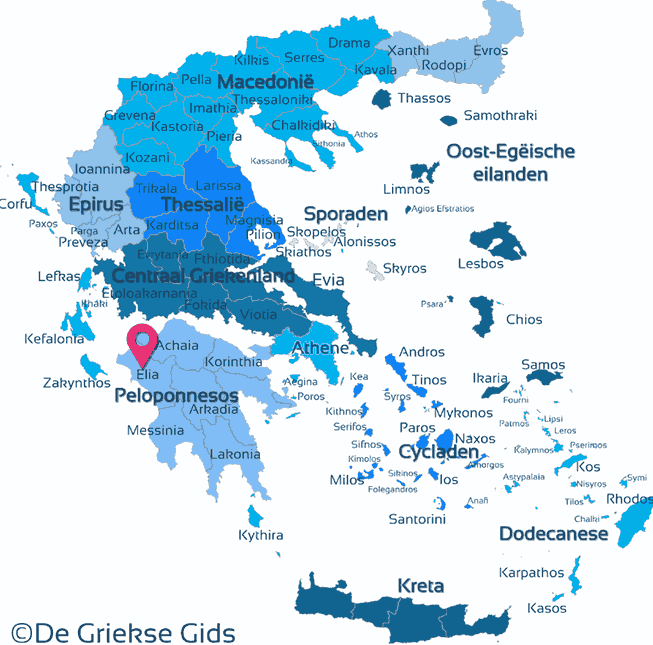
ELEIA. According to Pausanias, Aethlios
was the first king of the raglan; he was succeeded by his
son Endymion and grandson
Epeios. The later gave his name to the inhabitants, who
ware called
Epeians. When Epeios' nephew Eleios inherited the throne,
the name of the district was changed to Eleia and the inhabitants
Eleians, and that is what they have been called ever since.
Pirgos is the capital of the prefecture of Eleia. The town
owes its name to the presence of a tall tower (pirgos)
erected by loannis Tsernotas (1512-20). It was known by this
name
as early as 1687. Its chief landmarks are the two exquisite
neoclassical buildings designed by Schiller, the Municipal
Market and the Apollo Municipal Theatre. In the evenings
the residents of this little town congregate in the flagstone
paved main square lined by cafes and pastry shops. In the
narrow alleyways, small taverns and grills serve up local
delicacies, savoury titbits from Eleia's fertile soil.
Ancient Olympia
|

Olympia, Peleponnesos.
Photo: Alex Köning |

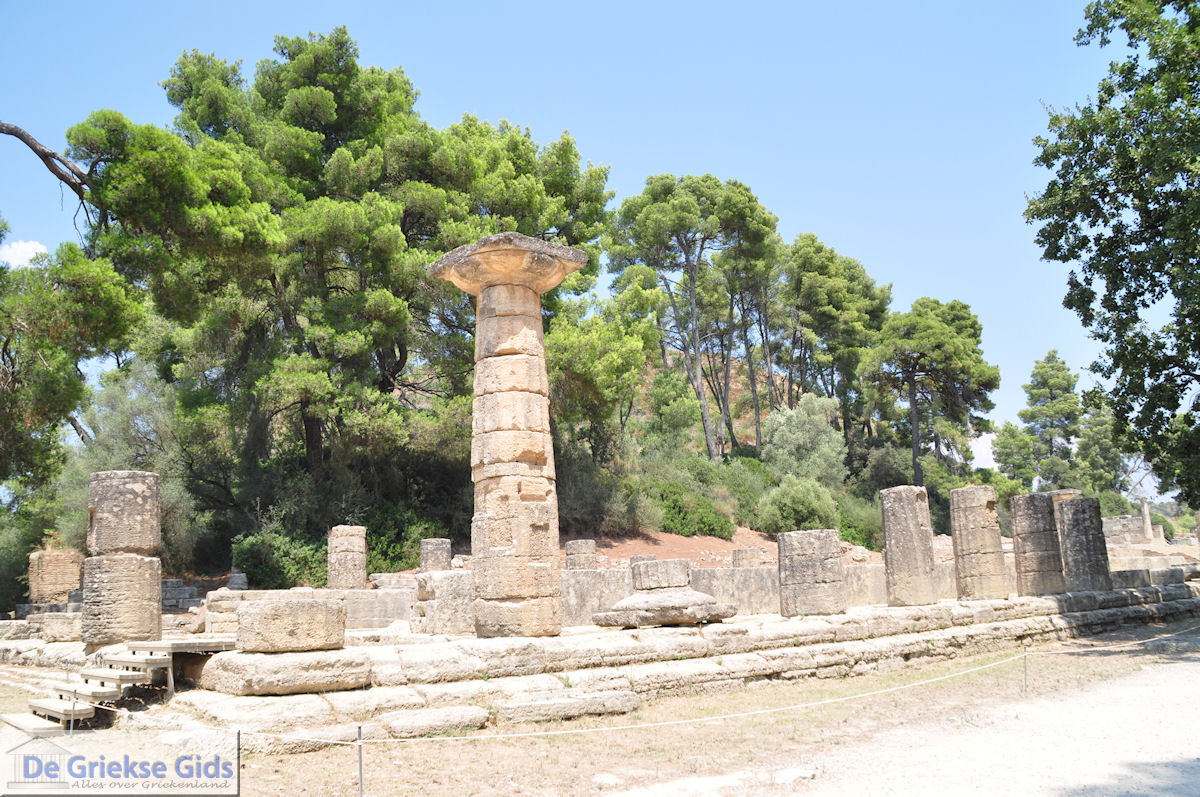
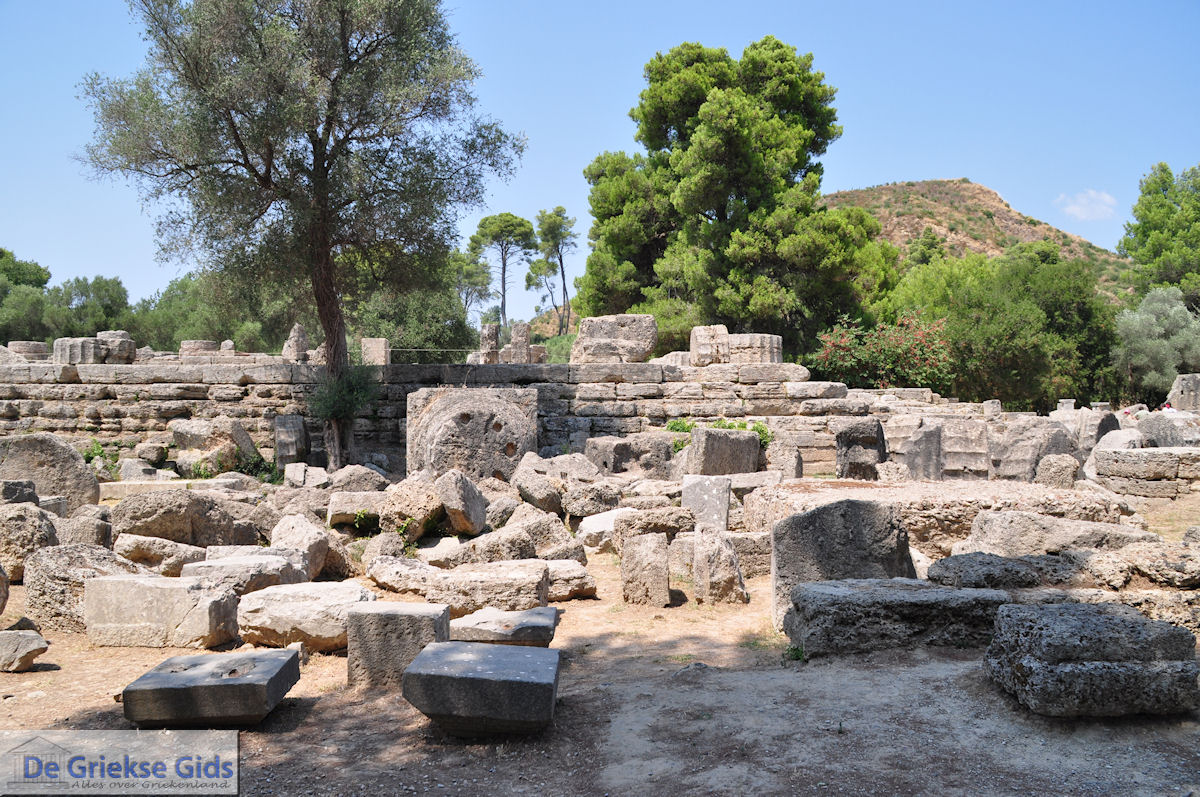
Olympia. Zuil of the de temple van Zeus.
Photo: Wim
Blommaert |

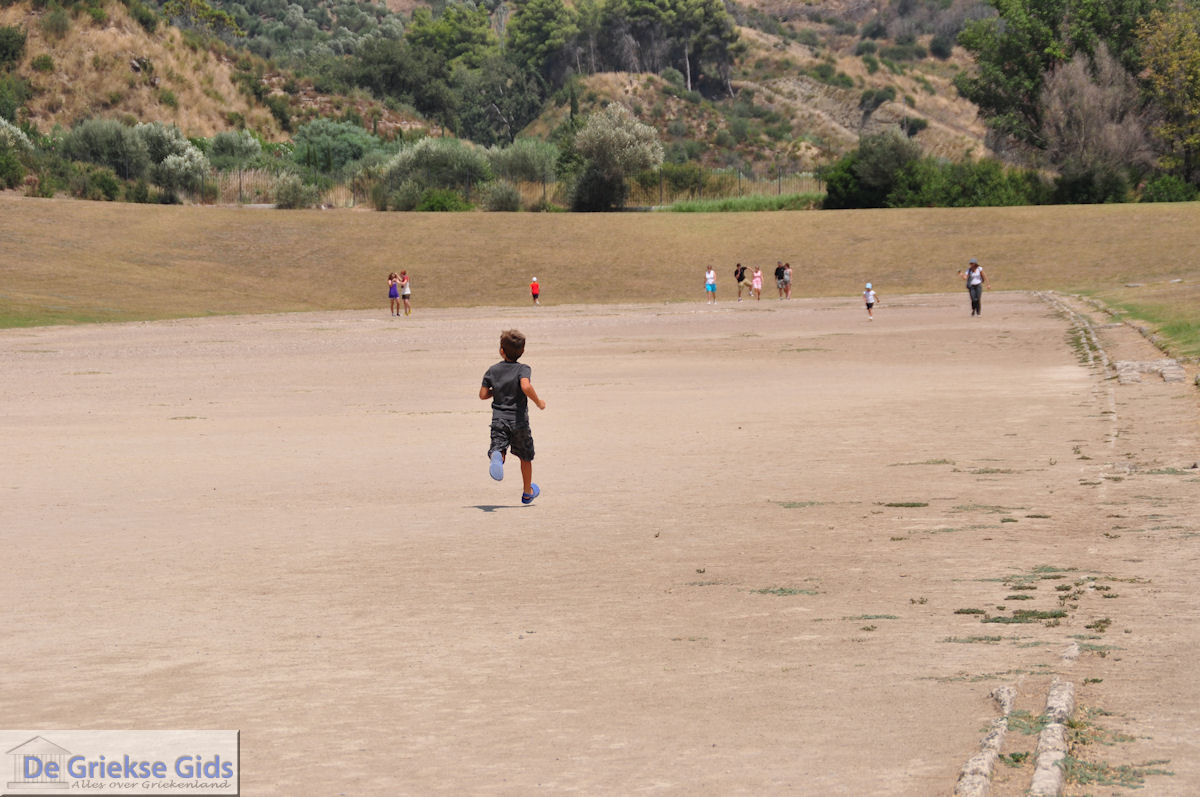
Olympia. Wrestle-arena.
Photo: Wim
Blommaert
Ancient Olympia lies 10 km. east from Pirgos, in a valley between
wooded Mt. Kronos, Alfios river and its tributary, the Kladeos.
A brief history of the Games
According to legend, this area was inhabited by the Pisans.
Their King was Oinomaus, whose daughter Hippodameia had
married Pelaps. There are indications that already by 1000
BC, games
ware being held in honour of the couple. Though exclusively
local at the beginning, the games gradually attracted the
interest of the other towns in the vicinity. In 776 BC,
the leader of
the Eleians, Iphitos, rededicated the games to Zeus. This
date marks the first Olympiad; afterwards every four years
Pan-Hellenic
contests ware held attracting athletes from all the Greek
city-states. During the Games, the Olympic Truce was in
force and all hostilities
ware suspended. The victor's prize was a crown made from
a wild olive branch, which was always cut from the same
tree, the Kallistefano. "TinelIa kallinike" -
Well done, glorious victor - shouted the crowd in praise
of the winner.
Back in his birthplace, people would knock down the city
walls. The Olympic Games, which included the foot-race,
wrestling, the Pankration, the Pentathlon, chariot racing
and horse
racing,
as well as artistic and literary competitions, came to
an end in 393 AD, with the propitiatory edict of Theodosios
I. Fifteen
centuries later, in 1896, they ware revived where they
had
been born, in Greece, by the French historian and educator
Pierre de Coubertin. Since then every four years a torch
bearer, like the ancient heralds, starts out from Olympia
bearing the
sacred flame to the place where the Games are held. To
oversee the organization of the Games, an International
Olympic Academy
was founded with headquarters since 1961 in Olympia.
The
archaeological site
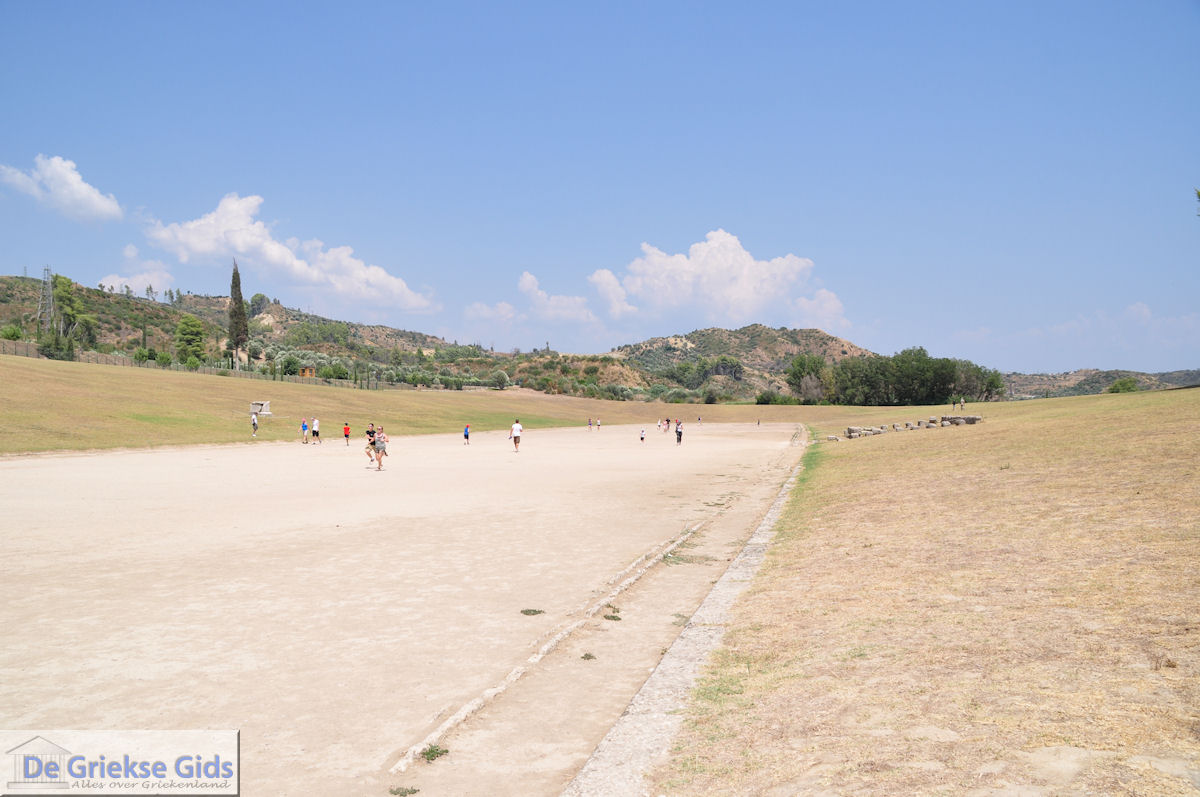
The first building on the left is the Prytaneion, where
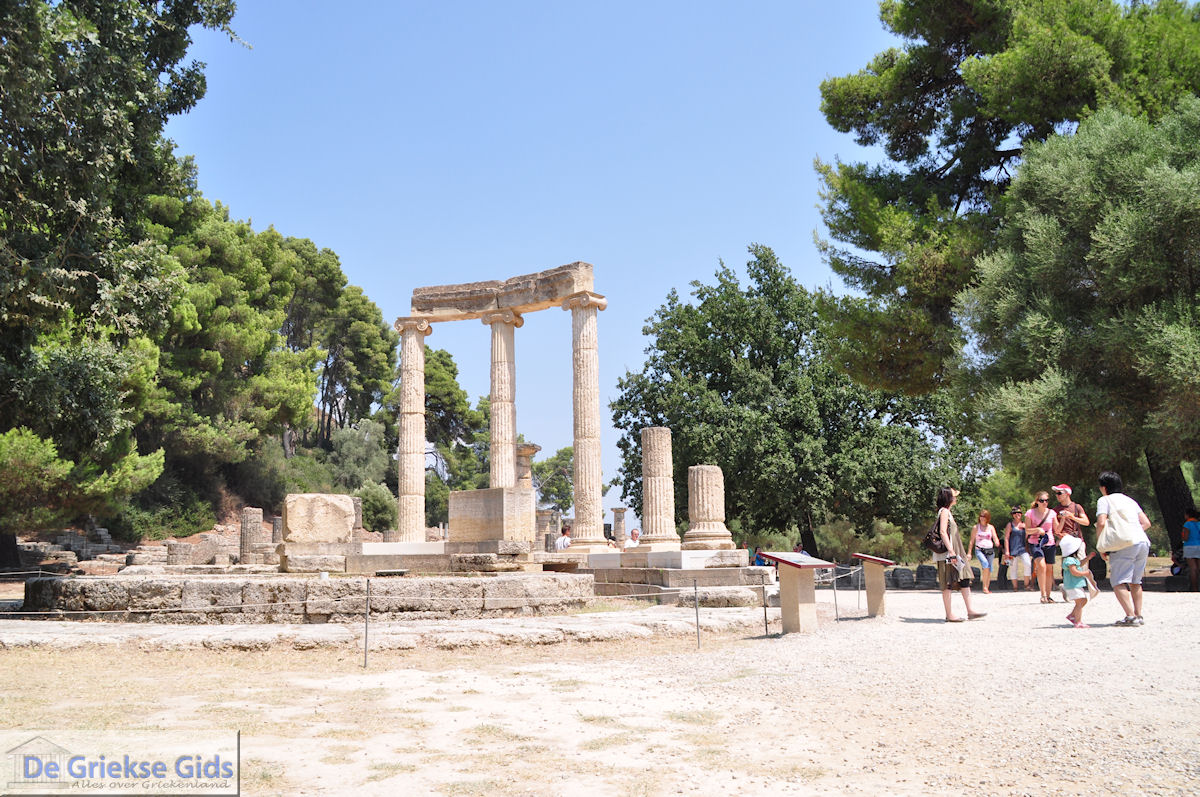
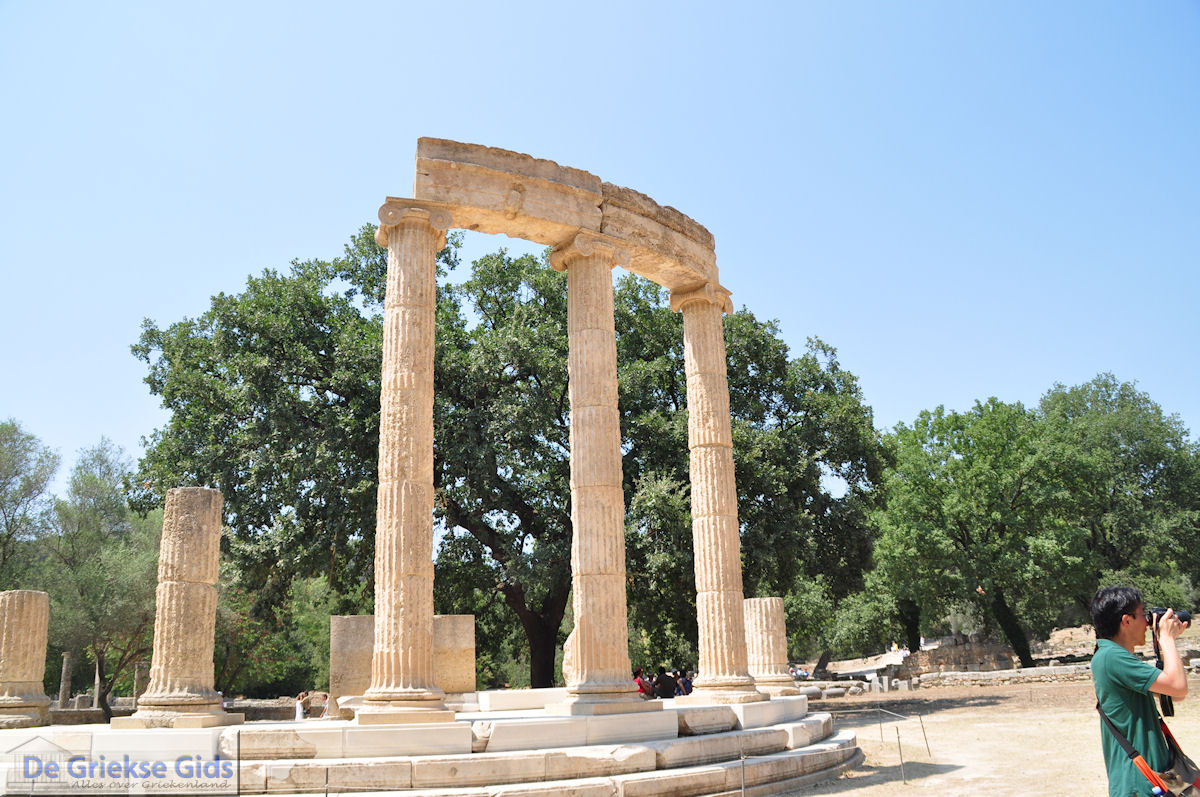
ceremonies honouring the winners took place. Further south, Philippeion and next to it the Heraion,
a Doric temple dedicated to Hera. Special running races,
the Heraia,
ware held in her honour in which only virgins from Eleia
could participate. Southwest of the Heraion lies the
Pelopion, an
altar dedicated to Pelops, for whom the Peloponnese is
named. Nearby is the Doric Temple of Zeus (472 BC); here
stood the
famous gold and ivory statue of the god, a work of Pheidias.
Outside the sacred grove of the Altis are ruins of other
buildings: the Bouleuterion or Council House, where the
athletes took
the Olympic Qath; the Leonidaion, used as a hostel for
official visitors; the Palaistra (wrestling school), the
Gymnasion
and the Baths. The Treasuries, placed at the foot of
Mt. Kronos,
ware small edifices raised by each city to house sacrificial
vessels. Next to them stands the Nymphaion, a semicircular'
marble tank that held Olympia's water supply. Just beyond
the Treasuries lie the Stadium and the Stoa Poikile or
Echo Colonnade,
and near it Nero's house. Set in the shade stands the monument
where is buried the heart of Baron de Coubertin, the man
who revived the Olympic Games.The Archaeological Museum
Olympia's new museum lies in a shady grove opposite the site.
Here are displayed findings from the area, among them the
stone head of Hera. Praxiteles' marble statue of Hermes
(330 BC), the Victory by Paionios (421 BC), Miltiades' helmet
the terra cotta group of Zeus carrying Ganymede, and the
sculptures from the pediments and metopes of the Temple
of
Zeus, among the most important works of Classical art.
There are also pottery, terra cotta and bronze figurines,
votive
offerings from the sanctuary, etc.Museum of the Olympic
Games
Very near the ancient site lies the modern village of Olympia.
Here one of its prettiest buildings houses the Museum
of the Olympic Games, the only one of this in the world.
It
contains mementos connected with the history of the Games
and a unique series of postage stamps, designed by Papastephanos-Provatakis
commemorating the Games.The land, scenery and people Eleia is cris-crossed by roads. Each one leads to somewhere
interesting: an ancient temple, a Byzantine monastery,
a Frankish castle, a splendid mountain or an endless beach.
The
hills of Eleia
1st route.
From Olympia the road leads to the district of Lala and
the mountains of Folois. The village of Lala is built
at an altitude
of 600 meters, in a lush area filled with cherry and walnut
trees. The village boundaries mark the start of the enormous
oak forest of Folois, redolent with legends and traditions.
Folois was the kingdom of the benevolent centaur, Folos,
who gave shelter to Herakles. At 800 meters, the settlement
of
lambia (Oivri) stands out, drenched in greenery. It consists
of seven neighbourhoods, each with its own name, church
and fountain. A bit further on lies the village of Tripotama.
Eleia has many delightful mountain villages. Dotting tree-filled
slopes or tucked away in the heart of a forest, they seem
like
hamlets out of a fairy tale.
2nd route.
On the way to Andritsena and Bassae (Vasses), the first
stop is Krestena, a market town spread out in a pine-wooded
area.
On the top of the hill are the ruins of the Temple of
Athena Skillountia.
The road is in a good condition and as one drives along,
whiffs of wild herbs float in the window. Andritsena
is next, its
houses jutting out from the tree covered mountainside.
Their walls are stone, their roofs tiled. A vast plane
tree casts
its shade over the main square. As one walks through the
cobbled streets he can see latticed windows all around,
enclosed wood
en balconies and terraces lined with flowerpots. Romantic
and calm, like a medieval lady. Andritsena's celebrated
library
containing rare editions from 1500 and later is housed
in an old school building. The folk museum is well worth
a
visit;
churches date from the 12th and 19th century. At a small
distance of the town lies the ruined 13th century monastery
of Isova.
The road continues up the mountain to Bassae. Greenery
gradually gives way to rock, massive peaks and a few
scrawny shrubs.
Amidst this tangled wilderness the temple of Apollo Epikaurios,
is a surprising sight'. Designed by Iktinos, architect
of the Parthenon, it was built in 420 BC, on the foundations
of an
older temple, by residents of the neighbouring settlement
of Figalia. It was dedicated to Apollo, in thanks for
the
god's
relieving them from an epidemic. This is the best preserved
temple in Greece, second only to the Temple of Hephaistos
(the Theseion) in Athens. From here, a dirt road leads
to Figalia,
a tiny mountain village, surrounded by olive and orange
trees, and boasting the ruins of a temple left over from
the ancient
Arcadian city of the same name. Next comes Lepreo. The
ruins of the Classical temple of Demeter Leprea stand
above the
village on a hilI. Way below Neda river flows, with its
waterfalls
or "white waters" as the locals call them. In
a short while there is a valley, on a fine road leading
to
Zaharo.
Eleia's mountains are a unique experience, a sparkling
spring to quench your thirst for nature and antiquity.
Men and women
with faces hewn by the north winds offer hospitality, friendship
and good cheer. Here hospitality is not just a feeling.
It's a virtue, a tradition as old as time.
Eleias' valleys
Soil is fertile here, land is blessed, fields are endless.
Every corner is cultivated with vines, olive graves,
corn, wheat, vegetables. Every place well tended, nothing
wild.
It's nice to fall asleep next to a threshing floor or
on a sandy beach. Zaharo is a market town covered with
pine
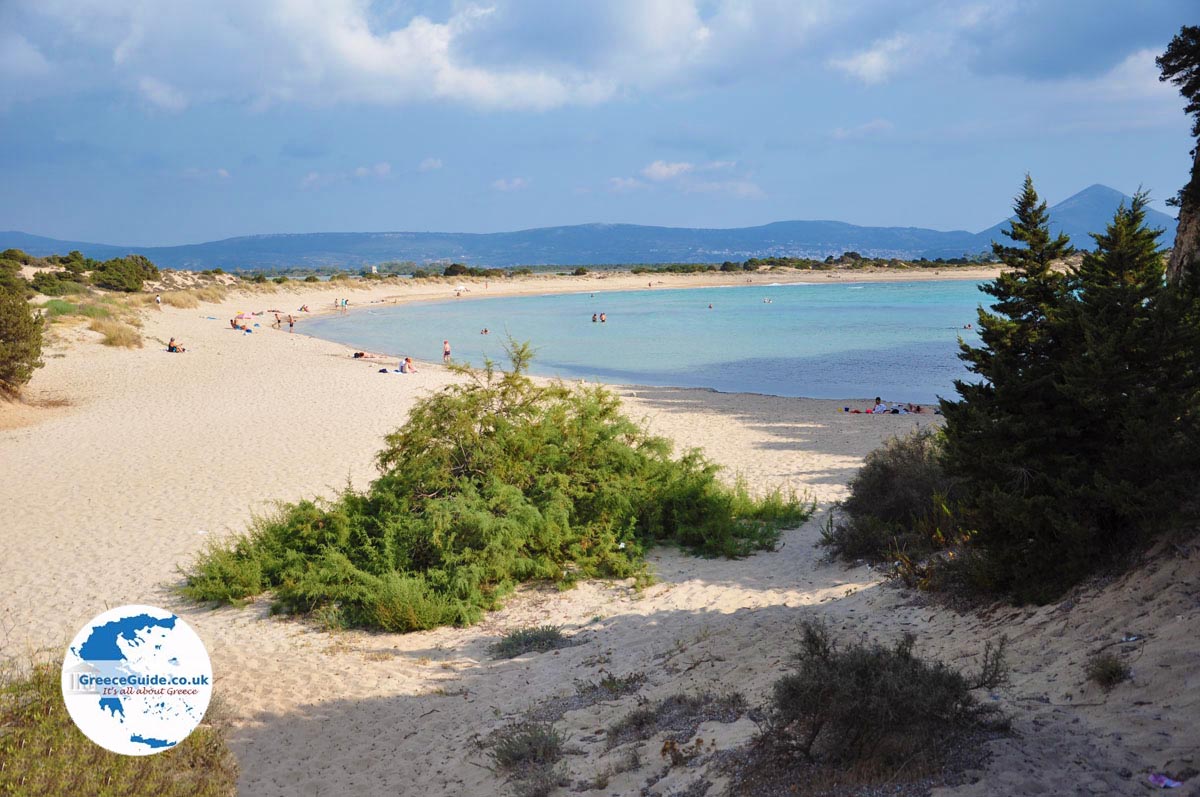
and olive trees bordered by an enormous stretch of beach
with white sand and sparkling water. Heading north the
road leads to Kaiafas, a well known spa, and the islet
of Agia
Ekaterini, in the middle of a small harbour. On the eastern
shore, the famous mineral waters gush from two caves
formed by crevices in the rocks. The larger one is called
the cave
of the Anigrides, the smaller the Geranion grotto, dwelling
places of nymphs since antiquity. The place is strangely
beautiful, delightful, though the odour of the springs
does detract somewhat. Legend maintains that the centaur
Nessus
washed his wound here after being struck by Herakles'
poison arrow, and that is why the water smells. Kaiafas
is not just
the sulphurous springs, however; It has also pine trees,
sand and sea and a long, long shore. It's hard indeed
to draw yourself away such a sea. Continuing our tour,
we pass
the Alfeios and its renowned dam, and then arrive at
medieval Katakolo, in the district of ancient Pheia (Fia).
In the bay of Agios Andreas, atop a hill, are the remains
of a fortress called Pontikokastro (mouse caste), built
by the
Villehardouins. The road continues towards the village
of Skafidia and the monastery with the same name. A Venetian
tower, dating
from 1686, stands inside the monastery garden. A stop to
eat fresh fish at one of the trim, newly painted taverns
in the
vicinity, watching the sea for hours, is necessary. Chairs
and tables shaded by trees or grape arbours await visitors.
Amaliada is the name of a new town, built in the middle
of
an emerald green field planted with olives and grapevines.
The monastery of Frankavilla, erected during the Frankish
occupation, lies 2 km. away. Another monastery with echoes
of the Franks
is Agios Nikolaos of the Frankopidima. It look its name
from the perilous leap (pidima) made by a desperate knight
to
escape his pursuers. North of Amaliada the road branching
to the right
takes you to the ruins of Ancient Elis. Elis was where
the athletes used to train before taking part in the
Olympic
Games. Excavations have brought to light a theatre, traces
of the
Gymnasion and two shrines to Aphodite. Go further we come
to the Pinios dam, one of the largest earth dams in Europe.
On
the way back to the main road, there is Gastouni. The signpost
indicates Andravida to the north and Killini to the west.
Andravida, headquarters of the Principality of the Morea
during the Frankish occupation, was the most glamorous
and the richest
city in the area. Here noblemen from all over Europe used
to come to try their luck at jousting tournaments. As tor
Killini,
it was one of the Principality of Achaia's major ports.
The city was surrounded by a massive fortification wall
with
bastions and turrets. Near the harbour the Byzantine convent
of Our
Lady of Vlacherna (12'h c.) with its magnificent frescoes.
Killini is connected with Zakinthos with a ferryboat. Six
kilometres further north is where the Franks had their
castle, the fortress
of Hlemoutsi (Clairmont), the most beautiful and best preserved
of all the castles in the Peloponnese. It was built by
Geoffrey I Villehardouin in 1120. A few kilometres beyond
Hlemoutsi,
are the hot springs of Kilini, a well known spa, with hotels,
organized camping grounds and mineral waters. The waters
bubble out at a temperature of 25.5° C degrees centigrade
and are
recommended for asthma, rheumatic and skin diseases. The
buildings are spread out among pine and eucalyptus trees.
A truly tranquil
and pleasant spot, where the sun's iridescent rays shine
benignly and where the cicadas buzz non-stop. This place
is paradise
for young and old, brimming with joy and health. Leaving
the spa and heading south, are Arkoudi, Glifa - with its
fine sand
- and Bouka, while towards the north lie Lehena and Manolada,
known for their watermelons and cheeses. From Manolada
the road, cutting through a thick pine forest that extends
to
the water's edge, comes out at Kounoupeli, identified with
ancient
Yrmine, mentioned by Homer. A rock juts out of the sea
from which more mineral waters gush. Above on the promontory
there
are traces Mycenaean and Frankish remains. A little further,
there is a small taverna, where visitors can se at looking
the sea, for hours.
Source: Greek National Tourism Organisation