Laconia
LACONIA.
History.
With the settling of the Dorian's in the region (1100 BC). Sparta
became the centre of the new colonists. The laws and social structure
change. Up till the time of Alexander Sparta and Athens were the
most powerful city-states in Greece. In 146 BC, Sparta was subdued
by the Romans. During the Byzantine era, Laconia was a province
of the Peloponnese and suffered numerous attacks by barbarians.
In the 13th century, it fell to the Franks only to return in 1262
to the Byzantines who made their headquarters at Mistra. Two centuries
later (1460) the Turks marched against Laconia and finally conquered
the district in the mid 17th century. The region of Mani always
retained its autonomy and privilege up to a certain point. The
area was liberated in 1828.
Laconian Mani

Gerolimenas |
|

Gerolimenas
|
|
|

Mani |
|
|
|
|
|
|
A barren land. Rocks, stone walls and prickly pears. Hard stones,
naked hillsides. Bays and coves torn by the sea and the wind.
Harsh people like stones. Maniots are very proud beings. Every
so often at the edge of the sea a small hamlet sprouts up.
A series of mountain villages higher up. The towers of Mani
are well-known. Made of stone by fearless souls. One tower
is built after the other and so on. Absolute silence on the
way until Itillo can be remarked. Deserted beaches to walk
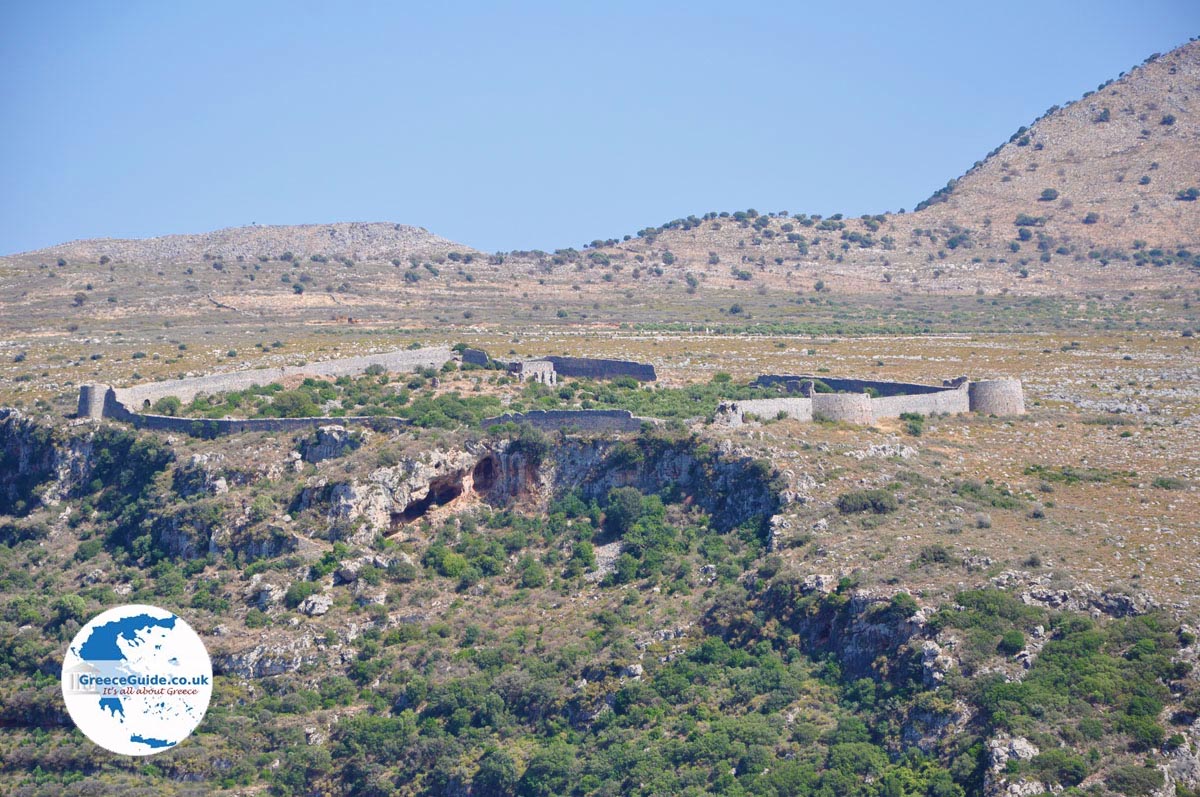
alone. Opposite stand the ruins of the fortress of Kelefa.
Further on, beneath a sleep cliff lies the little harbour of
Limeni. High above looms Taigetos, its peaks forbidding and
inaccessible. The haunt of the goddess Artemis. Areopolis.
A harsh and remote landscape filed with sharp rocks and white
stones. It takes its name from Ares (Mars), god of war. Honour
and bravery. The courage of the Maniots is legandary. Ancestral
glory. It echoes through the cobbled alleys of the city and
in the corridors of the Kapetanaki Tower. Pirgos Dirou. There
are towers everywhere. The most famous of all is the one belonging
to Sklavounakos family. Diros caves. Full of splendid colours.
Stalactites and stalagmites form figures in a light embrace.
Awe and wonder. Then comes the tiny bay Mezapos, dotted with
ruined towers. One looms above them alll from its perch on
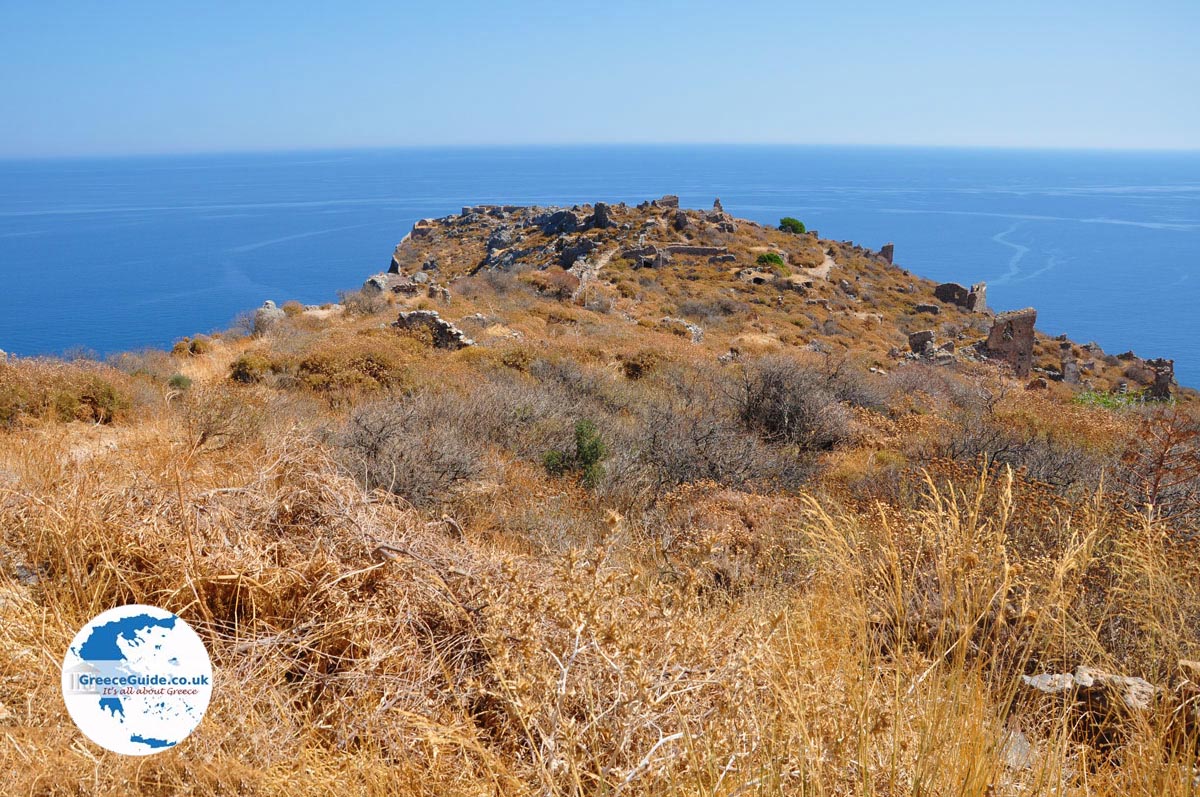
a high cliff, the ruined castle of Mani, called Maina, which
gave its name to the peninsula. Nothing here but stones, prickly
pears and a few gnarled olive trees. Gerolimenas. Some houses
and a pier filled with alques. A friendly small taverna calls
for rest and relaxation, for calm and tranquility. To the north
lie the towers of Kita and Nomia. To the south the village
of Alika among the prickly pears. Further on the sleep cape
of Kiparissos. There used to be a temple to Poseidon there.
The oracle and sanctuary of the Laconians and the temples of
Demeter and Aphrodite. Still further the little road to Marmari
and the cave of Hades. Where the descent to the Underworld
began. This is the cavern Orpheus braved in his search for
the lost Eurydice. Beyond lies Cape Tenaro or Matapas with
its huge lighthouse followed by Porto Kagio, a refuge for quail
and storks. (These places. can be toured by Car only with the
assistance of a map or else take the more usual route, a ride
around the peninsula by caique). The road drives you through
wheat fields and olive trees. Through knolls crested with towers.
Next the high hilltop of Vathia packed with gray towers. The
towers of treasured tradition. Most of them have been restored
and transformed into guesthouses by the GNTO. A refuge where
peace and quiet reign. In Mani the Cretan influence is pronounced.
Many Maniots wear baggy breeches and head bandanas like the
Cretans. With their decorated jackets and midriffs tightly
swathed by heavy belts, tall and thin with thick moustaches
and eyebrows, they seem like heroes out of a fairy tale when
you encounter them in the road or in a café. And they have
the same habits. They welcome you to their homes with a glass
of the same fiery raki, the same preserves and the same cup
of coffee. They differ only in their songs and dances. Here
the need for comfort from the pain of death gave birth to a
unique form of folk poetry, the Maniot moirologia or laments.
These are whole poems that are sung at the grave. They remind
the lament of Andromache for Hector or the dirge of Hecuba
for her lost children as well as of Byzantine threnodies. Kotronas.
A place with stone land and stone houses. A traditional village.
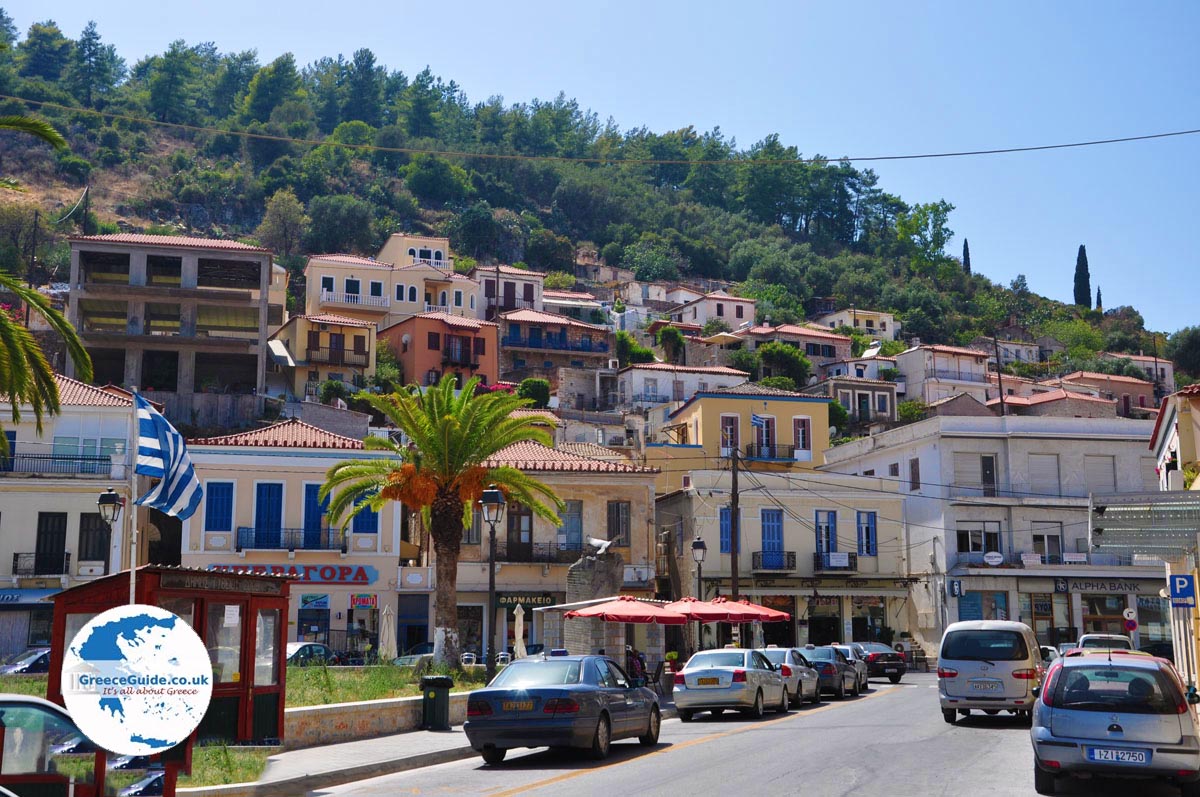
Ringed by a warm bay. Skoutari, Kalivia, Passavas, Githio (Sparta's
port). Boats are lied up along the pier. The broadest of beaches.
Houses, shops, taverns. Opposite it lies Marathonisi, no longer
an island. Tradition maintains that this is where Paris spent
the night with the lovely Helen. Tzanetakis tower stands in
the centre of the island. To the north, on a hill, lie the
ruins of the ancient acropolis. Githio has a small collection
of archaeological and Byzantine artefacts on view in the Town
Hall.
Central Laconia
Sparta (Sparti) is the capital of the prefecture. An ordinary
town, built in the middle of the Evrotas river valley, in the
same site where the ancient city stood. Some ruins remain,
those of the ancient acropolis, the sanctuary of Artemis Orthia
(6th c. BC), The tomb of Leonidas (5th c. BC) and the Menelaion.
The museum with findings from the area is housed in a neoclassical
building in the centre of town. The plain of Laconia spreads
out around Sparta, green and cool. A few kilometres distant
is the ascent for Taigetos. Snowy peaks and precipitous rocks.
Plateaus and ravines. Olive graves on the gentler slopes. Poplars,
willows and plane trees line the banks of the Evrotas. Gardens
of every shade of green. And the series of villages continues.
Some drenched in chestnut trees (Anavrito) or enormous plane
trees (Karies) or perched in precarious sports - real eagles'
nests (Georgitsi). Some boasting castles and Byzantine churches
(Geraki, Vresthena, Vrondamas) and others simply bucolic. The
succession of villages makes you wander about them and feel
like discovering all of them. To walk through this land you
must faal love and possess an adventurous spirit.
The Byzantine
state of Mistras

Mistras |
|

monastery Mistras
|
|

monastery Mistras
|
|

Byzantine church
|
|

Mistras |
|

Byzantine church
|
|

Mistras |
|

Pantanassa
monastery |
|

Mistras |
|

Byzantine church |
|

Byzantine
church
Mistras |
|

Byzantine church
Mistras |
|
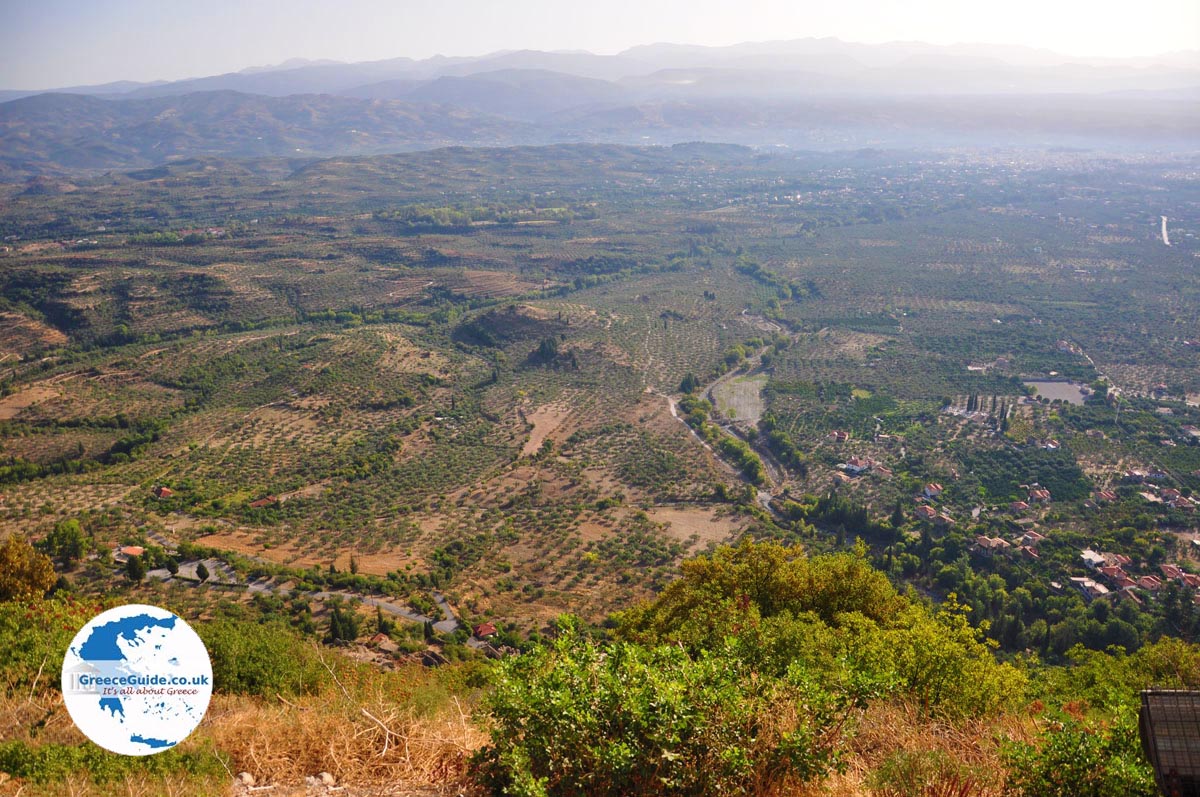
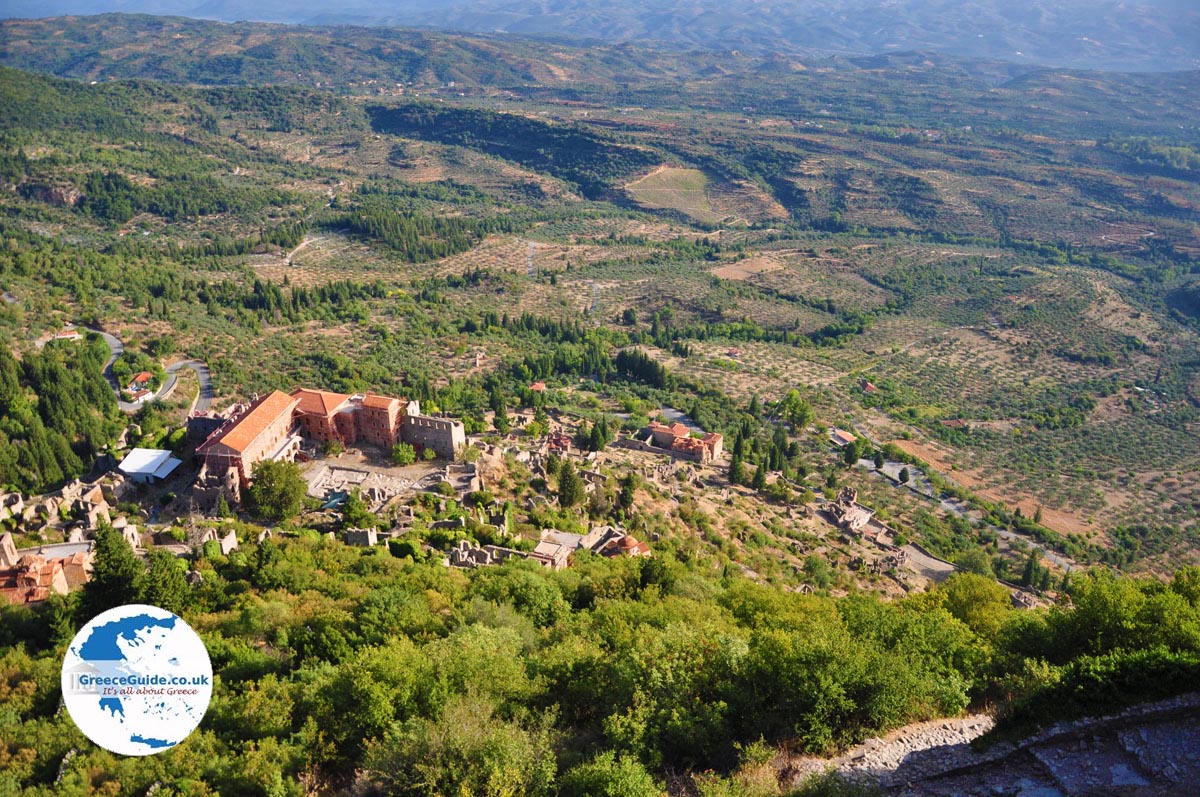
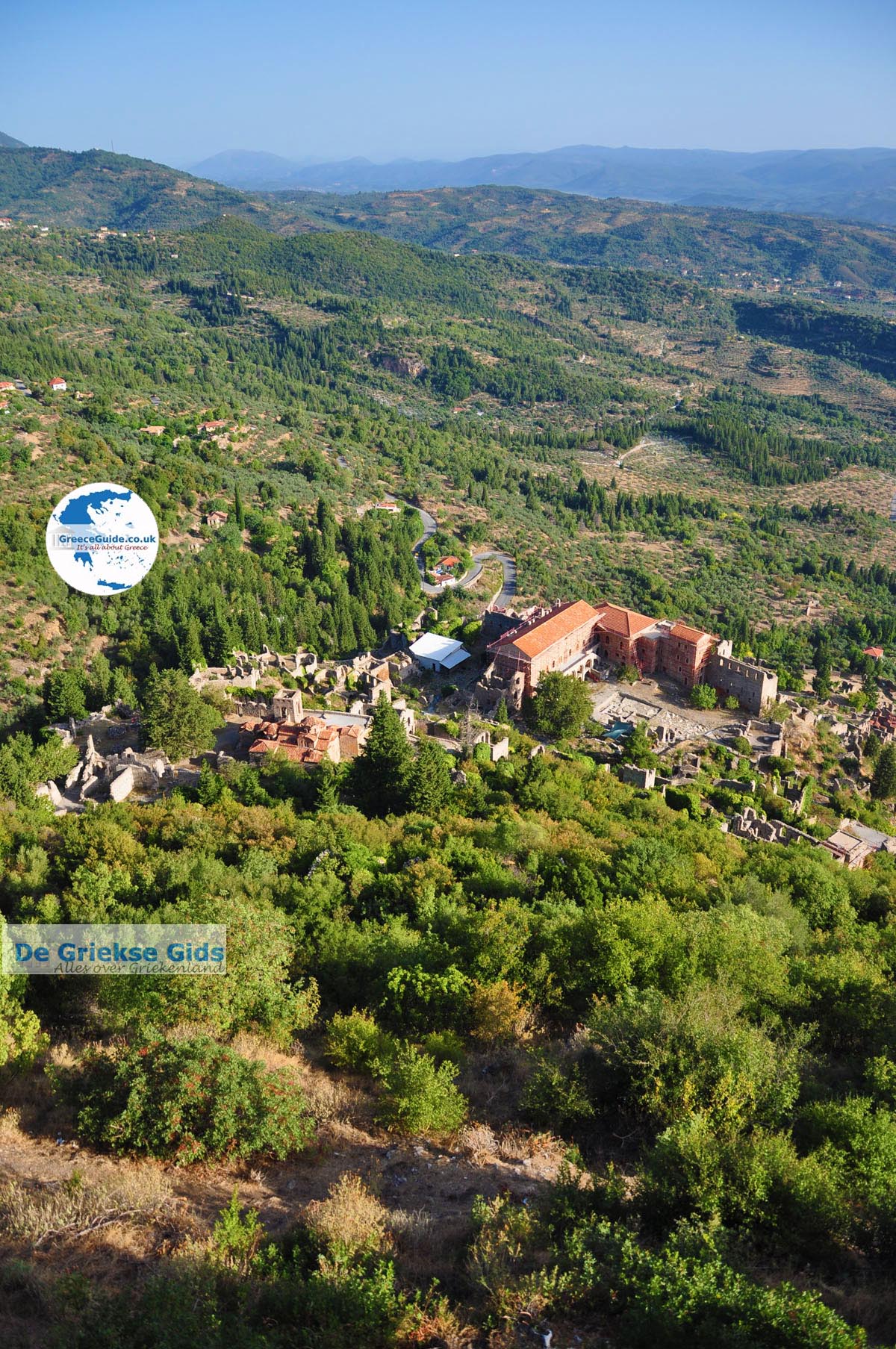
Approaching Mistras (5 km from Sparta) the visitor feels
as though he is making a pilgrimage to Byzantine Greece.
Walking
uphill,
the Castroporta (the castle gate) welcomes him for a walk
through the narrow lanes of this once invincible fortress.
The castle
of Mistras was built by the "Franks in 1249 in their attempt
to establish their supremacy over the Peloponnese. Their catastrophic
defeat at Pelagonia (1259) forced them to hand over Mistra
to the Greeks. The Frankish prince Guillaume de Villehardouin
erected the castle. He built bastions for his knights, houses,
dungeons, storerooms, court yards. From up there he ruled over
the whole Evrotas area. As time went by, houses ware built
on the hillside under the Frankish castle, and a town was born
whose fate was to become the centre of civilization and the
cradle of the last dynasty of the Byzantine emperors. The houses
built in a round are of two or three stores. With their imposing
vaulted roofs and arcades these mansions lead up to the Palace,
an architectural creation of the Palaiologues. The throne room,
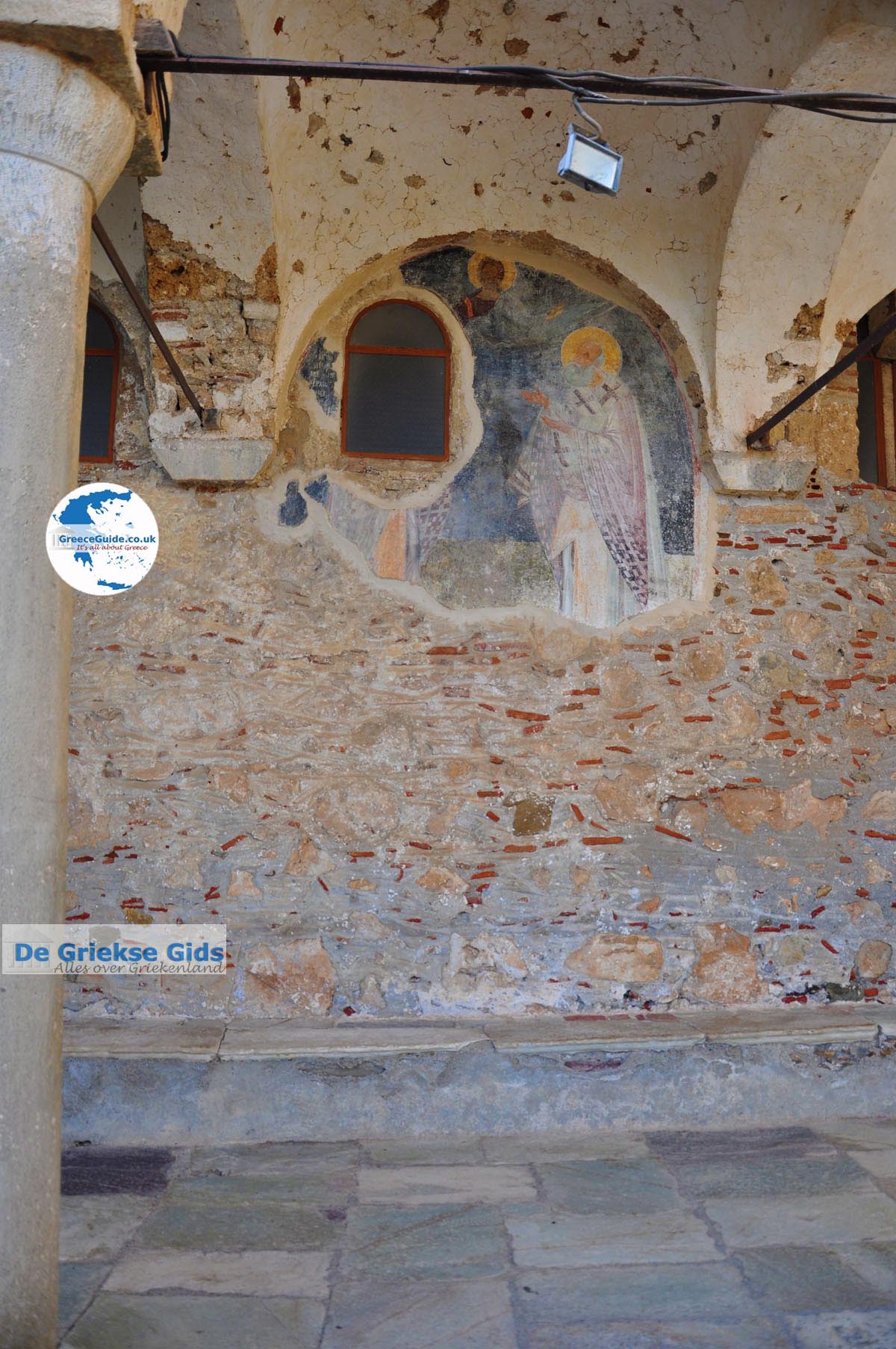
the chapel with vestiges of Byzantine frescoes, the rooms lighted
by large windows with ogival arches, are some of the features
of this building the construction of which look place in various
periods, according to the style prevailing in Constantinople.
During the two centuries that Mistras was the Byzantine capital
of the Peloponnese many churches and monasteries with domes
and chapels ware erected, representing all the painting trends
of the capital. The most important monument on the way up -
built before the others - is the Cathedral of Agios Dimitrios.
On the floor of the church is the two-headed eagle, symbol
of Palaiologos dynasty, carved into a plaque. According to
tradition, this is where Konstantinos stepped when he was crowned
King. Next to it stands the carved throne. In 1449, Konstantinos
Palaiologos was crowned emperor of Byzantium and he left Mistras
for Constantinople. In 1453 the Turks captured Constantinople,
and a few years later, in 1460, the same fate befell Mistras.
Mistras, that used to be the brilliant capital of the Despotate
of Morea, was reduced to an insignificant village. The frescoes
in the Cathedral show a shining sky which is painted by very
skilful hands. One part of the church houses the Museum. Towards
the northern corner of the yard stand the two most impressive
churches of Mistras', those of Agii Theodori and Panagia Odigitria,
known as the Afentiko. Its wall paintings hold you spellbound.
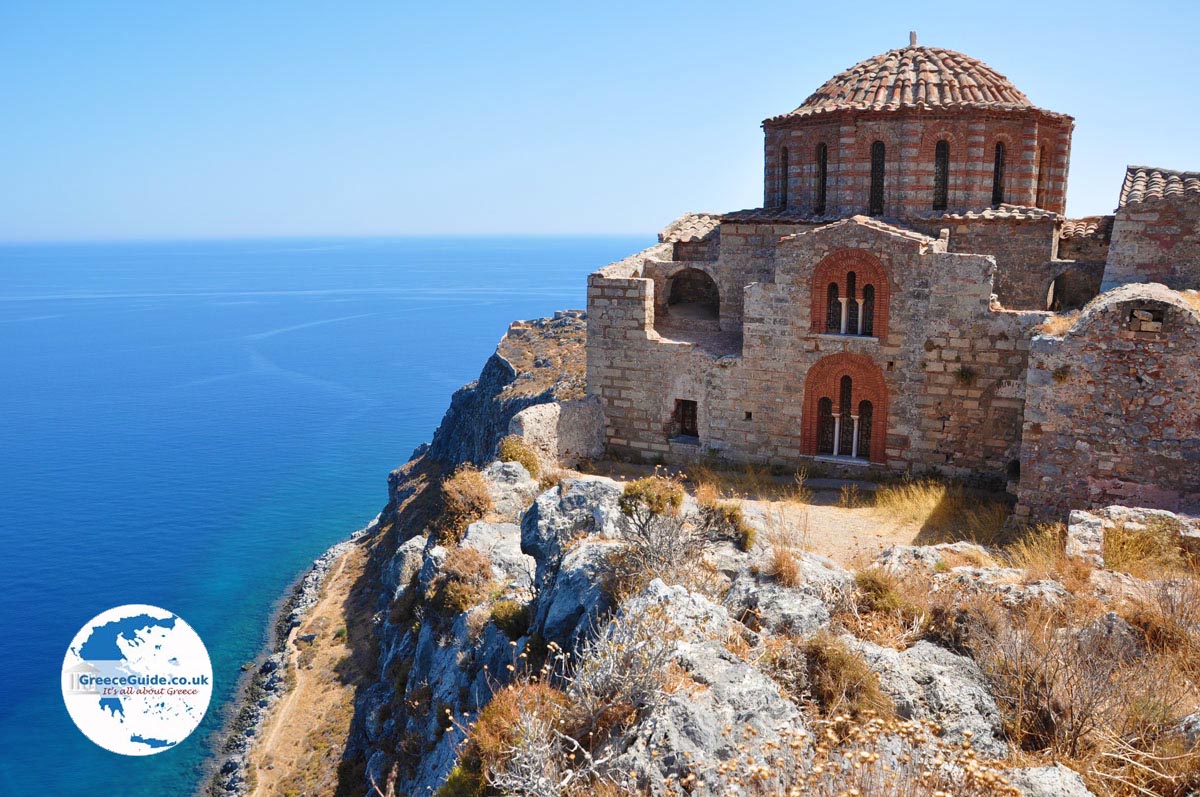
Near the Highest gate of the castle stands the church of Agia
Sofia, while on the slope to the east is Pantanassa monastery,
built by the lords of the 15th century. The church is impressive
due to its elegance and fine style. The frescoes are characterized
by the bright colours and the motion they exhale. Today Pantanassa
is a hospitable convent with clean cells looked after by gentle
nuns, the only living beings in Mistras. Strolling through
the narrow lanes of the old city, the road leads to Perivlepto,
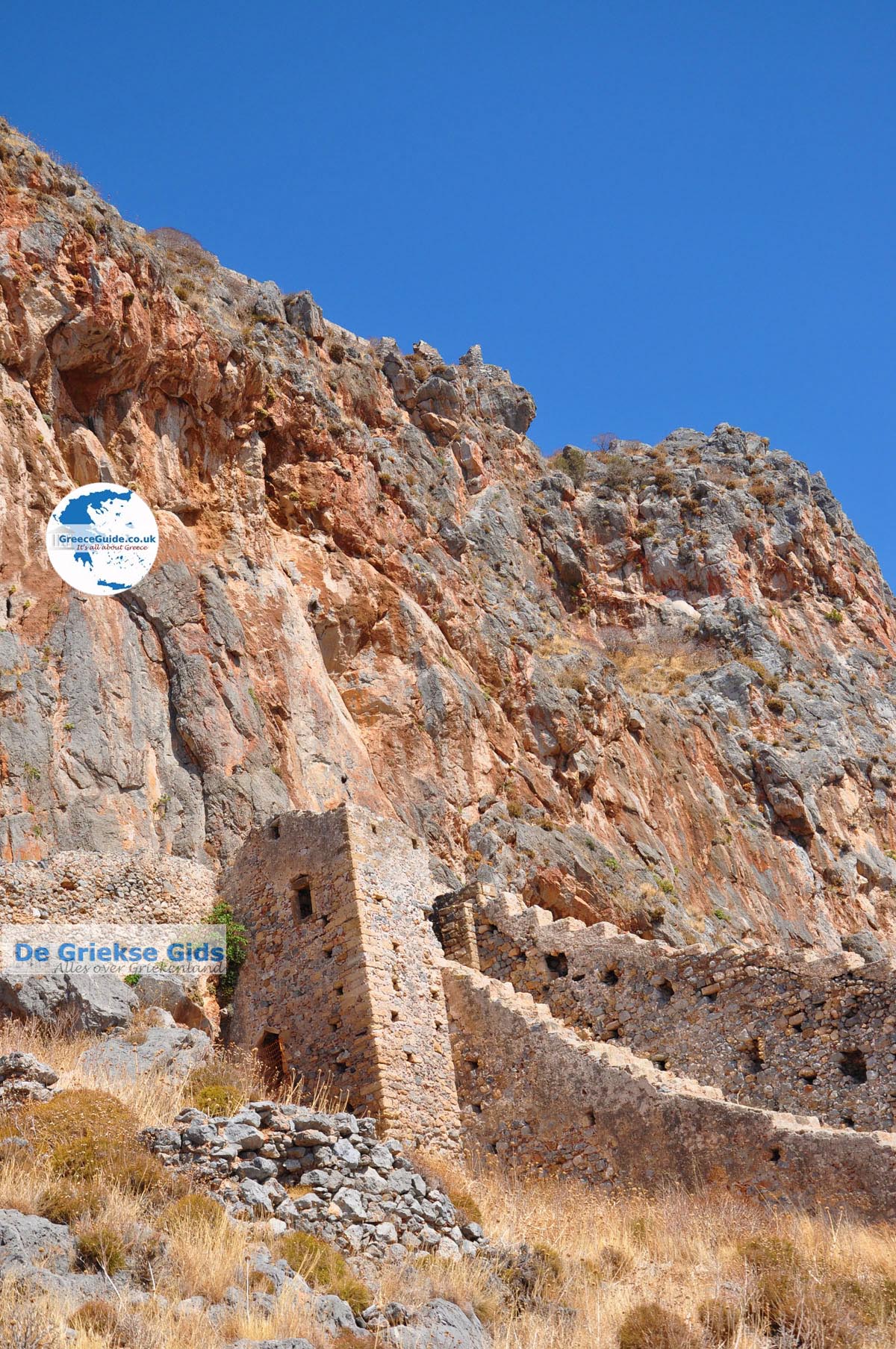
the monastery built under a rock with marvellous frescoes.
It is from here that the ascent to the castle begins. Winding
stairways, arcades, court yards. Everything in ruins: crumbling
facades, turrets with ravaged opening, damaged plaques, decayed
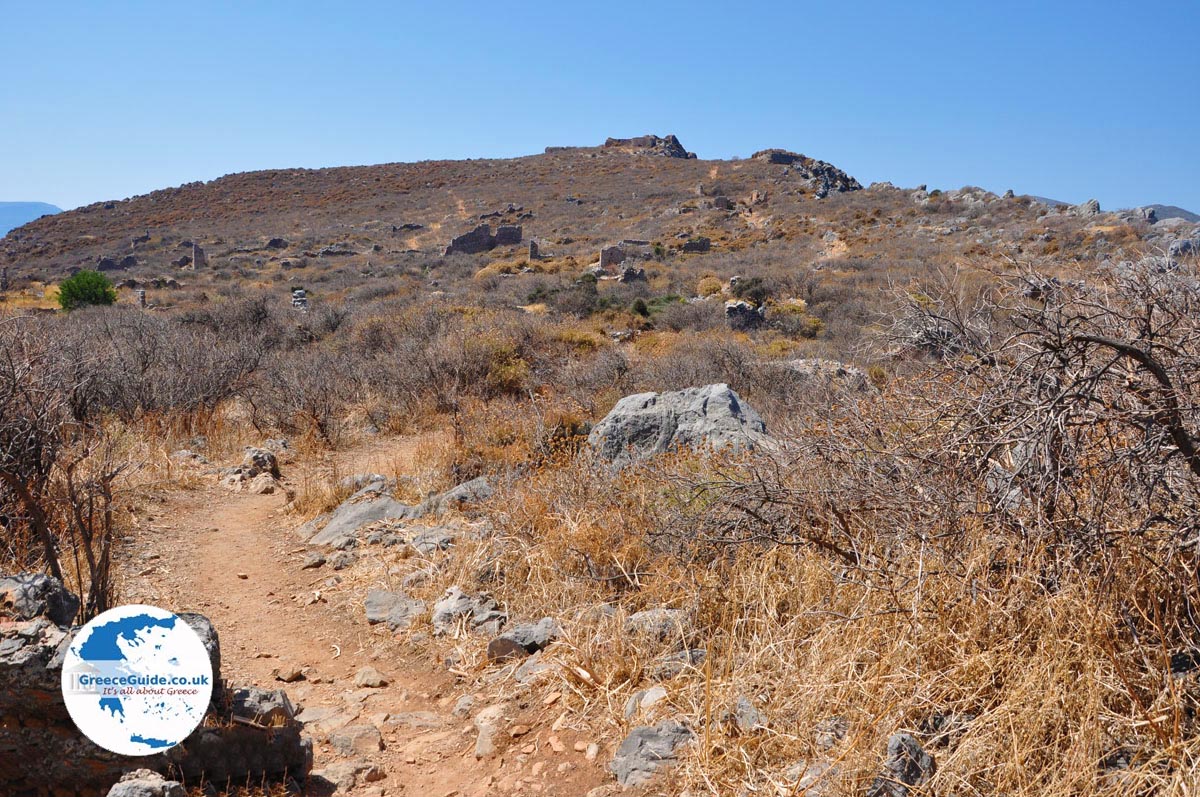
mansions. At some point the bare part of the mountain appears.
Below is expanded the endless valley. In the front a sleep
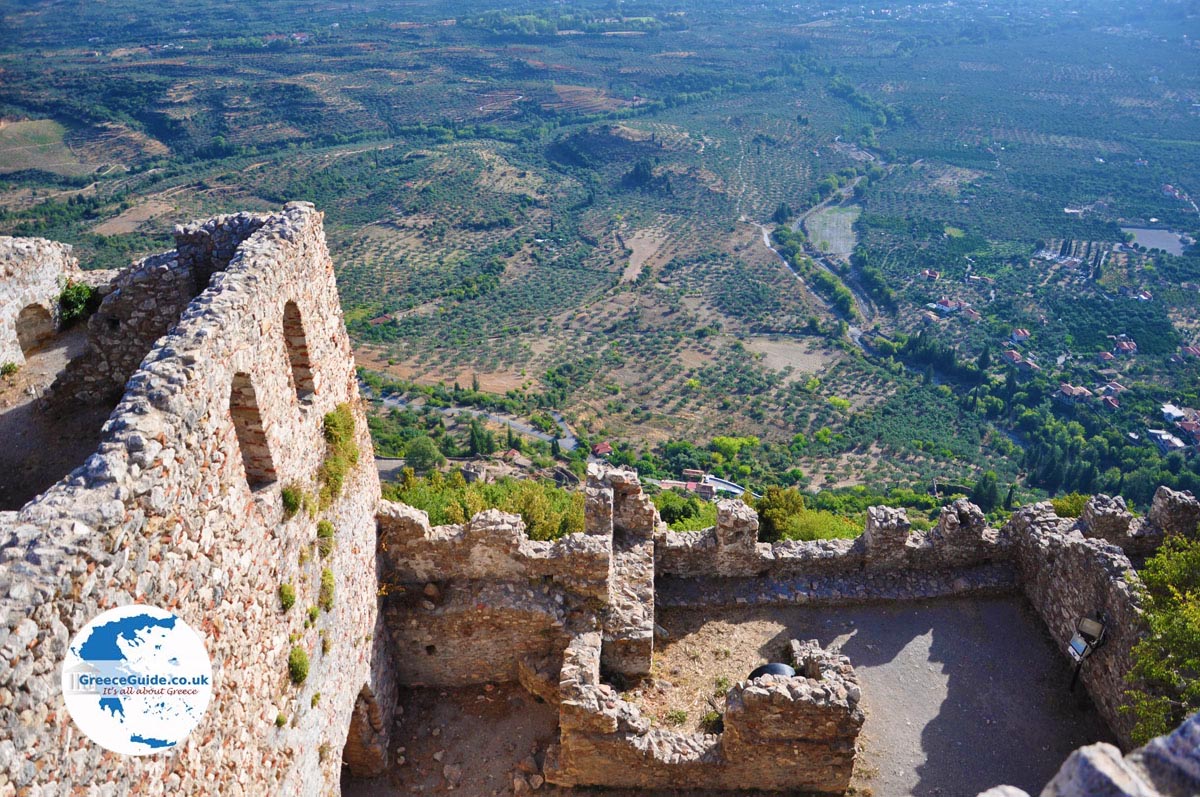
path leads to the top of the hill. In an impregnable position,
its ramparts and fortification impose themselves on the landscape.
The security this castle offered from foreign and local enemies
was the motive that made its bishops, lords, enlightened clerics,
founders of schools of philosophy, monks, artists, writers
and other men of intellect, like Pachoumius, Nikephoros Moschopoulos
and Gemistos Plethon transform this town, "protected by
God", into a cradle of the Renaissance.
South-eastern
Laconia
The farthest finger of the Peloponnese. The Laconic gulf
on the west, the Mirtoo sea on the east. Along both coasts
and
at
some distance from the sea there are scattered villages.
One beach after another and then one more even larger. Everything
baked by the sun and basted by the sea. On the southern coast
of the peninsula, looking onto the Mirtoo sea, stands the
former
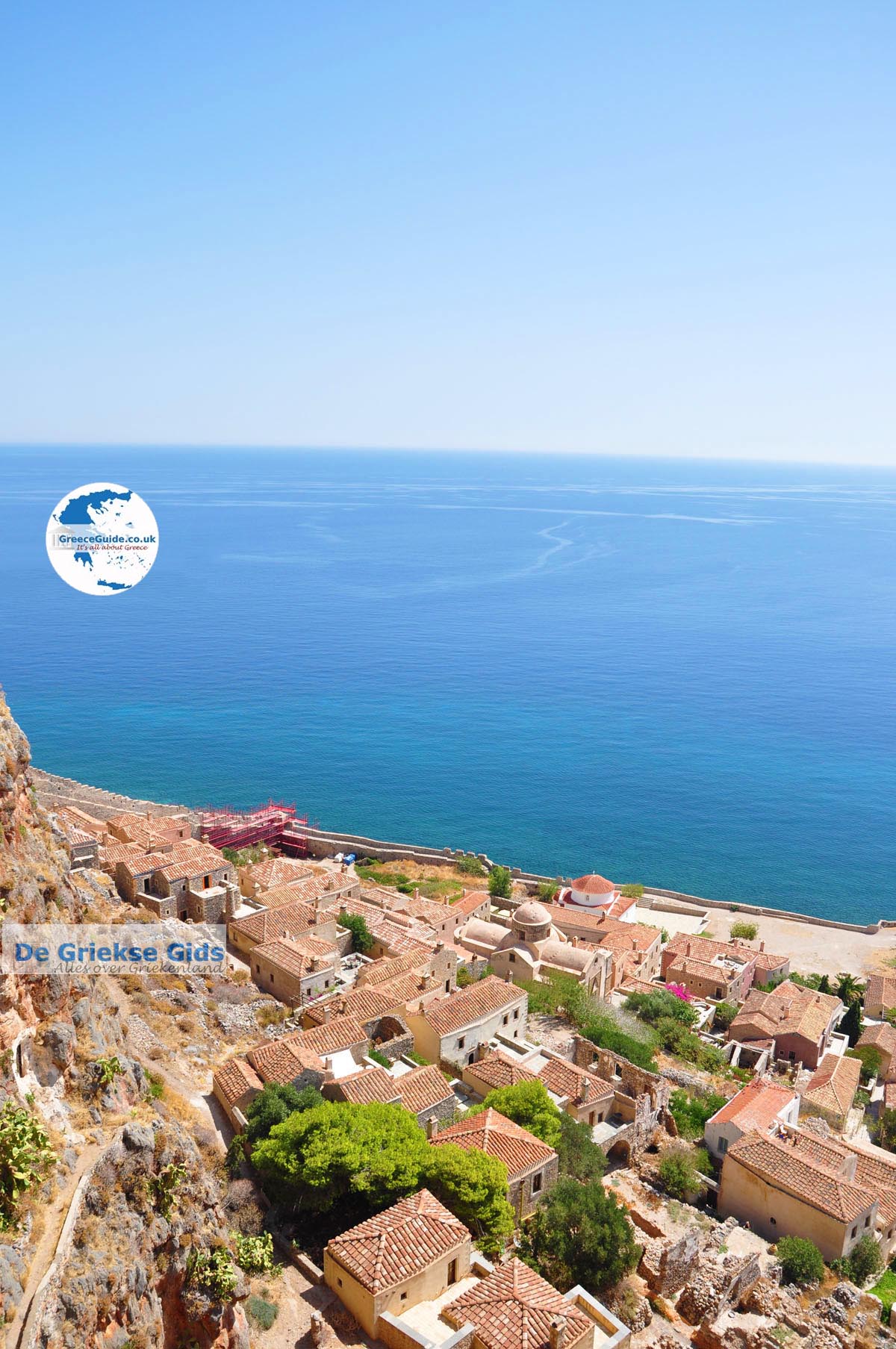
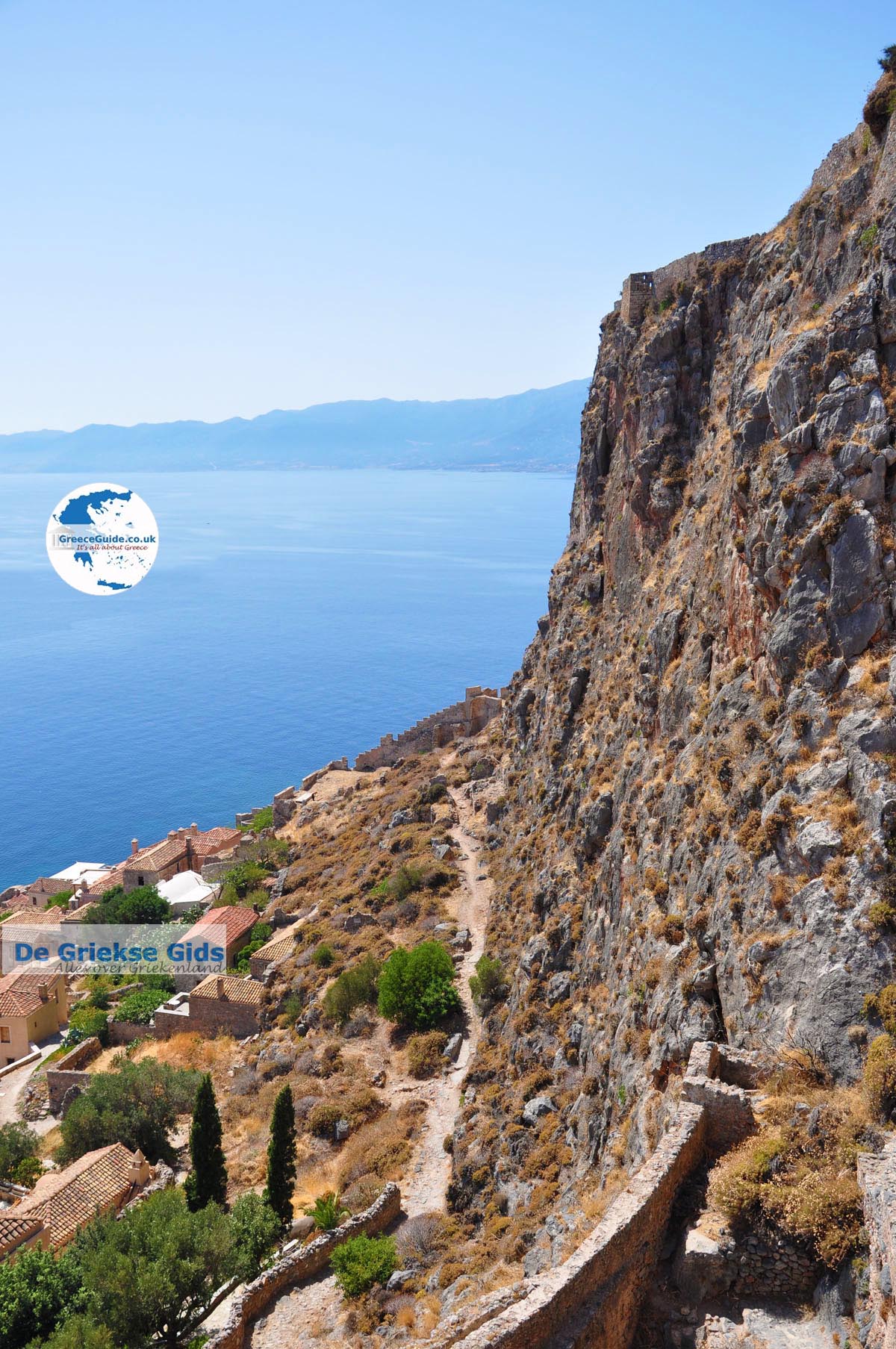
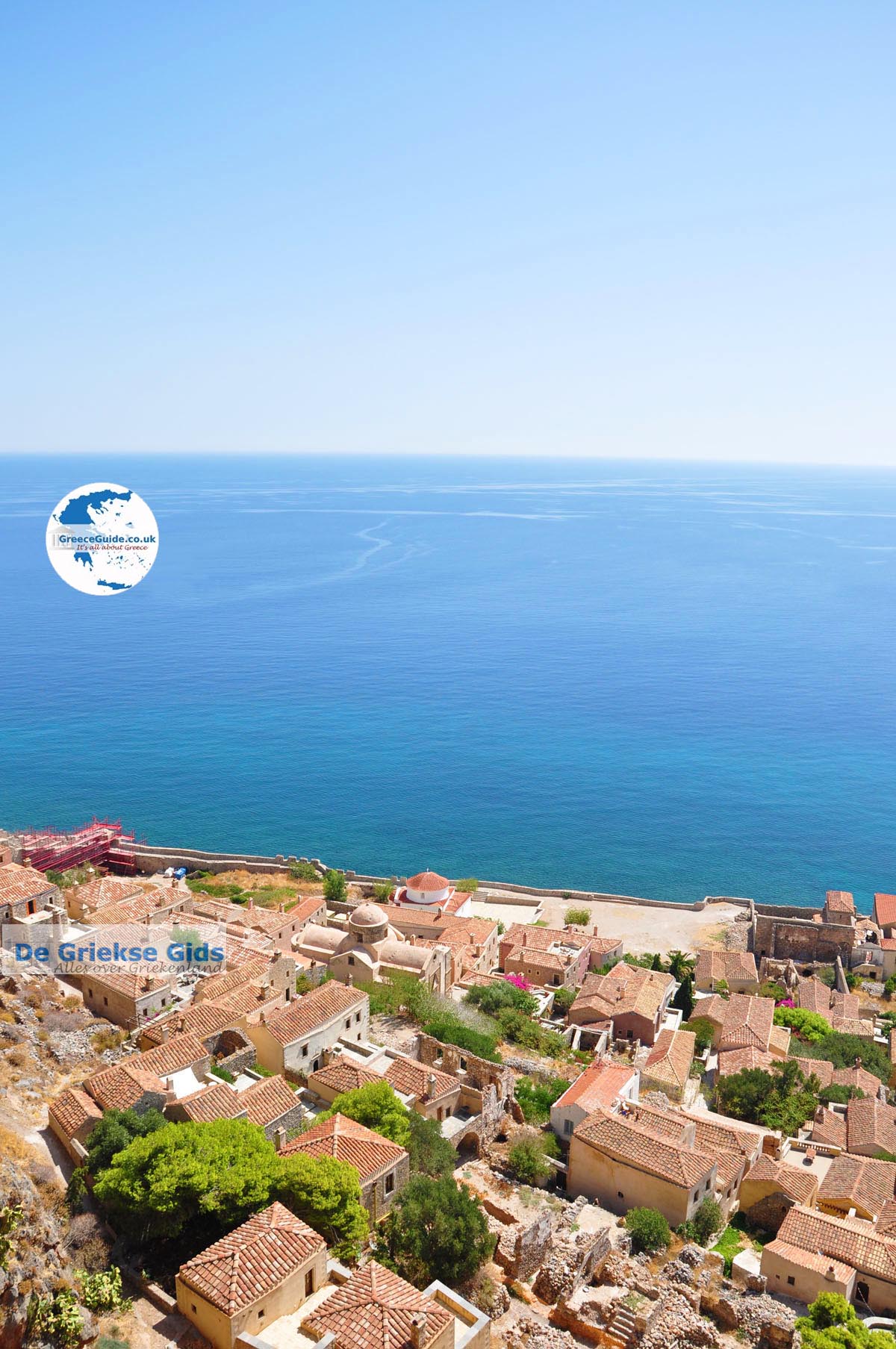
Byzantine-Venetian fortress-state of Monemvassia, on its
rocky promontory. From afar it looks as if it could be an
island.
In Greek Monemvassia means "one entrance": the
long causeway joining it to the mainland was and is the only
access
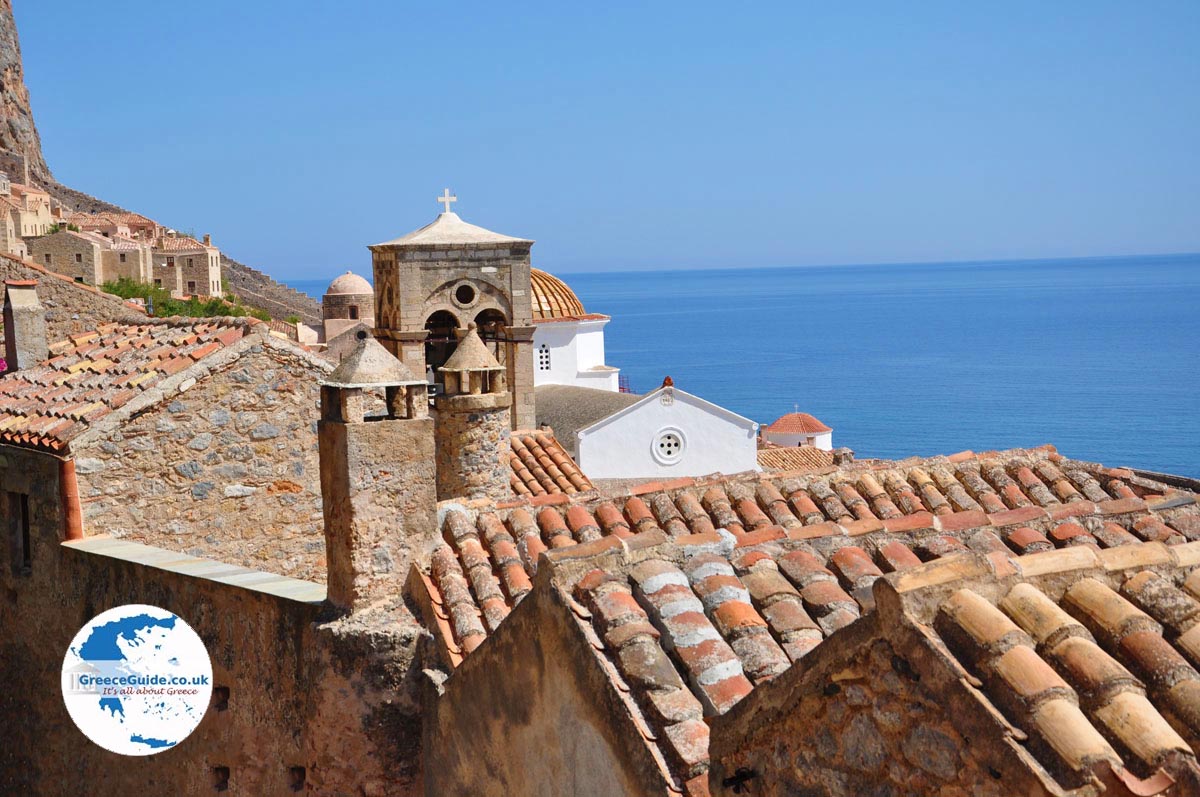
to the rock. Time stopped here in the Middle Ages. Castles
and ramparts, old mansions, little houses, narrow lanes paved
with stone slabs, churches with crumbling facades, old low
archways, semi-destroyed stairways. Every little detail calls
up memories of Byzantium and the Venetians. Apses, escutcheons,
imperial marble thrones, Byzantine icons (Christ in chains)
give the impression of an imaginary city, untouched by modern
times. This magic of the past make visitors vision of princes
and emperors, knights and bishops. For Monemvassia is a revelation
that leaves one with a heavy heart and a deep nostalgia,
a feeling that one would like to stay here forever. North
of
Monemvassia the region of Zaraka is full of medieval villages,
built high in the mountains alongside ruined castles, churches
and houses, with names like Harakas, Rihia, Gerakas, Ag.
Dimitris, Glotsoli and Kiparissi. Sixty - one kilometres
from Monemvassia
across the peninsula lies the seaside market town of Neapolis,
the last port of the Spartans on the laconic gulf. Beaches,
bays, springs, plane and walnut trees (Paradissi), caves
lined with stones that look like coloured woven fabrics (Kastania),
taverns, cafes, people with warm smiles - it would be easy
to surrender to a life of nothing but this. Opposite Neapolis
is the islet of Elafonissi, a dream snatched from the South
Seas. Swimming, fishing, sand, sun, twilight, moonlight,
octopus
in red wine, fish stew and seafood are the way of life here.
On the horizon beyond lies Kithira, the isle of Eros, the
legendary birthplace of the goddess Aphrodite (Venus). From
the first
step on the island the visitor will discover ancient temples,
Byzantine churches and monasteries, Venetian castles, caves
with stalactites and stalagmites and miniature lakes, villages
with the distinctive architecture of the lonian islands,
pebbly beaches, sandy beaches, multicoloured shells, greenery,
hills
and countless birds. All giving the feeling of a world where
happiness and the joy of life reign supreme. The caique stops
its engine at Antikithira, a barren rock in the middle of
the sea. The island is famous because the wonderful statue
of the
Ephebos of Antikithira was found on the island's shores.
In this place visitors spend days and nights in the embrace
of
the sea, in company with the sun and the moon and the sea
breeze. Maybe one day a modern Aphrodite will rise from the
sea foam.
Source: Greek National Tourism Organisation