The
Argolid
THE ARGOLID.
The magic of the shores of the Argolid, the bald mountains,
golden valleys, the grandeur of the monuments and the eternal
quality of its myths leave a lasting impression. On this "flaming
red Argive earth" celebrated by the poet, "where
the poppy flames still brighter", are heard the most sublime
voices of the Greek land - Homer, Aeschylus, Sophocles.
History. The Argolid was the heart of Greece from 1600 to 1100 BC
under the Mycenaeans. With their decline, the Dorian's
controlled the fate of the region until the conquest of
the country by the Romans. During the Byzantine era the
Argolid shared the fortune of the rest of the Peloponnese.
It was ruled by the Franks and surrendered to the Turks
in 1460, Nafplio, however, remained in Venetian hands until
1540. Nafplio was the capital of the newly formed Greek
state from 1828 to 1834, when this role passed to Athens. The
district. In this little tour the approach
to the district of Argos starts in the south, at Arcadian
Astros. The little village
of Mili is not far away. Ten kilometres further at the
north are the ruins of ancient Lerna, where it is sold
that Herakles has killed the Hydra, a dragon with the body
of a snake and nine heads. Driving through valleys filled
with vines and olive graves along the turquoise sea, the
road leads to Nea Kios, a coastal town built at the back
of the bay of Nafplio. Tranquillity reigns on this sandy,
shallow seashore. Here on the last Sunday before Lent a
festival is held during which tree food and wine are offered.
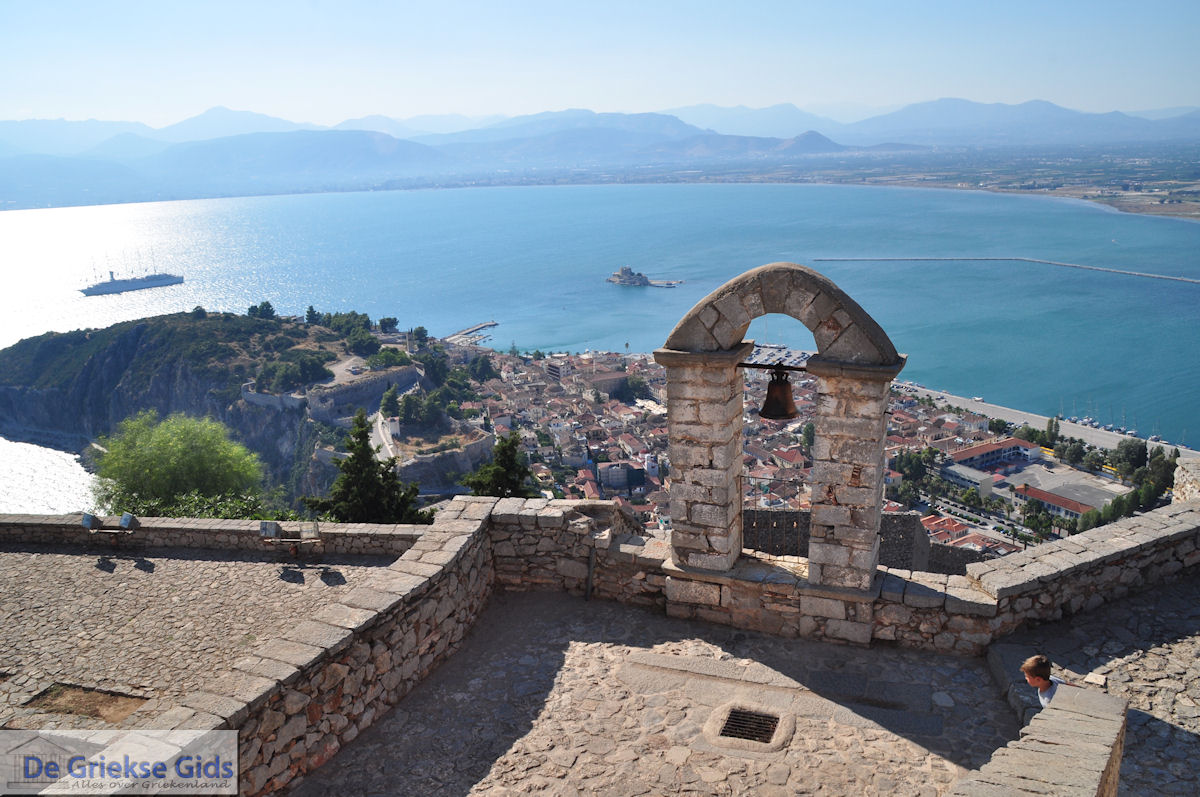
Nauplia (Nafplio).
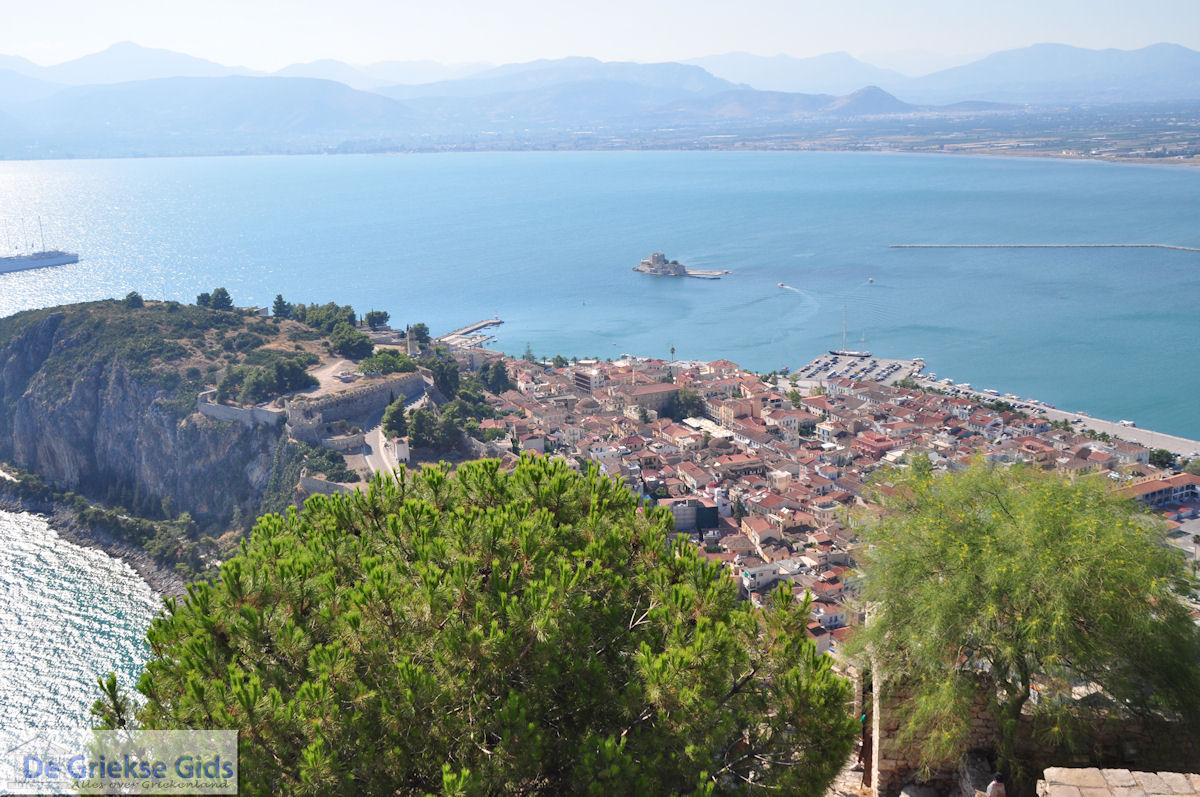
The coast road continues on to Nauplia (Nafplio), capital
of the prefecture and one of the loveliest towns all over
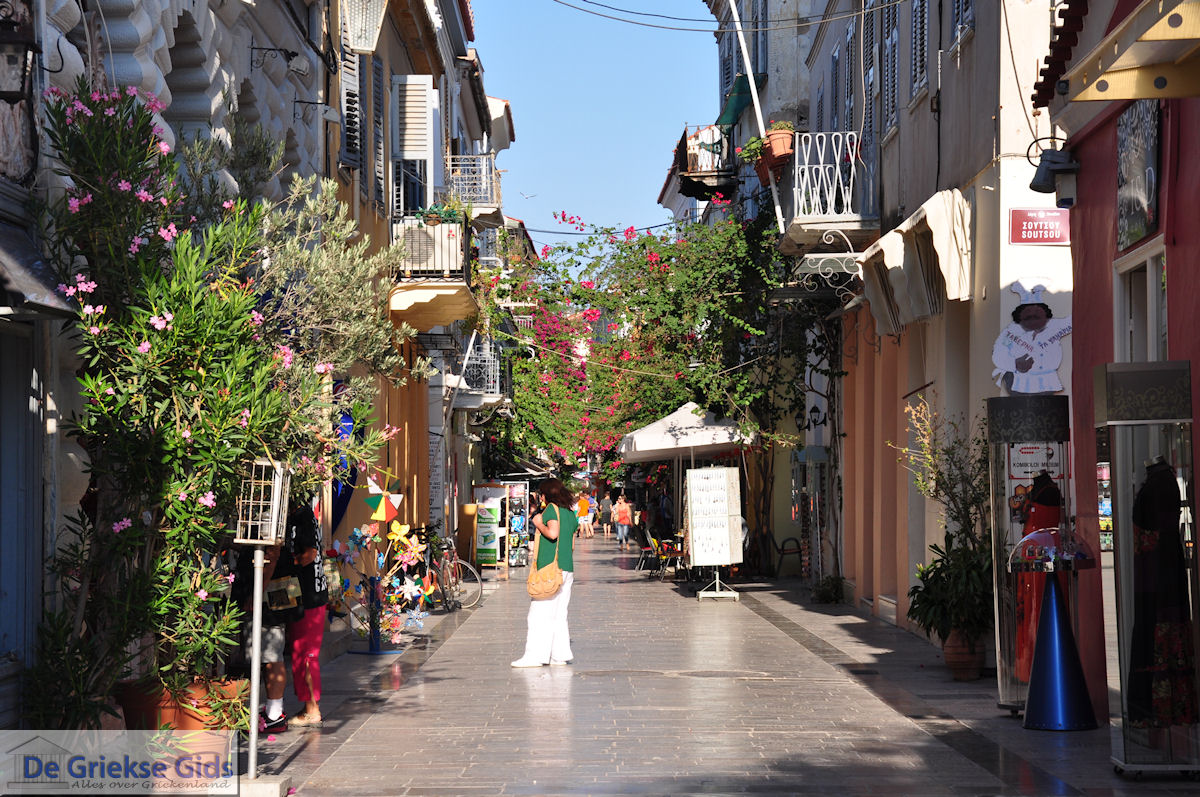
Greece. The old city with its neoclassic houses, picturesque
streets, wooden balconies with cascading flowers, Turkish
fountains, the Constitution (Syntagma) Square with
fascinating mosques and outdoor café tables is like a fairy
land. It was in this place that after centuries of struggle,
peace has finally settled.

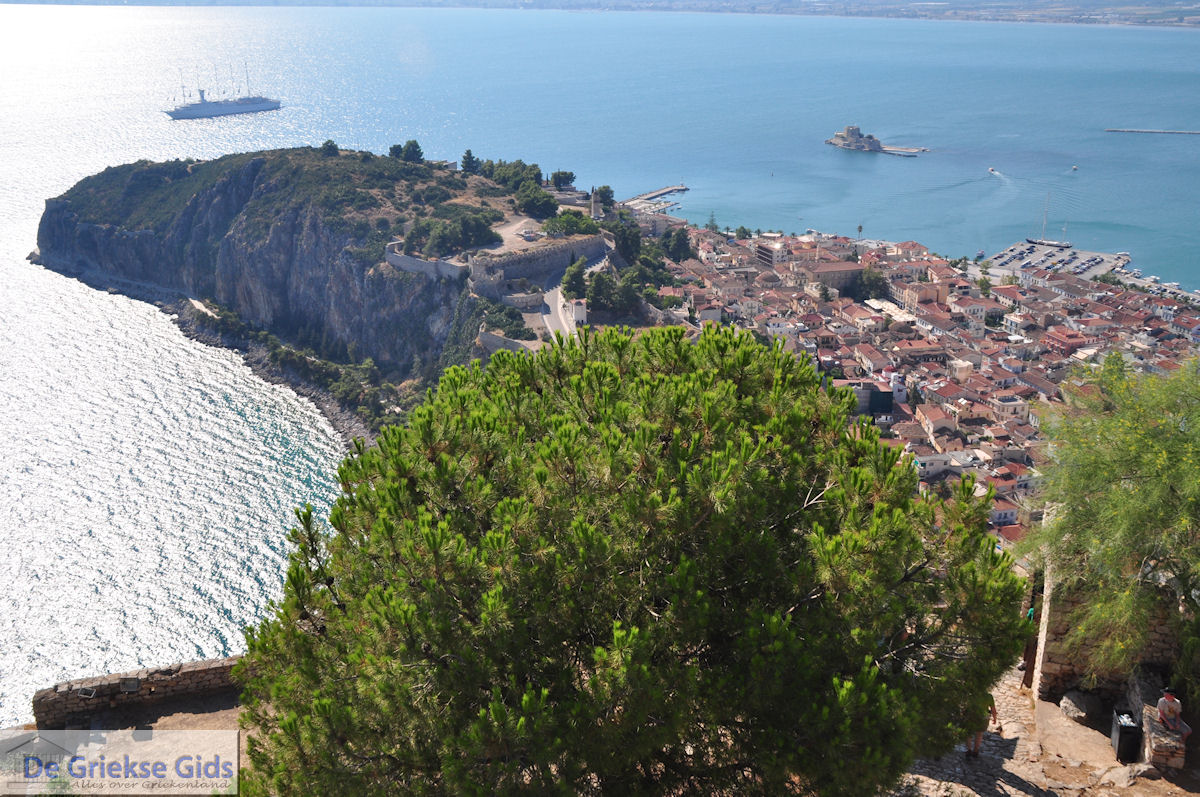
"Bourtsi" Nafplion.
Alex
Köning |
Nafplion
Leon Beekwilder |
Visitors feel like immersing in its
history, fumbling the elements of its past; Regent Maurer's
house, the Military Academy, - which today operates as
a military Museum-, the Army Ministry, Greece's first high
school, the Parliament House, St. Spyridon's the church
where Kapodistrias, the first governor of Greece, was assassinated.
And the fairy tale world continues, whether you climb up
the 857 steps to the Venetian fortress of Palamidi crowning
the city, wander round the battlements of Acronafplia or
pop over to the fortified islet Bourtzi, afloat in the
middle of the bay. A new sight or sensation keeps coming
across your path. Nafplio is full of the joy of life: it
is the nobility and calm found in Minoan frescoes; it is
Syntagma Square, which strikes you as more gracious and
delightful every time you see it; it is the little restaurants
on the waterfront, the open-air cinemas, the bars and the
music that every evening takes you closer to the people,
the sea and the stars. In Syntagma Square the Archaeological
Museum, with its findings from various periods and frescoes
from Mycenae (Mikines) and Assini, is housed in an imposing
Venetian building, while the Folk Art Museum, on Vas. Alexandrou
street, occupies a neoclassical house.
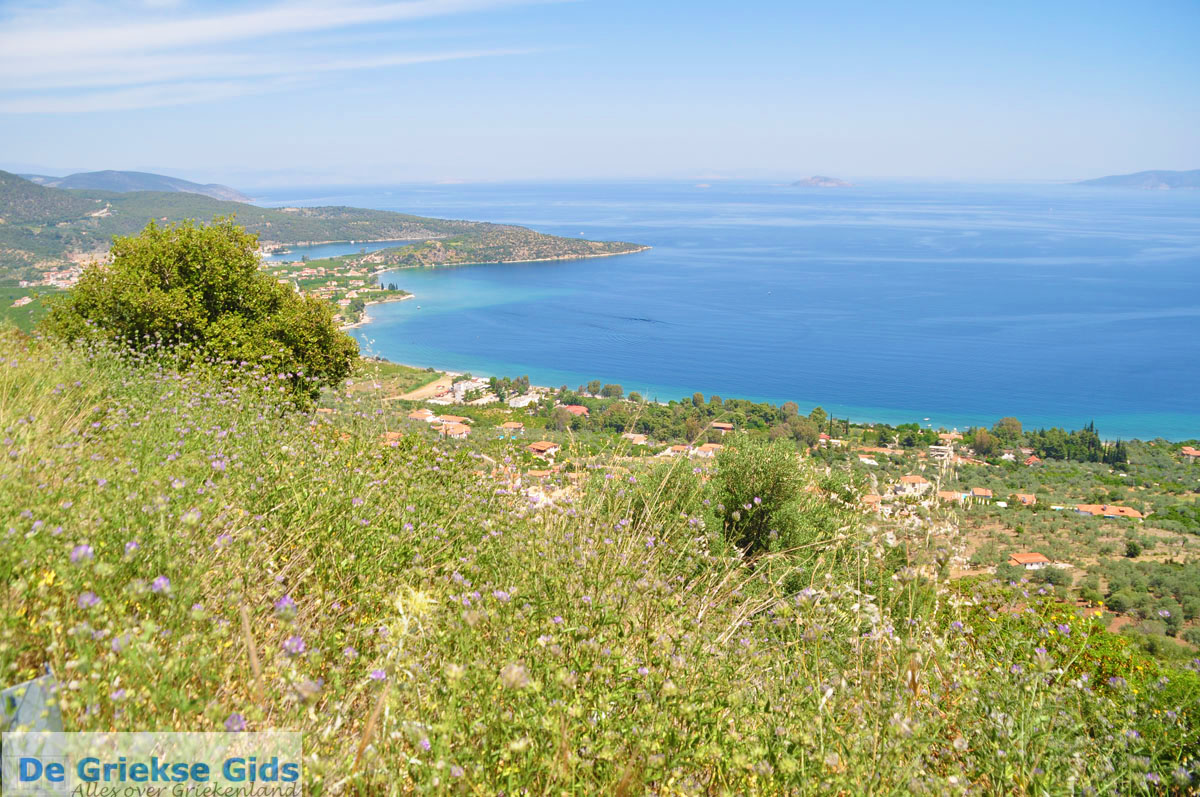
By the sea. Leaving Nafplio the first seaside
village is Tolo, situated
on a picturesque bay. Its seafood taverns overlook the
water. You take a bite and inhale the salt breeze. You
listen to the put-put of the little motor boats chugging
over to the islet of Romvi opposite. The more romantic
travellers will want to head for Assini, which inspired
one of Nobel prize-winning poet George Seferis' most beautiful
poems. A sheer rock at the water's edge adorned with remnants
of the distant past. Here stood the acropolis of ancient
Assini mentioned by the first Greek poet, Homer. Ten kilometres
from Nafplio the road passes through the coastal village
of Drepano, drenched in orange and lemon trees, and Vivari,
with its ruined Venetian castle. The view from here is
enchanting. Next the road leads on to the much frequented
villages of Kandia and Salandi, winding up in Kilada, a
peaceful fishing village at the head of a closed bay. Just
outside the village, one can see the large cave of Frahthi
where Mesolithic artefacts were found. Not far from Kilada
- inland - the farming town of Kranidi stands out, spread
out over the hillside of Agia Anna. The hill is sprinkled
with Byzantine monasteries. Seven kilometres far from Kranidi
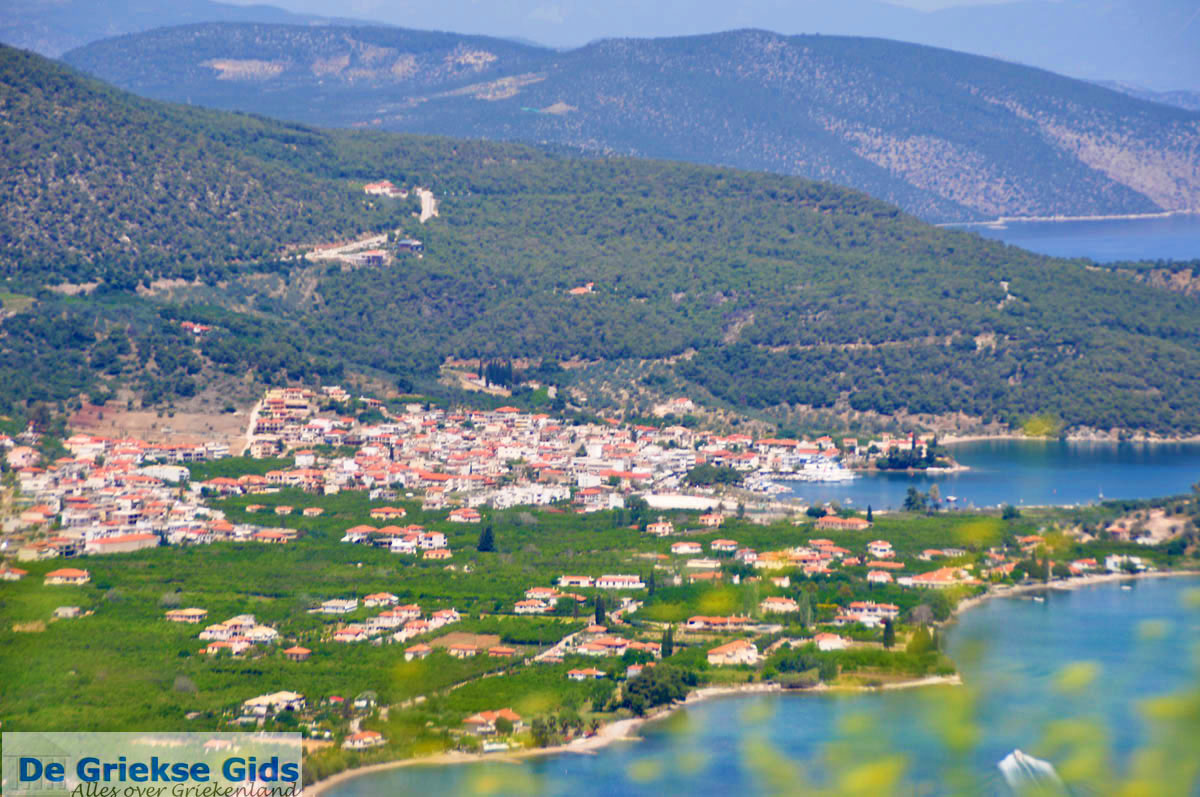
the road leads to Porto Heli, an important summer resort
on a closed protected bay with a natural harbour. Brightly
painted caiques and trawlers, little sailboats and motorboats
repose in the harbour. Customers at the seafood taverns
are ordering fried and grilled fish, shrimp, octopus, and
a big country salad. At midday Porto Heli is humming with
people. The shouts and laughter mingle with the aromas
wafting up from the coals. lt's perpetual festival for
people who delight in this miracle of nature, the Argolid
perfumed by the sea, rich in fields, harbours and beaches;
the Argolid with its translucent waters that reflect ancient
and modern dreams; the Argolid, whose every village is
a treat for the eye. Kosta, Ermioni, Thermissia, Plepi,
Metohi, and Galatas with the dozens of lemon trees. The
Argolid dream world. The first lights from the shores of
the Saronic islands across the way appear in the twilight.
Taking the coast road north will bring you to lush Galata,
just a stone's throw from the Argosaronic island of Poros.
The narrow strait that separates them is alive with small
boats ferrying passengers between island and mainland.
Further north, at the al most spherical peninsula of Methana,
lies the spa of that name, famous since antiquity for its
hot sulphurous and saline springs. Methana's waters are
recommended in the treatment of dermatological, rheumatoid
and neurological ailments. Visitor to Methana will find
ample accommodation as well as numerous taverns, restaurants,
bars, discos and other facilities for tourists, The crystalline
sea and lovely beaches attract holidaymakers all summer
long. The town is linked year round with Piraeus by ferry
and in summer by several hydrofoils (from Zea marina) per
day. This is the magical Argolid. The first lights from
the shares of the Saronic islands start twinkling in the
dusk.
Tirins
From Nafplio the road passes through a fertile, verdant valley
to arrive at the village of Tirins.
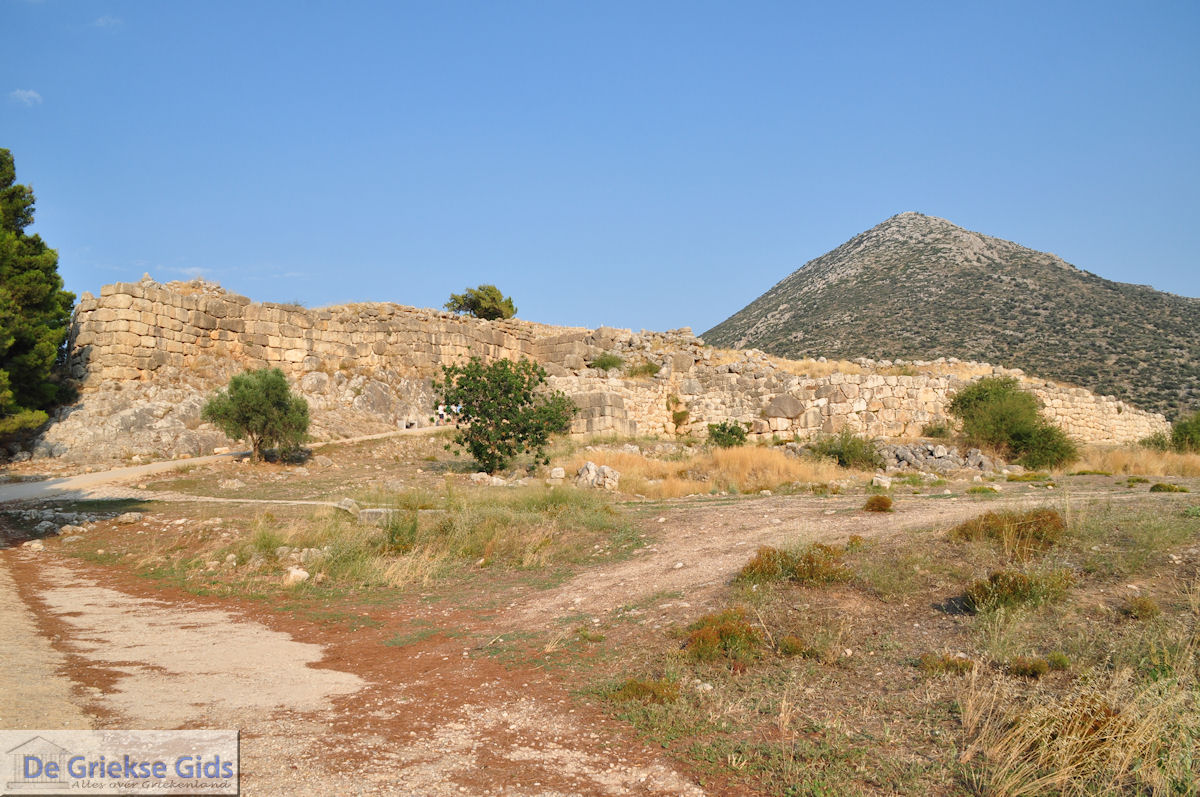
The ruins of the fortress-palace of Tirins lie just off
the road. Its cyclopean walls are older than those of Mycenae.
The ancients believed that these walls ware built by the
Cyclops, creatures with superhuman powers. Homer mentions
the "wall-girt" cities that look part in the Trojan
War. Looking at these massive walls - the biggest boulders
weigh 13 tons each - one imagines that any attempt at besieging
them must have been in vain. Tirins flourished up to 1200
BC, when the acropolis was destroyed by fire. In the enclosure
below the acropolis are the famous tunnels (secret cisterns),
among the most interesting architectural achievements of
the period. The palace with the royal throne room at its
centre occupied the highest point on the acropolis. Fragments
of wall paintings testifying to the wealth and luxury of
the palace at Tirins are on display in the archaeological
museums of Nafplio and Athens.
Argos, Midea, Mycenae.
From Tirins the road continues through the Argolid valley
to Argos itself. Men and women are working in the fields,
while earthy odours and the buzzing of a bee accompany
you. Farmers tending rickety roadside stands sell their
wares to passers-by - juicy grapes, oranges and apricots
depending on the season. The scenery alternates between
grapevines, olive graves and apricot orchards. Today the
historic Peloponnesian city of Argos is the agricultural
and commercial centre of the prefecture. The city has retained
soma neoclassical buildings, the neoclassical market place
and the army barracks dating from the time of Kapodistrias.
The archaeological museum on Vas.Olga street has an interesting
collection of local findings. After the destruction of
Mycenae (Mikines) and Tirins, Argos began to develop, reaching
its peak as one of Greece's most powerful cities in the
71h century BC. Large works produced in the city's famous
sculpture studios decorated temples and sanctuaries. The
visitor will find some of them, weathered by time, in the
ancient agora (on the raad to Tripolis). Northwest of Argos,
the citadel of Larissa stands on the crest of a low mountain,
it is worth a visit - an asphalted road goes all the way
up - to admire the Frankish and Venetian fortifications
as well as the view, which is especially impressive at
sunset, when the colours run riot. There is a monastery
on the hillside, the Virgin Concealed or of the Rock. South
of Argos the road leads to Kefalari, a lush area with several
springs. The spreading plane trees, running water and taverns
will hold you in their grasp for hours by offering those
simple Greek pleasures: shade, fresh air, good food and
relaxation. To the east another road leads to the village
of Merbaka (Agia Triada), with its 121h century Byzantine
church, and from there on to the ham Iets of Manesi and
Dendra. Fram Dendra a path takes you to the top of a hill
and the Mycenaean acropolis of Midea. Here too there are
huge cyclopean walls. According to myth, the walls at Mycenae
(Mikines), Tirins and Midea ware built by a tribe of men
descended from the Cyclops. Nine kilometres outside Argos
the road leads to the slopes of MI. Evvia where, built
on an outcropping, stand the ruins of the Heraion (Ireon),
dedicated to Hera, one of the most important sanctuaries
of antiquity. In the uncluttered beauty of the scenery,
emotions and memories connected with the worship of the
goddess still linger.
The Mycenaean treasure
The road leads from the Heraion to the "golden" Mycenae
(Mikines). The acropolis reveals itself in the heart of a
landscape that is barren to the north, a bit tamer towards
the south. A grey mound of rock with the marks of the Cyclops
upon it. One has to touch these gigantic rough-hewn slabs
in order to comprehend the deep sense of security they offered
the Mycenaeans. Within these walls the leaders heaped the
booty from their extended wars, gold and jewels, bowls and
purple rugs.
|

Mycene
Bruno Hubrecht
|

Mycenaean
Tholos tomb. Alex Köning |
Mycenae was the most powerful, brilliant and sovereign influence
in Greece up to 1100 BC when it was destroyed by fire. Centuries
later the tragic poets Aeschylus and Sophocles brought it
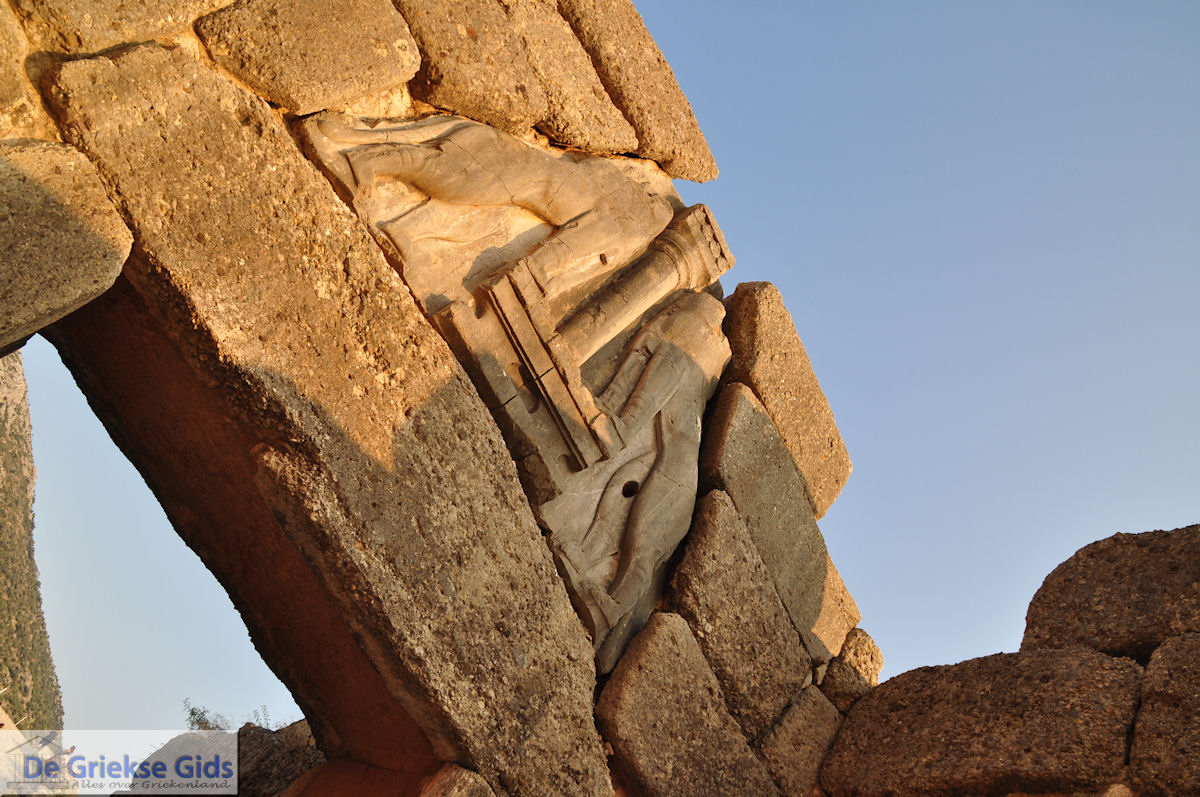
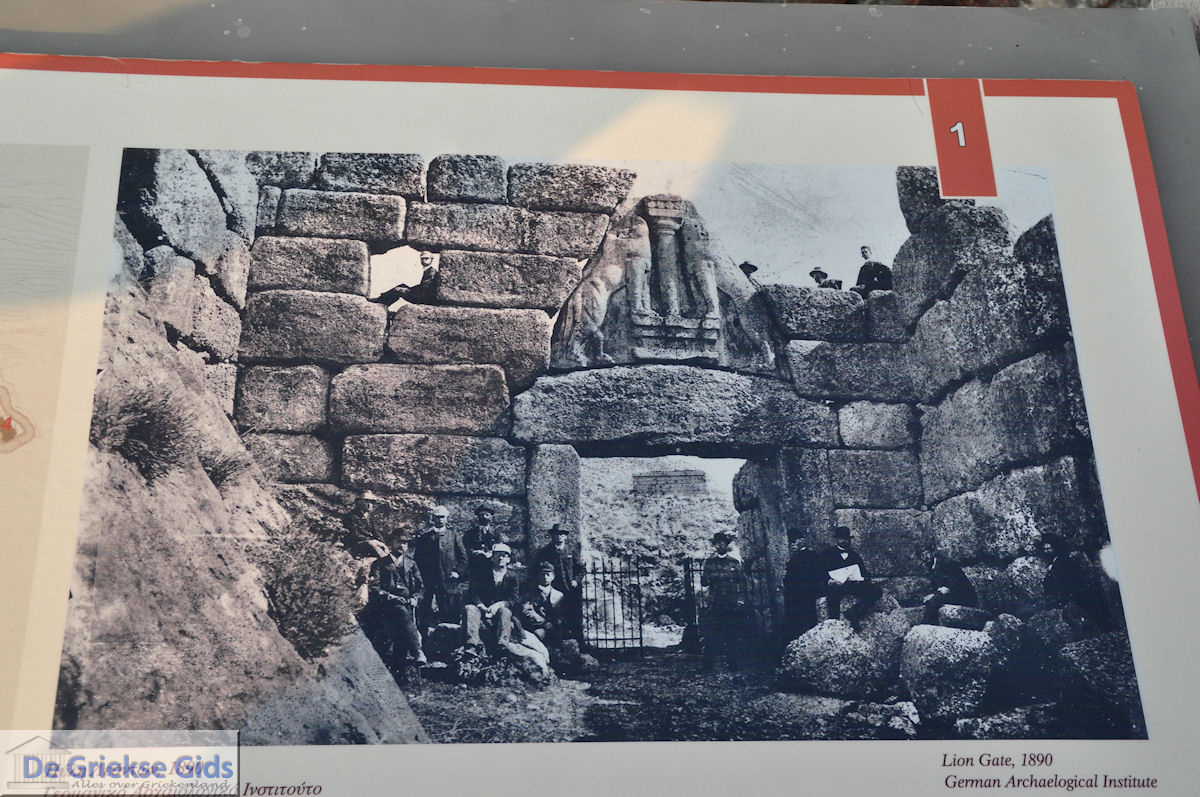
back to life with the magic of their verses. One enters the
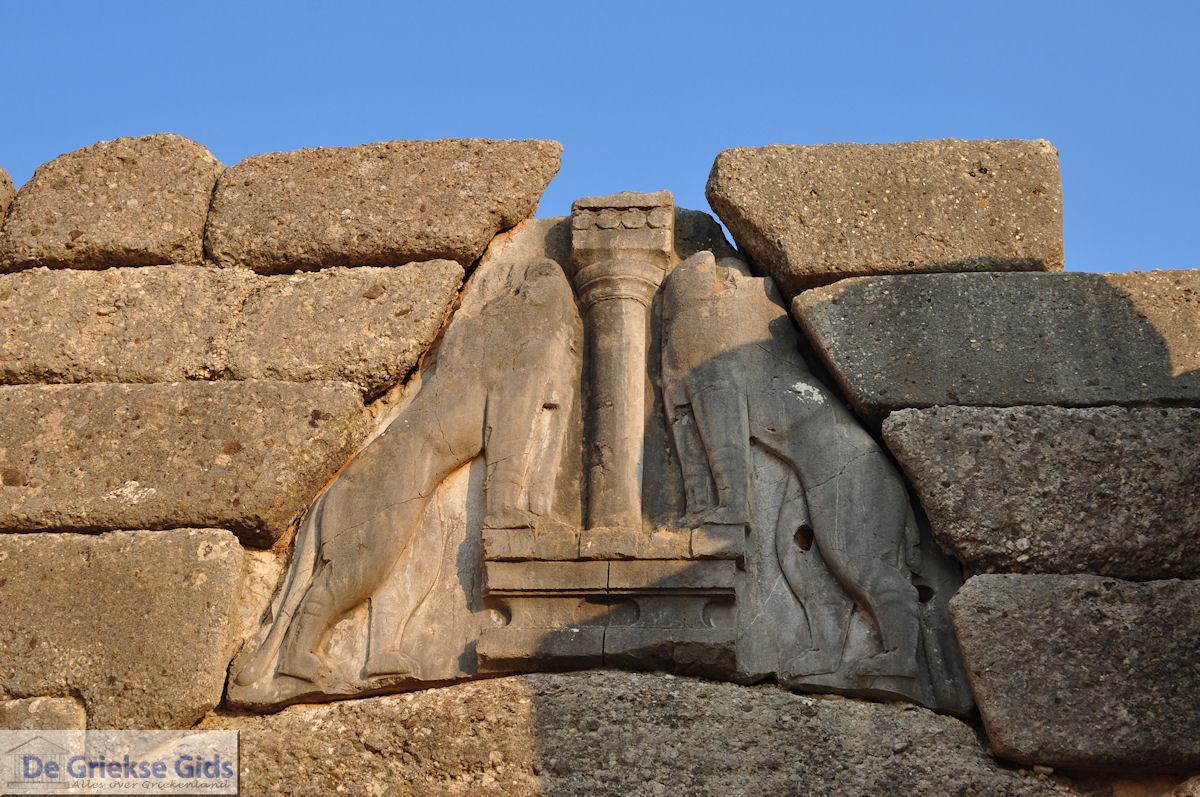
acropolis through the Lion Gate, the oldest sample of monumental
sculpture in Europe. A secondary entrance, built in the same
style, exists is the north side. Inside the walls excavations
have uncovered the palace complex, grave circle A with six
royal tombs, courtiers' houses, sanctuaries and other important
buildings. Outside the acropolis lie the ruins of private
houses. Grave Circle B with 14 royal tombs and 12 tombs of
private citizens. On the nearby hill of Panayitsa archaeologists
brought to light the most stunning edifice of Mycenaean architecture,
the Treasure of Atreus, also known as the beehive tomb of
Agamemnon. Most of the more exceptional findings from the site are on
exhibit in the National Archaeological Museum in Athens.
These include frescoes, gold jewellery, and the gold mask
sold to have belonged to Agamemnon, among other priceless
pieces.
Epidaurus

Foto van Rob van de Berg
|
foto
van |
The road from Nafplio to
Epidaurus (Epidavros) passes through
vineyards and age-old olive graves with the mountains looming
hazily in the distance, but for Mt. Arahneo, which rises
directly above Epidaurus. Arahneo - that's just how Aeschylus
called it in his tragedy, Agamemnon. The breeze carries waves
of sweet fragrances from the woods, resin and turpentine.
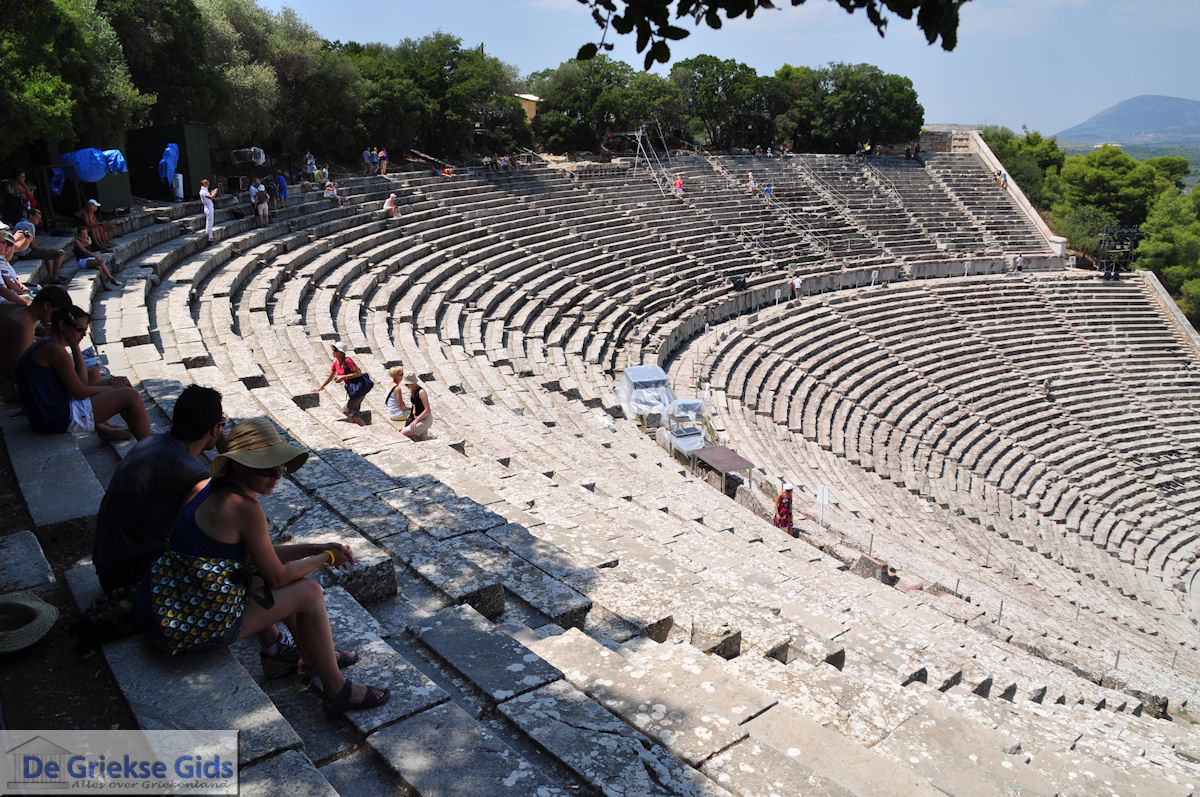
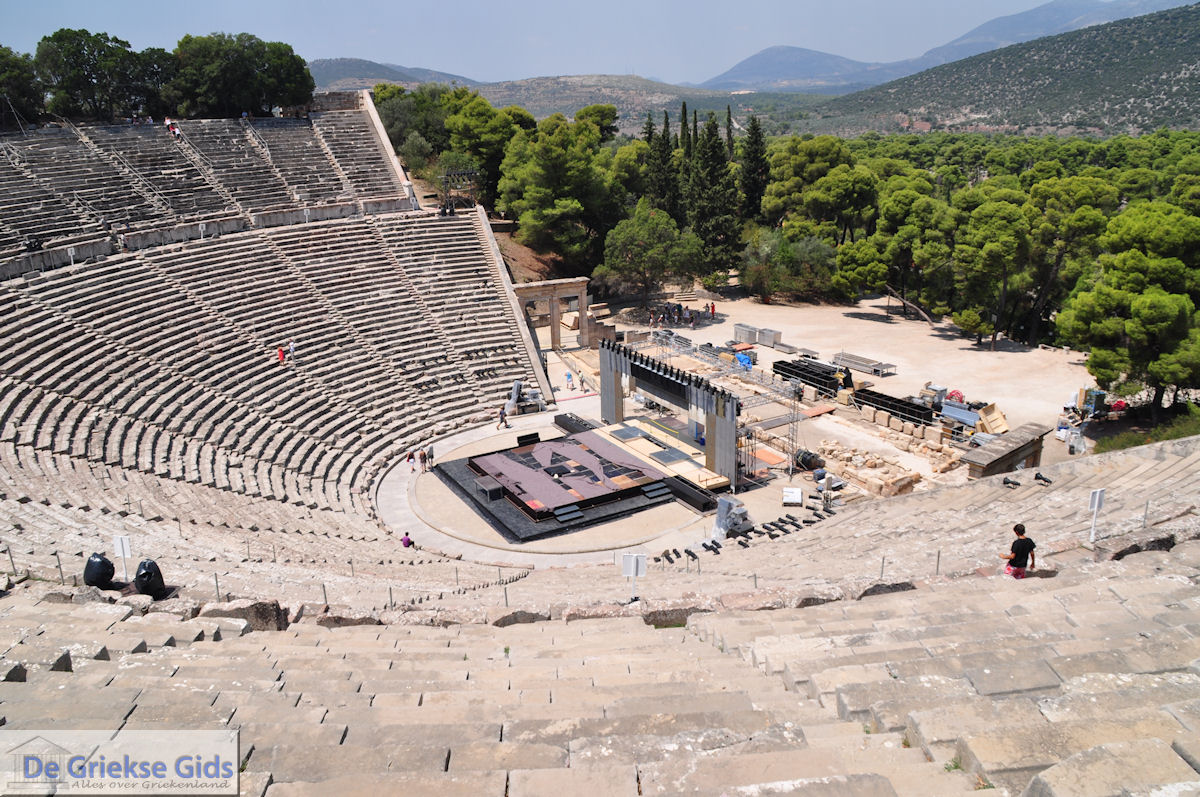
On a hillside, within the sanctuary, lies the theatre of
Epidaurus (3rd c. BC), The most famous and best preserved
of all the ancient theatres in Greece. Built of limestone,
it can seat 10.000 spectators. Every summer it comes alive.
Attending a performance of ancient drama in this theatre
is almost a mystical experience. Never to be forgotten. A
catharsis of the soul. At Epidaurus the actors don't need
to shout or speak loudly. The acoustics are so perfect that
the merest whisper can be heard in the last row. The entrance
to the sanctuary lies to the north of the theatre. Asklepios
was worshipped here. Though he was a god, Zeus struck him
down with his thunderbolt because he wanted to eliminate
death. Among the ruins, one can see the foundations of the
temple of Asklepios (Doric, 4th c. BC), the guest house,
the Tholos, the Abaton or sleeping porch, the temples of
Artemis and Themis, the gymnasion, etc. The museum is near
the entrance to the site and contains various artefacts plus
a helpful model of what the sanctuary must have looked like.
The town of ancient Epidaurus occupied the same location
as the present village of Palia Epidavros (Old Epidaurus),
a seaside settlement with a small harbour, nestled in a plain
thick with olive and orange trees, rimmed with scenic beaches
and several taverns. Seven kilometres further north, at the
foot of Mt. Akros, the road arrives at Nea Epidavros (New
Epidaurus), an inland village and then proceeds several kilometres
on to the lonely monastery of Agnounda with its Byzantine
frescoes. West of Nea Epidavros, is Ligourio, a modern market
town much frequented by tourists. There are taverns everywhere
you look, and coaches, cars and motorbikes. Over the wind
waft tempting smells of roasting lamb and kokoretsi. Theatre
buffs and lovers of archaeology from all over the globe gather
here to eat and chat under a starry sky. Crickets are trilling
on the trees. This land is an endless song. This is where
the travel through, the old and the new Peloponnese ends.
Source: Greek National Tourism Organisation.